


|
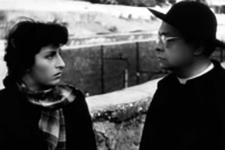 It is probably difficult for Americans, particularly Americans of this day and age, to understand what a profound effect Roberto Rossellini's Rome Open City (Roma città aperta) had when it premiered in Rome a mere six months after the end of World War II. Shot quickly on location in the city itself on whatever scraps of celluloid Rossellini and his crew could get their hands on during the final months of the war (Rome had been liberated by the Allies, but half of the country was still occupied by the Nazis), the film was more than just a fictionalized account of the Italian Resistance. Rather, it was a raw reminder of the trauma the country had just endured. And, with the dust still settling and memories still fresh, the immediate reaction was one of rejection. Italian audiences turned away from the film the way we turn away from any painful sight, the way that New Yorkers booed the screened and yelled "Too soon!" when trailers for Paul Greengrass's United 93 (2006) debuted some five years after 9/11.
Yet, it wasn't long (especially after the film shared the top prize at the Cannes Film Festival) before audiences, both Italian and international, began to recognize what a profound achievement Rome Open City represented, especially since Italian cinema had not been an international force since the super-spectacles of the silent era. Not only was it one of the first European films to depict the underground resistance during the war, but it looked and felt unlike anything that had preceded it. The necessities of wartime film production—virtually no money and no studio resources—forced Rossellini to make do with what he had, including the use of disparate types of film stock, which resulted in a rough, newsreel-like aesthetic that gave the story's undeniably melodramatic tensions and clear-cut depictions of good and evil a sense of gritty reality and true gravity that was further fueled by the underlying anger of a nation in ruins. The story, which is divided into two not entirely congruous parts, takes place in Rome during the Nazi occupation (the winter of 1943 to 1944, just before the liberation). The main characters—a Catholic priest named Don Peitro (Aldo Fabrizi), a communist resistance fighter named Giorgio Manfredi (Marcello Pagliero), and his friend's pregnant fiancé Pina (Anna Magnani)—were loosely based on real-life personalities (in fact, the film was originally intended to be a documentary about Giuseppe Morosini, a priest martyr-hero of the resistance). The crux of the story is that Mandredi has been cornered by the Gestapo and is trying to remain hidden, an endeavor aided by Don Pietro and Pina and ultimately undermined by Mandredi's opportunistic, drug-addicted mistress (Maria Michi). Screenwriters Sergio Amidei and Federico Fellini wisely spread the sentiment among the major characters, all of whom are brilliantly played by unlikely actors (Fabrizi was a comedic player making his dramatic debut and Magnani was best known as a cabaret performer). They also recognize the emotional power of showing collaboration against a common enemy, which is why the alliance between Don Peitro and Manfredi, who represent the otherwise antithetical Catholic Church and communist party, respectively, is so effective. Rome Open City is most frequently discussed as the film that brought the Italian neorealist movement, which arguably began with Luchino Visconti's Ossessione (1942), to its artistic fruition, which is why it has been credited with inspiring everything from the French New Wave (Godard was a big fan) to the cinema-verité documentary style. Neorealism sought to document the realities of life in postwar Italy by rejecting the artificiality of the studio-based production style that characterized the fascist period and embracing handheld camerawork, nonprofessional actors, natural lighting, and, most importantly, location shooting. Neorealist filmmakers took to the streets quite literally, with Rossellini's film leading the way. Of course, such a history obscures the fact that Rome Open City engages with plenty of cinematic devices not often associated with neorealism, from the use of known stars in the lead roles, to the melodramatic contrivances of the plot. What is masterful about the film, then, is not its neorealist purity, but rather the way in which it used unconventional techniques to inject new life into old forms, in the process forging a cinema that would profoundly influence the rest of the world.
Copyright ©2017 James Kendrick Thoughts? E-mail James Kendrick All images copyright © The Criterion Collection | |||||||||||||||||||||||||||||||||||
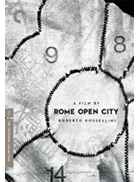
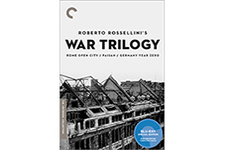 Rome Open City is available exclusively as part of the three-disc "Roberto Rossellini's War Trilogy" box set (SRP $99.95), which also includes Paisan (1946) and Germany Year Zero (1948).
Overall Rating:

 (3.5)
(3.5)
Subscribe and Follow
Get a daily dose of Africa Leader news through our daily email, its complimentary and keeps you fully up to date with world and business news as well.


News RELEASES
Publish news of your business, community or sports group, personnel appointments, major event and more by submitting a news release to Africa Leader.
More Information