UN Women
02 Dec 2025, 05:13 GMT+10
That represents 20 per cent of all women, compared to 12 per cent of men.
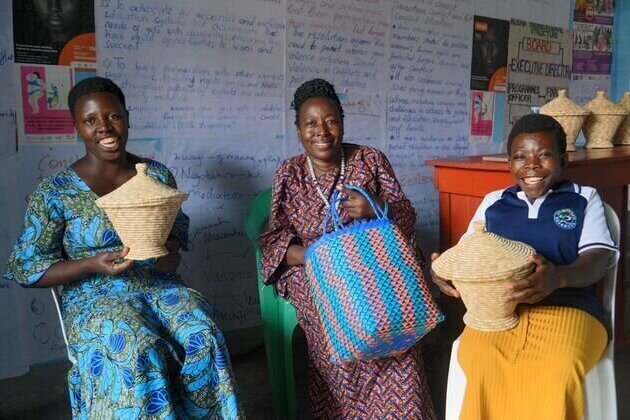
Many of the challenges faced by women and girls around the world are, to some extent, shared. Whether they face bias or violence because of their gender, disproportionate care responsibilities, digital abuse, or lack of access to decision-making spaces – many women know these challenges personally.
And yet every woman and girl comes face to face with challenges in ways that are unique to them and what rights they have access to. Appreciating that uniqueness is what intersectionality is all about. Just as we commonly acknowledge individual strengths, we each face individual challenges – and those challenges have their own ways of interacting with one another. In the case of inequality – racism, sexism, ageism, ableism, classism – these injustices can often exacerbate each other.
This is why UN Women proudly fights for all women and girls. To promote rights and equality for the collective, we must understand the ways in which people are uniquely and systemically affected.
Every day, women do 16 billion hours of unpaid care work: Cleaning, cooking, fetching water, and looking after people— including those with disabilities. Without this unpaid labour, society would collapse – and yet it is rarely given the value that it deserves.
The absence of equitable care and support systems does not just devalue women’s work. It puts people with disabilities at risk of human rights violations, including inadequate physical and emotional care, forced institutionalization, and forced medical treatments.
Women and girls with disabilities also shoulder significant unpaid care responsibilities within their families and communities, while often facing stigma and limited access to economic opportunities.
Well-functioning care systems, on the other hand, support carers with recognition, resources, and responsibility-sharing. They do not rely solely on unpaid labour to provide quality, disability-inclusive services that allow everyone to live and age with dignity. They include community-based models that support parents learning to care for children with special needs – and support for women with disabilities caring for others.
UN Women is calling for a care revolution to improve the well-being of unpaid caregivers and ensure the best support and opportunities for those being cared for.
Assistive technology (AT) and digital technologies have the potential to fundamentally change the experiences of all women and girls, including those with disabilities – promoting autonomy, communication, and access to essential services. In partnership with ATscale, UN Women has conducted global surveys and consultations on AT to discover and expand technologies that could potentially advance inclusion throughout women’s lives.
But just as technology has been expanding and benefiting society, technology-facilitated violence has been intensifying in parallel – with studies showing 16 to 58 per cent of women impacted. This technology includes powerful, largely unregulated AI tools.
Artificial intelligence (AI) is not only amplifying existing forms of inequality – including discrimination, digital abuse, and lack of job opportunities – but creating new ones. AI systems are often designed without the meaningful participation of people with disabilities and frequently rely on datasets that exclude or misrepresent them, especially women. As a result, algorithms fail to account for diverse communication needs, accessibility requirements, and lived experiences. This can lead to harmful outcomes, from employment screening to education to healthcare access.
UN Women calls for shifting AI development to include universal design principles, robust protection measures, and diverse development teams. AI systems should expand – rather than restrict – opportunities for women and girls with disabilities.
Around the world, the fight for women’s rights and empowerment continues. But in key legal reforms and protections, gender and disability are often addressed separately, if they are addressed at all.
UN Women continues to expand the way we practice intersectional approaches, including within the UN system itself, with lessons learned on disability inclusion across critical areas of the Beijing Declaration and Platform for Action. These include recommendations for the UN’s Disability Inclusion Strategy (UNDIS) to strengthen capacity, collaboration, and coherence in its accountability framework.
Accountability also means access to justice. Women and girls with disabilities often require assistance to reach or communicate with law enforcement and courts. This can sometimes be a major barrier and an infringement of their legal rights, such as women and girls who must rely on family members who are physically, emotionally, or economically abusive; the lack of available sign-language interpreters for deaf people outside of major cities; and the perception or false assumption that women with intellectual and psychosocial disabilities are not credible enough to represent themselves in court.
Access to justice is essential for an equitable world. For justice to be served, policymakers and law enforcement must take gender and disability into account – and ensure discrimination does not create impossible barriers for any woman or girl.
Here are 5 ways to ensure women with disabilities lead the push to end gender-based discrimination and violence.
Read moreGet a daily dose of Milwaukee Sun news through our daily email, its complimentary and keeps you fully up to date with world and business news as well.
Publish news of your business, community or sports group, personnel appointments, major event and more by submitting a news release to Milwaukee Sun.
More InformationBISSAU, Guinea-Bissau: Major General Horta Inta-a was installed as the transitional president this week by Guinea-Bissau's military,...
The Israel Defense Forces (IDF) conducted operations over the weekend that resulted in the deaths of two individuals in southern Gaza....
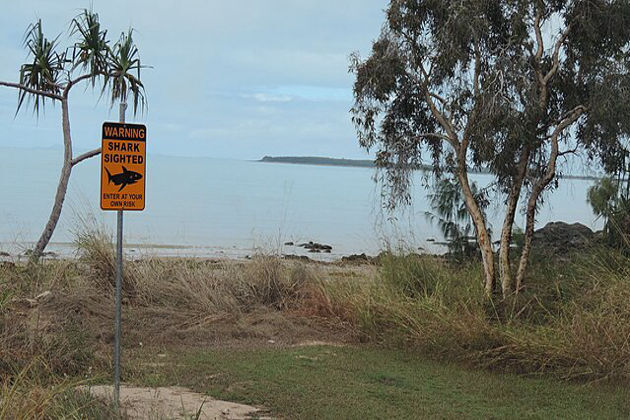
MELBOURNE, Australia: A woman was killed and a man seriously injured when a shark attacked them during an early morning swim at a national...
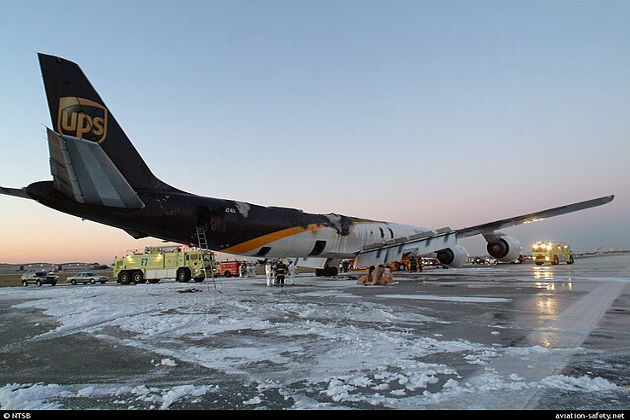
ATLANTA, Georgia: United Parcel Service (UPS) has stated that several of its aircraft have been grounded and are not expected to return...
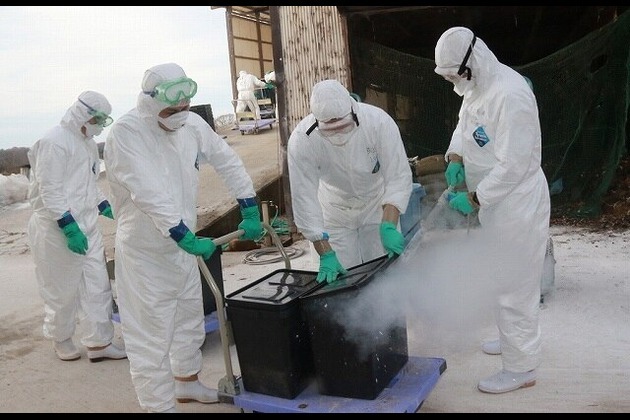
PARIS, France: Europe and North America are confronting an early and unusually intense wave of bird flu, with outbreaks spreading across...
NEW DELHI, India: India has lodged a protest with China over what it called an arbitrary detention of an Indian citizen at the Shanghai...
ERIE, Colorado: An increasing number of farm animal sanctuaries across the country are promoting an alternative Thanksgiving tradition...
(Photo credit: Jim Dedmon-Imagn Images) The Charlotte Hornets and Brooklyn Nets are experiencing their share of difficulties this...
(Photo credit: Benny Sieu-Imagn Images) Khris Middleton will be intent on slowing down old friends when the Washington Wizards play...
(Photo credit: Vincent Carchietta-Imagn Images) Jalen Brunson belongs in the NBA Most Valuable Player conversation. That's the...
(Photo credit: Trevor Ruszkowski-Imagn Images) Pascal Siakam hit a 14-foot jumper at the buzzer and finished with 24 points and nine...
(Photo credit: Benny Sieu-Imagn Images) Giannis Antetokounmpo scored 29 points to lead the Milwaukee Bucks to a convincing 116-99...