Comedy exposes the truths society hides most fiercely, illuminating our moral blind spots and political realities without fear or apology.
Comedy isnt merely entertainmentit is a civic instrument, a mirror held up to the collective self, reflecting truths that polite society refuses to see. Consider a single joke, tossed into the world, capable of eliciting both laughter and discomfort in equal measure. In that moment, the joke does what politics cannot: it names contradiction, exposes hypocrisy, and forces reflection. Comedians, in their irreverence, are the pressure valves of culture, the diagnosticians of moral temperament. Their freedom to speak without restraint is not frivolousit is essential.
The health of a society is often measured by the rigidity of its laws, the sophistication of its philosophy, or the eloquence of its leaders. Yet these formal instruments tell only a portion of the story. To understand what people truly fear, admire, or secretly condone, one must look elsewhere: to the humor they produce and consume. Comedians, much like the jesters of old, operate outside customary hierarchies. They are licensed by neither office nor tradition, yet they are often more honest than either. When a society loses the ability to laugh at itself, it begins to lose the capacity for self-correction. Humor becomes constrained, policing becomes reflexive, and truth becomes uncomfortable, dangerous, or invisible. In this context, unrestrained comedy is not a luxury; it is a necessity, an essential mechanism of civic discernment.
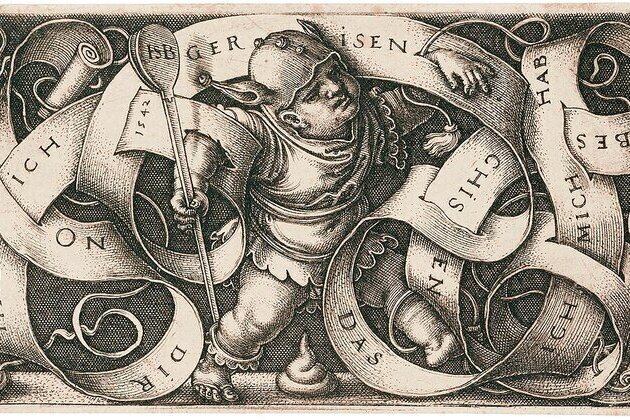
Long before stand-up stages and late-night sets, there were court jesters. These figures, garbed in motley, occupied a singular space in medieval society: they could speak truth to power without fear of reprisal. The jester was not merely an entertainer; he was the sanctioned heretic, the one who could speak the unspeakable. The king, sovereign and untouchable, could be mocked, lampooned, and exposedyet the jester endured. Their humor performed critical functions: it deflated authority, exposed hypocrisy, and reflected public sentiment that could not otherwise be voiced. Yet the tradition was not confined to the courts. In 17th-century Italy, commedia dellartetransformed public plazas into civic truth-arenas, using stock characters, improvised scenarios, and satirical exaggeration to expose social pretenses and mock power. It was popular theater as democratic critiquerowdy, ambiguous, and unlicensed, yet more honest than the formal discourse of its age.
The modern comedian inherits this lineage. They are unlicensed philosophers, beholden to neither office nor ideology. Their allegiance is to the collective nervous system of society. Unlike politicians or pundits, whose words are constrained by responsibility, calculation, and public expectation, comedians probe, experiment, and press the boundaries of discomfort. Theirs is not a voice of permissionit is a voice of necessity.
To understand a societys ethics, one need not consult its laws or political manifestos. Laws codify what those in power wish to enforce; philosophy articulates what thinkers hope to achieve; comedy reveals what a culture truly believes. Greek comedy exposes anxieties about democracy that are absent from polished political treatises. Roman satire exposes corruption and moral contradictions among the elite. Restoration-era plays lampoon sexual hypocrisy while hiding, in their laughter, deep anxieties about desire and propriety. Even 20th-century stand-upRichard Pryor, George Carlinchronicled racial, gendered, and postwar tensions that no lawbook could capture. Comedy, in other words, is sociological data, emotional intelligence in action. It archives the unspoken, preserves contradictions, and illuminates truths societies prefer not to codify. Offense is not the pointvisibility is. The revelation of truth in forms we are compelled to recognize, even unwillingly, is the purpose of comedy.
Yet comedians today operate in a climate of heightened scrutiny. A misstep can ignite viral outrage, provoke campaigns of moral censure, and threaten livelihoods. Social media amplifies every jab, every ironic observation, into a lightning strike of collective judgment. Platforms, institutions, and even audiences themselves increasingly demand emotional conformity. Fragility has become a form of power, and compliance a form of virtue. The irony is stark: comedians are policed more aggressively than politicians precisely because their work bypasses rational defenses and lands directly on the emotional nervous system. Where a law can be debated, and a speech can be countered, a joke lands instantly, exposing contradiction, absurdity, or shame. That is why societies attempting to control comedy are often societies in emotional crisis: when laughter is constrained, reflection is constrained; when humor is policed, moral and civic self-awareness begins to fray.
History offers stark lessons about the consequences of silencing humor. In fragile or authoritarian societies, comedy goes underground. Jokes become dangerous, subversive, and coded. Satire transforms into a language of fear. In these conditions, the collective self cannot see itself; contradictions accumulate; hypocrisy hardens into orthodoxy. Even in liberal societies, microcosms of this fragility appear: campuses, workplaces, or platforms where certain topics are effectively off-limits. The policing may be subtle or informal, yet the effect is the same. Comediansand the audiences they serveare deprived of the space needed to confront moral tension. A society without unrestrained humor is a society without the ability to process itself fully, to metabolize contradictions, or to confront uncomfortable truths that sustain moral growth.
The necessity of comedic freedom can be articulated in four interrelated functions. First, as a moral mirror, comedians reveal what people actually believe, not what they claim to believe. In their humor, contradictions surface, moral pretensions crumble, and unspoken truths become visible. Second, as a pressure valve, laughter dissipates collective anxiety before it calcifies into punitive aggression or authoritarian impulse. Comedy diffuses the pressure that, if unrelieved, erupts destructively. Third, as truth-tellers, comedians pierce obfuscation and deception with absurdity, exposing what conventional discourse cannot. And fourth, as social historians, comedians archive the emotional and ethical life of a society. A century of comedic output often provides a more accurate record of a cultures moral landscape than official texts. From Pryors streets to Carlins stage, from medieval jesters to modern satire, humor preserves the truths institutions overlook.
Protecting comedians is not about protecting entertainment. It is about protecting societys capacity for insight, reflection, and ethical calibration. Restricting comedic speech is not merely a cultural or political concernit is a civic danger. If we cannot tolerate comedians, what does that reveal about our democratic resilience? Humor is an index of emotional intelligence. It measures a societys capacity for self-reflection, its tolerance for contradiction, and its willingness to confront uncomfortable truths. A society that narrows the space for comedy narrows the range of truths it can face. The converse is equally instructive: where comedy thrives, even the sharpest jabs are permitted, and even the most absurd observations are heard, a culture demonstrates resilience. It can absorb critique, process tension, and recognize its own contradictions without collapsing. Humor becomes the crucible in which civic health is tested.
Comedy is not optional; it is essential. In the telling of jokes, in the discomfort of laughter, and in the audacity to speak the unspeakable, we glimpse ourselves more honestly than any law, speech, or philosophical treatise allows. Comedians, like the jesters before them, hold up a mirror that reflects virtues and follies alike. Their freedom is not a giftit is a necessity. And as citizens, as participants in the ongoing experiment of society, we do well to honor, defend, and preserve that space. When laughter is constrained, reflection is constrained. When humor is policed, democracy itself is tested. And when we finally allow comedians to speak, without restraint, we give ourselves a chance to see the truths we most need to face.
Martina Moneke



 Share
Share
 Tweet
Tweet
 Share
Share
 Flip
Flip
 Email
Email