NEW YORK, New York - Wall Street closed lower on Wednesday, with losses across major U.S. benchmarks as investors retreated from equities, led by a sharp pullback in technology stocks.
"We definitely have seen a pretty clear rotation from large-cap growth into large-cap value, and what we're really seeing is, I think, people positioning themselves in a more defensive posture for what's going to happen next year," Brian Mulberry, client portfolio manager at Zacks Investment Management told CNBC Wednsday. "The real question that's being asked is, ‘Who is going to monetize these very large investments in AI?'"
The Standard and Poor's 500 fell 78.76 points, or 1.16 percent, to close at 6,721.50, as broad-based selling weighed on the benchmark index.
The Dow Jones Industrial Average declined 228.29 points, or 0.47 percent, finishing the day at 47,885.97, with losses spread across several industrial and consumer-facing stocks.
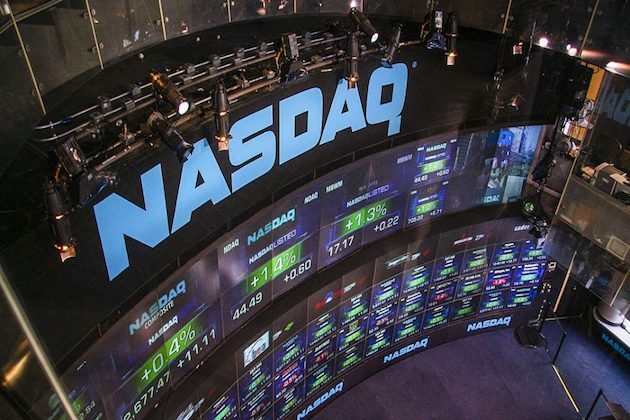
Technology shares underperformed, pushing the NASDAQ Composite down 418.14 points, or 1.81 percent, to 22,693.32, marking the steepest decline among the major US indices.
U.S. dollar firmer against major peers in Wednesday's forex trade
The U.S. dollar traded mostly higher against major currencies on Wednesday, supported by renewed demand for the greenback, while the euro, pound and Australian dollar edged lower in subdued foreign exchange markets.
The euro weakened slightly against the U.S. dollar, with the EUR/USD pair trading at 1.1743, down 0.03 percent on the day, as investors showed caution toward the single currency.
The Japanese yen softened, pushing the USD/JPY pair higher to 155.65, a gain of 0.62 percent, reflecting continued pressure on the yen in global currency markets.
The U.S. dollar also strengthened against the Canadian dollar, with USD/CAD rising 0.27 percent to 1.3787, as the greenback maintained its broad-based support.
Sterling moved lower during the session, with the British pound falling against the dollar. The GBP/USD pair slipped 0.31 percent to 1.3376, amid cautious trading conditions.
The Swiss franc was weaker, with USD/CHF up 0.12 percent at 0.7953, while the Australian dollar underperformed. The AUD/USD pair declined 0.39 percent to 0.6604, reflecting softer sentiment toward risk-sensitive currencies.
The New Zealand dollar also finished lower, with NZD/USD down 0.08 percent at 0.5775.
Overall, foreign exchange markets on Wednesday were characterised by modest moves, with the U.S. dollar broadly firmer as investors and traders weighed global economic signals and remained selective in their positioning.
Global markets mixed at Wednesday close as regional performances diverge
Global equity markets finished mixed on Wednesday, with gains in London, Hong Kong and parts of Asia offset by declines across much of continental Europe, Canada, Australia and emerging markets.
European markets closed mostly lower, despite a strong session in London. The FTSE 100 rose 89.53 points, or 0.92 percent, to end the session at 9,774.32, supported by gains in heavyweight stocks, and an inflation reading that was lower than expected. The Bank of England is largely expected to cut official interest rates this week which also supported UK markets.
Defence stocks in Europe rallied after Germany said it would increase defence spending by $60 billion. The news however was not enough to stem the selling amidst the broader market.
Germany's DAX shed 116.28 points, or 0.48 percent, Wednesday, to 23,960.59, while France's CAC 40 fell 20.11 points, or 0.25 percent, to 8,086.05.
The broader EURO STOXX 50 declined 36.16 points, or 0.63 percent, to 5,681.67, and the MSCI Europe Index eased 6.64 points, or 0.26 percent, to 2,587.44.
Elsewhere in the region, the Euronext 100 dropped 4.80 points, or 0.28 percent, to 1,692.60, while Belgium's BEL 20 gained 35.03 points, or 0.70 percent, closing at 5,045.95.
In Canada, the Standard and Poor's TSX Composite Index edged lower, slipping 13.91 points, or 0.04 percent, to close at 31,250.02, as modest losses capped an otherwise subdued session.
Asian markets were mixed Wednesday. Hong Kong's Hang Seng Index climbed 233.37 points, or 0.92 percent, to 25,468.78, while In Japan the Nikkei 225 added 128.99 points, or 0.26 percent, to finish at 49,512.28.
South Korea's KOSPI recorded a strong gain, rising 57.28 points, or 1.43 percent, to 4,056.41, and in China the SSE Composite Index advanced 45.47 points, or 1.19 percent, to 3,870.28.
However, markets elsewhere in the region ended lower. Singapore's STI Index edged down 4.25 points, or 0.09 percent, to 4,575.48, while Taiwan's TWSE Capitalization Weighted Index slipped 11.49 points, or 0.04 percent, to 27,525.17.
Indonesia's IDX Composite eased 9.12 points, or 0.11 percent, to 8,677.34 on Wednesday, and in Malaysia the FTSE Bursa Malaysia KLCI fell 6.87 points, or 0.42 percent, to 1,641.44.
In the Pacific, Australian equities closed lower. The S and P ASX 200 declined 13.70 points, or 0.16 percent, to 8,585.20, while the broader All Ordinaries index slipped 6.40 points, or 0.07 percent, to 8,874.20.
New Zealand's S and P NZX 50 Gross Index recorded a sharper fall, down 129.04 points, or 0.96 percent, to 13,295.91.
In emerging markets, in India the S and P BSE Sensex dropped 120.21 points, or 0.14 percent, to close at 84,559.65, while Egypt's EGX 30 slid 498.40 points, or 1.19 percent, to 41,504.00.
Israel's TA-125 bucked the trend Wednesday, gaining 28.27 points, or 0.78 percent, to 3,656.22.
In South Africa the Top 40 USD Net TRI Index rose 93.51 points, or 1.39 percent, to 6,838.14.
Overall, Wednesday's session reflected uneven investor sentiment across regions, with selective buying in parts of Asia and the UK countered by broader caution in Europe, Canada, Australia and several emerging markets.
(This report incorporates quotes retrieved with the assistance of artificial intelligence).
Related stories:
Tuesday 16 December 2025 | Tech stocks rally on new Tesla high; Dow dives on jobs data | Big News Network.com
Monday 15 December 2025 | Tech slump drags U.S. stocks lower Monday | Big News Network.com