Xinhua
26 Dec 2025, 17:46 GMT+10
BEIJING, Dec. 26 (Xinhua) -- While winter blankets much of China, Sanya City in the southernmost Hainan Province basks in spring-like warmth -- a climatic advantage now being leveraged for far more than comfort.
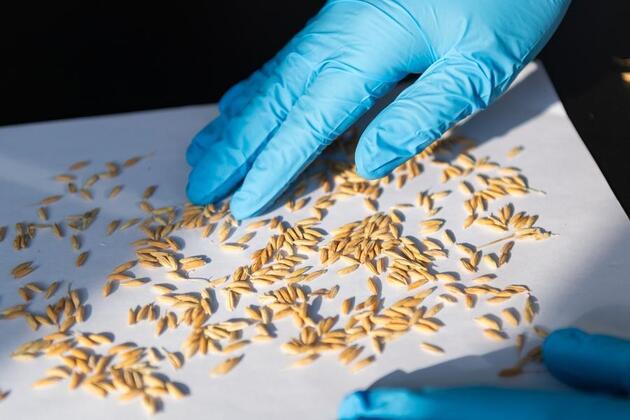
This natural benefit is fueling a scientific race against time at a local agricultural research park, where sprawling experimental plots are carpeted by thriving soybean seedlings.
Here, Tian Zhixi, chief scientist of the soybean seed innovation team at the Yazhou Bay National Laboratory, meticulously examines plant traits in an urgent quest to decipher the genetic codes underpinning higher and more stable yields.
"There remains a notable gap between China's soybean yield per unit and that of countries such as the United States and Brazil," said Tian. "We must make every second count in screening elite genes."
By capitalizing on Hainan's unique light and heat conditions, scientists can cultivate one to two additional crop cycles each year, dramatically compressing the breeding timeline and accelerating the development of high-quality new varieties.
Through unremitting efforts, Tian's team has successfully mapped soybean genetic regulatory networks and advanced molecular design breeding, yielding over 10 high-yield, premium-quality soybean varieties. Their breakthroughs exemplify China's strategic focus on overcoming agricultural bottlenecks through seed technology innovation.
In today's complex and challenging global food security landscape, marked by intersecting crises from climate change, resource scarcity and pest outbreaks, accelerating the development of new crop varieties with high yield, superior quality, stress resilience, and resource efficiency has emerged as a frontline battleground in international agricultural science and technology competition.
The team's race against time in Hainan is not an isolated endeavor but a microcosm of China's strategic initiative to revitalize its seed industry amid mounting global food security pressures.
Over the past five years, China has rolled out a comprehensive suite of targeted policies and action plans to address critical seed supply bottlenecks and shore up national food security.
In 2020, the Central Economic Work Conference underscored the imperative for breakthroughs in seed-source technologies to resolve strategic constraints. In July 2021, an action plan to revitalize the seed industry was approved, charting a roadmap for China's transition from a major seed producer to a global seed industry powerhouse.
Today, the fruits of these efforts are becoming increasingly evident. According to the Ministry of Agriculture and Rural Affairs, domestically bred crop varieties now dominate over 95 percent of the total planting area, while homegrown livestock, poultry and aquatic species collectively hold market shares exceeding 80 percent and 85 percent, respectively. National seed industry bases now supply 80 percent of the country's seed demand.
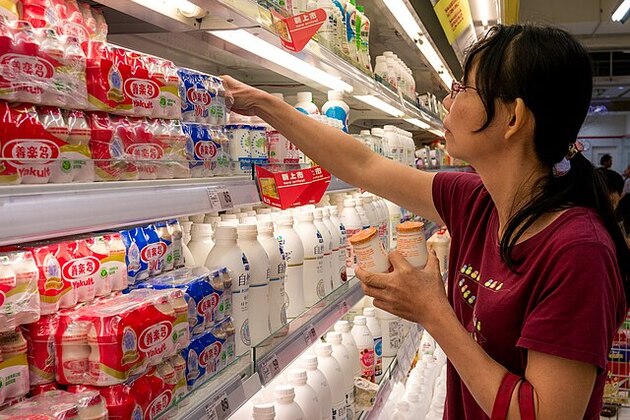
Beyond staple grain crops, China is embracing an "all-encompassing approach" to food -- diversifying supplies to include meat, eggs, dairy, seafood, fruits and vegetables.
This shift is driven by growing public demand for premium-quality, nutrient-rich and diverse dietary options amid the pursuit of a better life. It is also a pragmatic imperative for a country that feeds nearly 20 percent of the global population with only about 9 percent of the world's arable land and 6 percent of its freshwater resources.
The story of Pacific white shrimp breeding exemplifies a comprehensive multi-front effort. Once reliant on costly imported broodstock, Chinese scientists have developed indigenous varieties through meticulous selective breeding of imported stock over successive generations.
In 2024, a new disease-resistant strain named "Zhongxing No. 2," developed through collaborative efforts between a breeding base and Sun Yat-sen University using molecular design breeding techniques, received national approval. This breakthrough demonstrates over 20 percent greater resistance to the Vibrio bacteria. It improves aquaculture survival rates by more than 10 percent, helping transform China from a dependent importer into a competitive force in global markets.
Looking ahead to the 15th Five-Year Plan period (2026-2030), China will press ahead with the high-quality development of its seed sector, accelerate technological self-reliance in seed research, and strengthen the security and controllability of germplasm resources.
By advancing the seed industry revitalization, China is not only reinforcing its own food security but also making significant contributions to global food stability and sustainable agricultural development, analysts noted.
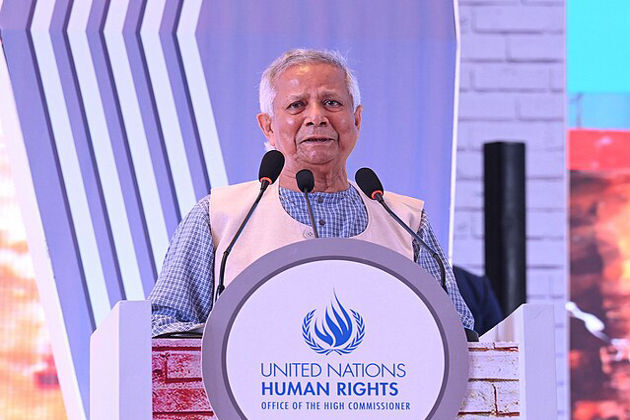
"Just 40 years ago, China faced food insecurity and malnutrition," said Chikelu Mba, an official of the Food and Agriculture Organization of the United Nations. "Its success in lifting hundreds of millions of people out of poverty and hunger serves as a replicable model for South-South and triangular cooperation."
Get a daily dose of Milwaukee Sun news through our daily email, its complimentary and keeps you fully up to date with world and business news as well.
Publish news of your business, community or sports group, personnel appointments, major event and more by submitting a news release to Milwaukee Sun.
More InformationNEW YORK CITY, New York: An investigative journalist has sued Elon Musk's xAI, Anthropic, Google, OpenAI, Meta Platforms, and Perplexity...
NEW YORK CITY, New York: Legendary singer Barry Manilow said on December 22 that he will be undergoing surgery for lung cancer and...
In the backwash of the Sydney massacre, numerous questions arise, puzzling and otherwise. One, which readers may be able to solve for...
DHAKA, Bangladesh: The killing of a prominent Islamic youth leader has triggered attacks on newspaper offices in Bangladesh, and media...
LONDON, U.K.: After being dropped by publisher HarperCollins, well-known British children's author and comedian David Walliams has...
BEIJING/BRUSSELS: China escalated its trade dispute with the European Union by announcing steep provisional tariffs on EU dairy imports,...
(Photo credit: Denny Medley-Imagn Images) Bo Nix tossed a 1-yard scoring pass to RJ Harvey with 1:45 remaining and the Denver Broncos...
(Photo credit: Mark Hoffman/Milwaukee Journal Sentinel / USA TODAY NETWORK via Imagn Images) The Packers tied up a playoff spot on...
(Photo credit: Jeffrey Becker-Imagn Images) Jordan Addison broke free for a 65-yard rushing touchdown late in the fourth quarter,...
(Photo credit: Katie Stratman-Imagn Images) Baltimore Ravens quarterback Lamar Jackson is considered doubtful to play in Saturday's...
(Photo credit: Jeff Hanisch-Imagn Images) The Denver Broncos promoted veteran tight end Marcedes Lewis and guard Calvin Throckmorton...
(Photo credit: Jesse Johnson-Imagn Images) The Milwaukee Bucks got an early Christmas gift in the form of a rare road victory on...