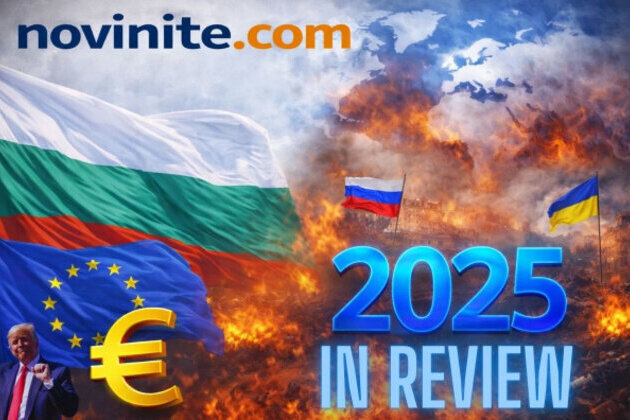
As Bulgaria prepares to welcome the euro on January 1, 2026, we look back at a year that saw our readers grapple with questions of identity, security, economic transformation, and Bulgaria's place in an increasingly volatile Europe. From breaking news that stopped the internet to profound reflections on history and democracy, 2025 was a year when the personal became political, and the global felt unmistakably local.Here are 's most-read articles from the past year:
When the Digital World Went Dark
Google Down in Eastern Europe
On September 4, millions across Eastern Europe experienced something increasingly rare in our hyperconnected age: digital silence. Google services, from search to Gmail, Maps to YouTube, went dark across Bulgaria, Turkey, Greece, and much of the Black Sea region. The outage, which lasted several hours, wasn't just an inconvenience; it exposed how dependent modern societies have become on digital infrastructure.
Initially, speculation ran wild. Was it a Russian cyberattack? The timing and geography seemed suspicious, hitting countries Moscow considers "unfriendly" for their support of Ukraine. Yet as technical analysis emerged, a more mundane reality took shape: infrastructure failure rather than foreign sabotage. Still, the incident sparked critical conversations about digital resilience and the vulnerability of systems we take for granted every day.
Read the full story:
Author: Ivan Kolev
The Euro Countdown: Hope, Fear, and Economic Reality
Bulgaria's Journey to the Eurozone
As the calendar turned toward 2026, one topic dominated Bulgarian discourse: the euro. With just days until adoption, readers sought clarity on what the currency change would mean for their daily lives. The question of how a 2,000 leva gross salary would convert to 1,022.59 euros captured the anxiety and anticipation of a nation on the cusp of its most significant economic transformation since the currency board was established in 1997.
The debate wasn't merely technical. It became a proxy for deeper questions about sovereignty, prosperity, and Bulgaria's European future. Would prices surge? Would workers lose purchasing power? Our comprehensive analysis of what would cost more, less, or stay the same revealed a complex picture: public transport fares falling due to rounding, taxi prices jumping nearly 20%, and technology costs facing global supply chain pressures that had nothing to do with currency change.
Read the full story:
Author: Ivan Kolev
Author: Nikola Danailov
Editor's Analysis:The campaign of disinformation surrounding euro adoption revealed how easily fear can be weaponized. Our fact-checking efforts exposed nine persistent myths: from claims that the ECB would seize Bulgaria's reserves to suggestions that the euro would trigger runaway inflation. The truth, as always, proved more nuanced than either the cheerleaders or the doomsayers suggested.
Tragedy and Safety Failures
The Nessebar Parasailing Accident
On August 18, the Black Sea resort of Nessebar became the site of a tragedy that shocked the nation. An 8-year-old boy from Razlog fell 40-50 meters from a parasailing attraction into the sea, dying despite desperate rescue efforts. The incident exposed not just mechanical failure but systemic inadequacies in emergency response: the first ambulance arrived without resuscitation equipment, and a second vehicle took nearly an hour to reach the scene from Burgas.
What followed was a familiar Bulgarian pattern: swift detention of those operating the attraction, promises of stricter oversight, and a brief surge of public anger that gradually dissipated. Yet the questions linger: How many other tourist attractions operate with inadequate safety measures? Why did it take a child's death to prompt discussions about equipment standards and emergency preparedness?
Read the full story:
Geopolitics at Bulgaria's Doorstep
Russia's Shadow Over the Black Sea
Bulgaria's Military Intelligence Service painted a sobering picture of regional security in its 2023 report, released in May 2025. Russia's aggressive stance in the Black Sea has intensified, with long-term "dangerous zones" restricting freedom of navigation and air traffic.
The report's warning proved prescient: regardless of how the war in Ukraine ends, Moscow's aggressive policies will persist. The prediction that Moldova, Georgia, and potentially Armenia face high risk of armed conflict in the medium term highlighted the precarious security environment Bulgaria navigates as it balances its NATO commitments with historical ties to the region.
Read the full story:
Trump's Diplomatic Theater
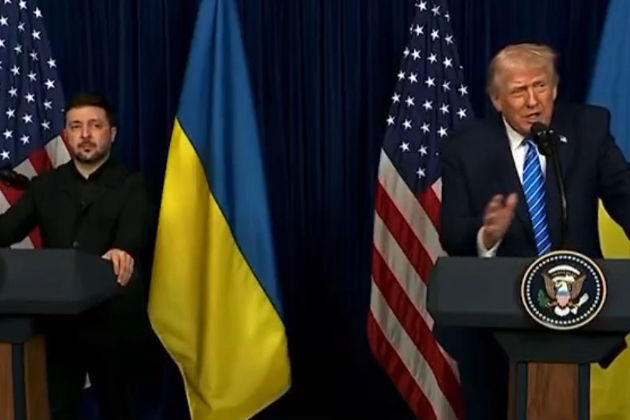
When Donald Trump returned to the White House in January 2025 with a bold promise to end the Ukraine war within 24 hours, the world watched skeptically. By the time his self-imposed deadline passed, the promise looked exactly like what many suspected: campaign rhetoric colliding with geopolitical reality. Trump's volatile meeting with Zelensky, where he reportedly adopted Putin's talking points verbatim and demanded Ukraine surrender the entire Donbas, revealed the challenges of dealmaking in a conflict where one side views compromise as existential capitulation.
For Bulgaria and Europe, the implications were profound. If American commitment to Ukraine proves shallow and transactional, fluctuating with Trump's moods and attention span, what does this mean for European security architecture? The question hung over every subsequent development in the war.
Read the full story:
Author: Nikola Danailov
Author: Nikola Danailov
A Generation Awakens: Bulgaria's December Protests
Gen-Z Takes to the Streets
On December 1, Bulgaria witnessed its largest popular mobilization since the 1990s. Between 50,000 and 100,000 people flooded Sofia's streets, with tens of thousands more in Plovdiv, Varna, Burgas, and dozens of other cities. Two massive banners dominated the scene: "GEN Z IS COMING" and "Young Bulgaria Without the Mafia."
What began as opposition to a controversial 2026 budget evolved into something far more profound: a generational awakening channeling decades of frustration with Bulgaria's political establishment. The budget's provisions struck many as profoundly unjust: significantly increasing salaries for state employees while simultaneously burdening the private sector with higher social security contributions and doubled dividend taxes.
Yet calling this merely a budget protest would miss the deeper currents. Generation Z, those born roughly between 1997 and 2012, showed up not just in numbers but with a sense of ownership over the protest's direction. They organized via TikTok and Instagram, coordinating in digital spaces that bypass traditional party structures. Their placards carried messages both defiant and poignant: "Gen Z is coming for U," "Give us a reason to stay," and most pointedly, "Delyan, Boyko, Generation Z is retiring you."
Read the full story:
Author: Nikola Danailov
Remembering Heroes and Confronting History
Vasil Levski: The Apostle of Freedom
On February 18, Bulgaria commemorated one of its greatest heroes: Vasil Levski, the revolutionary who shaped the nation's path to freedom. Our readers' deep engagement with his story revealed a hunger for understanding the ideals that founded modern Bulgaria. Levski's vision - of a Bulgarian republic based on equality and justice, free from Ottoman rule but also independent of foreign influence - resonates powerfully in contemporary debates about sovereignty and European integration.
His execution on February 6, 1873, at age 47, sent shockwaves through revolutionary circles. Yet his legacy endured: the belief that Bulgaria's liberation must come from within, that no foreign power, whether Russia or the West, could be trusted to prioritize Bulgarian interests above their own. In 2025, as Bulgaria navigated its role in NATO and prepared for the eurozone entry, Levski's principled independence offered both inspiration and cautionary wisdom.
Read the full story:
Ivan Vazov: The Patriarch of Bulgarian Literature
The enduring popularity of Ivan Vazov's story - the writer who dedicated his life to the national cause - demonstrates that even in 2025's hyperconnected, digital world, there remains profound appreciation for cultural heritage and literary achievement. Vazov's masterpiece "Under the Yoke," translated into over 50 languages and added to UNESCO's Memory of the World Register in 2021, continues to shape how Bulgarians understand their history and identity.
Read the full story:
Regional Tensions and International Complications
The Srebrenica Genocide and Balkan Denial
On the 30th anniversary of the Srebrenica genocide, readers engaged deeply with analysis of how denial continues to threaten Balkan stability. The piece, written by Assoc. Prof. Dr. Arben Fetoshi, argued that Serbia's systematic denial of genocide isn't merely moral deviation, it's a calculated strategy to distort truth and empower expansionist policy.
The article's central thesis, that admitting the truth would dismantle Serbia's myth of innocence and deceitful narrative of victimhood, struck a chord. Aleksandar Vu?i?'s 1995 statement, "For every Serb killed, we will kill one hundred Muslims" and his current refusal to support UN resolutions on Srebrenica demonstrate the ideological continuity embodied in the "Serb World" project.
Read the full story:
Author: Dr. Arben Fetoshi
Greece-Bulgaria Beach Dispute
Sometimes the most revealing stories are the smallest. When Alexandroupolis Municipal Council reopened discussions about Bulgarian tourists crowding local beaches, it exposed deeper questions about European freedom of movement, sustainable tourism, and economic fairness. The proposal to charge Bulgarian visitors ?5 for beach access, while legal under EU law, highlighted tensions between northern Greece's economic dependence on Bulgarian tourism and local concerns about infrastructure strain.
The dispute's complexity resonated with our readers: Bulgarian tour operators charging tourists up to 150 euros for packages that include access to beaches that are free or nominally priced in Greece. Who profits? Who loses? And how do communities balance economic opportunity with resource sustainability?
Read the full story:
Bulgaria's Defense and Security Posture
Reaching NATO's 2% Target
For the first time, Bulgaria allocated 2.208 billion euros (3.964 billion leva) for defense in 2024, representing 2.04% of GDP and finally meeting NATO's spending target set in 2014 following Russia's annexation of Crimea. The achievement came amid broader European recognition that security can no longer be taken for granted.
Yet the milestone prompted questions: What does this investment actually buy? How does Bulgaria's military preparedness compare to regional threats? And as defense spending becomes a larger portion of national budgets across Europe, what trade-offs will citizens accept between guns and butter?
Read the full story:
The EU's Drone Wall Initiative
Bulgaria's participation in the EU's "Drone Wall" defense initiative placed the country at the center of a continental defense network stretching from Finland to the Black Sea. The program responds to increasing Russian drone incursions into NATO and EU airspace: Poland recorded 2,732 interference incidents in January 2025, while Lithuania experienced 1,185.
For Bulgaria, the initiative represents both opportunity and challenge. The country must develop capabilities to defend against threats "from all directions" - not just the traditional eastern approach but also maritime routes through the Black Sea. Yet as experts candidly acknowledged, "we are still at the theoretical stage" and "we are not ready yet."
Read the full story:
Author: Nikola Danailov
Domestic Politics: Crisis and Corruption
Bulgaria's 2026 Budget Battle
Bulgaria's first budget denominated in euros became a lightning rod for deeper frustrations with governance. The framework authorizes new debt issuance of 10.8 billion euros and establishes a maximum external debt ceiling of 37.6 billion euros by 2026's conclusion - approximately 31% of GDP. While Finance Minister Temenuzhka Petkova emphasized Bulgaria maintains among Europe's lowest debt-to-GDP ratios, opposition forces characterized the budget as inscribing bankruptcy into fiscal policy.
The most stinging criticism came from former Finance Minister Asen Vassilev, who noted that aggregate corporate taxation throughout Bulgaria generates insufficient revenue to match planned expenditures for judicial, prosecution, and security apparatus. "You are putting us in a system with German taxes on Bulgarian income," he warned: a formulation that captured the fundamental grievance that Bulgarians face tax burdens approaching Western European magnitudes while earning substantially lower incomes.
Read the full story:
Author: Ivan Kolev
Peevski's Expanding Influence
The photograph says everything: Momchilgrad's mayor Ilknur Kyazim smiling alongside Delyan Peevski on June 3, publicly aligning with his "DPS?New Beginning" faction. Two days later, another photo, this time with Regional Development Minister Ivan Ivanov, announcing government funding for local infrastructure projects.
This sequence of smile, switch, spend became emblematic of how power operates in contemporary Bulgaria. One by one, mayors from across the country align themselves with Peevski. State institutions follow his lead without hesitation. His social media updates routinely become headlines, with national TV channels displaying his posts as captions. Meanwhile, the prosecution appears to steer clear of any scrutiny involving Peevski himself, though it remains visibly active in targeting his rivals: both political and economic.
Read the full story:
Author: Ivan Kolev
Economic Realities and Unexpected Progress
Bulgaria Tops the Balkans in Purchasing Power
In November, data revealed that Bulgaria had overtaken both Greece and Romania in purchasing power, establishing itself as the Balkan leader. With a purchasing power standard of 13,079 euros, Bulgaria now slightly edges Romania's 13,023 euros and significantly surpasses Greece's 12,436 euros - remarkable progress for a country that joined the EU in 2007 alongside Romania.
The achievement demonstrated tangible improvement in citizens' economic standing. Yet it also prompted reflection: If Bulgaria has made such progress, why do so many young people still leave? Why does the country feel so much poorer than the statistics suggest? The answer lies partly in distribution: purchasing power averages can mask significant internal inequalities and regional disparities.
Read the full story:
Workers Could Lose Half Their Income to the State
The planned fiscal changes for 2026 painted a sobering picture: the combined tax and insurance load on labor could reach 46% by 2027, up from roughly 42% in 2025. The Institute for Market Economics warned that if policymakers attempt to solve pension system deficits solely by raising contributions, the total insurance burden would need to increase to 45.5%. Once the 10% income tax is added, more than half of workers' earnings would effectively be directed to the state.
Economists cautioned that this would fuel the informal economy and create risks of layoffs. Bulgaria has previously experienced periods of similarly heavy fiscal pressure, followed by stagnation, widening budget deficits, and high unemployment. The analysis struck a nerve with readers facing the prospect of working harder to take home less.
Read the full story:
International Perspective and Opinion
Operation Rising Lion: Why and How Israel Attacked Iran
In June, Israel launched what it called "Operation Rising Lion" against Iran, marking a dramatic escalation in Middle Eastern tensions. The strikes, which targeted Iran's nuclear facilities and military infrastructure, represented a calculated gamble by Israeli leadership that fundamentally altered the regional security landscape.
The fall of Syria's Assad regime in December 2024 created an unprecedented opportunity - with Syrian air defense infrastructure collapsed, Israeli jets and missiles suddenly had a clearer path to Iranian targets. The timing was particularly significant as CENTCOM commander Michael Kurilla had warned on June 10 that Iran was "weeks away" from nuclear weapons capability.
Read the full story:
Author: Nikola Danailov
The Von der Leyen GPS Incident
On August 31, European Commission President Ursula von der Leyen's aircraft experienced GPS navigation issues while approaching Plovdiv Airport. Initial media reports suggested deliberate Russian attack targeting the EU leader specifically. However, comprehensive technical analysis revealed that while GPS interference occurred, it was most likely not a targeted attack but rather part of widespread regional jamming affecting Eastern European airspace.
FlightRadar24's analysis provided crucial evidence against the targeted attack narrative. The aircraft's transponder maintained accurate position reporting throughout the flight, with good GPS signal quality. The incident highlighted both the vulnerability of civilian navigation systems to military electronic warfare and the dangers of rushing to dramatic conclusions without thorough technical analysis.
Read the full story:
Author: Nikola Danailov
Germany's Minimum Wage and Bulgarian Workers
Impact on Bulgarian Students and Workers Abroad
From January 1, 2025, Germany raised its minimum wage to ?12.82 per hour and mini-job salary threshold to ?556 per month. For the thousands of Bulgarian students studying in Germany, 5,752 were enrolled in the winter semester of 2020/21, ranking among the top 20 countries; these changes represented real financial impact.
The increase demonstrated how economic decisions in Germany ripple through Bulgarian communities abroad. With one of the highest minimum salaries in Europe and ranking among the world's top five strongest economies, Germany continues to attract Bulgarian workers and students seeking better opportunities. The story resonated with readers who have family abroad or consider emigration themselves.
Read the full story:
Looking Beyond: European Perspectives
Keep Calm and Keep Cash
When the European Central Bank urged Europeans to prepare for crises by keeping 72-hour survival kits, including cash reserves of 70-100 euros per person, the recommendation sparked heated debate. Was this prudent crisis preparedness or fear-mongering?
The ECB study emphasized lessons from four major disruptive events in Europe, including the COVID-19 pandemic and Russia's 2022 invasion of Ukraine. The research underscored that banknotes hold both practical and psychological value: during acute crises, society views them as reliable stores of value when digital payment systems fail.
Read the full story:
Author: Ivan Kolev
Bulgaria's Government Proposes Indefinite Classification of State Secrets
Acting Prime Minister Dimitar Glavchev's government proposed changes to the Law on Protection of Classified Information that would allow certain information to remain classified indefinitely. The amendments would eliminate time limits ranging from six months to 30 years, enabling the government to justify indefinite classification by claiming the reasons for protecting information still apply.
Critics suggested that perpetual classification could be misused to withhold information from the public under the guise of national security. The proposal raised fundamental questions about transparency and accountability in Bulgarian governance. These are questions that resonated deeply with readers tired of opacity in public administration.
Read the full story:
Editorial Voices
A Commitment
Since February 24, 2022, Novinite has delivered continuous, independent coverage of Russia's invasion of Ukraine - the only Bulgarian media outlet to offer daily updates and comprehensive insights into the conflict. For more than 1,096 days, we maintained this commitment, providing summaries that are consistently highly ranked on Google search results.
The war itself has caused immense devastation. Thousands of lives lost, cities reduced to rubble, millions displaced. Yet Ukraine has shown remarkable resilience, fiercely defending its sovereignty. Our coverage reflects not only the military and geopolitical situation but also how the conflict affects Bulgaria and its people, offering insight into Bulgarian attitudes toward the war.
Read the full story:
Did Europe Forget?
While Metallica performed for over a million people in Moscow in 1991, Vukovar was becoming the scene of the first major conventional military battle on European territory since World War II. The siege demonstrated the inability of Western European countries in a new Europe without an iron curtain to stop what was happening under their noses.
The complexity of the Yugoslav wars, where there were no simple good and bad sides, no just two warring parties, and all armed groups were guilty of separate crimes of varying severity, remains misunderstood. The reflection on Vukovar served as reminder of how quickly Europe can descend into violence when institutions fail and nationalism rises.
Read the full story:
Author: Ivan Iliev
September 9, 1944
The 1944 coup d'tat, often described as the greatest national catastrophe of the 20th century, marked the violent seizure of power by the Fatherland Front with decisive support from the Soviet Union. What followed was not peaceful transfer of power but a campaign of terror that scarred the country for generations.
The so-called People's Court sentenced more than 9,000 people, with over 2,700 executions carried out, including regents, ministers, and senior military officers. Bulgaria's political, cultural, and intellectual elite was decimated, depriving the nation of generations of leadership. The reflection on this date continues to spark debates, memorials, and protests as society struggles with how to remember and interpret this pivotal event.
Read the full story:
Author: Ivan Kolev
Eighty-One Years On
Eighty-one years ago, the Warsaw Uprising erupted under German occupation at a moment shaped by idealism and strategic miscalculation, ultimately leading to the near-total destruction of the Polish capital and explaining its strikingly modern appearance today.
The resistance placed hope in a Soviet advance that had already stalled after Operation Bagration, while the Red Army had little incentive to engage in costly urban combat. At the same time, Nazi Germany, radicalized after the failed July 20 plot against Hitler, unleashed forces experienced in repression and terror, devoting vast resources to annihilating the city. The uprising ended in tragedy, but it remains a central symbol of Poland's determination to resist foreign domination, regardless of the cost.
Read the full story:
Author: Ivan Iliev
Behind the Photo
The Washington meeting offered more spectacle than substance, revealing the limits of European influence in global affairs. While leaders like Zelensky and Stubb were central, others, Rutte, Ursula von der Leyen, Meloni, Merz, Macron, and Starmer, were positioned and postured in ways that reflected uncertainty, disengagement, or hierarchy rather than active participation. Translators, lower-level officials, and standing figures underscored protocol and subtle forms of deference, highlighting Europe's dependence on the US.
The session functioned as a lecture from the American president, outlining future plans that Europe lacked the authority to shape independently. Trump's presence, meanwhile, exposed the contrast between his global power projection and Europe's constrained position, with the Alaska meeting further emphasizing the practical weight of US-NATO diplomacy. The gathering illustrated Europe's struggles to assert autonomy, the symbolic importance of seating and posture, and the limitations of leaders who operate largely as executors within a system they cannot control.
Read the full story:
Author: Ivan Iliev
When Politics Means Violence
In a certain country, political life is inseparably linked to violence, where assassinations and shootings are commonplace, showing that outside solutions rarely fit a society shaped by its own brutal and volatile realities.
Read the full story:
Author: Ivan Iliev
Conclusion: A Year of Transformation and Tension
2025 tested Bulgaria in ways both familiar and unprecedented. The euro's arrival symbolized economic integration and maturation, yet sparked anxiety about sovereignty and purchasing power. Generation Z's emergence as a political force demonstrated that younger Bulgarians refuse to accept politics as usual, yet the entrenched power structures they challenge show little sign of yielding.
Internationally, Bulgaria navigated an increasingly dangerous neighborhood. Russia's aggression in the Black Sea, the ongoing war in Ukraine, Middle Eastern conflicts, and Trump's return to unpredictable American leadership all reminded Bulgarians that geography remains destiny. As a small country on Europe's periphery, Bulgaria must balance its NATO and EU commitments with pragmatic recognition of regional realities.
What emerges from the stories that resonated most with our readers is a portrait of a nation in transition - economically advancing yet politically frustrated, historically proud yet uncertain about the future, European in aspiration yet Balkan in temperament. The questions raised in 2025 won't be resolved in 2026, but perhaps that's the point. Democracy isn't a destination but a continuous negotiation between competing visions of the national interest.
As we enter 2026 with a new currency in our pockets, we do so with clearer understanding of the challenges ahead. The stories we covered, the debates we facilitated, and the information we provided helped our readers navigate a complex year. That remains our mission as Bulgaria's largest English-language news website: to inform, to analyze, and to create space for the difficult conversations that democracy requires.
Thank you for reading, for engaging, and for holding us accountable. Here's to 2026 - may it bring clarity to confusion, progress from stagnation, and hope from frustration.
- the team at Novinite.com



 Share
Share
 Tweet
Tweet
 Share
Share
 Flip
Flip
 Email
Email