Xinhua
01 Jan 2026, 21:45 GMT+10
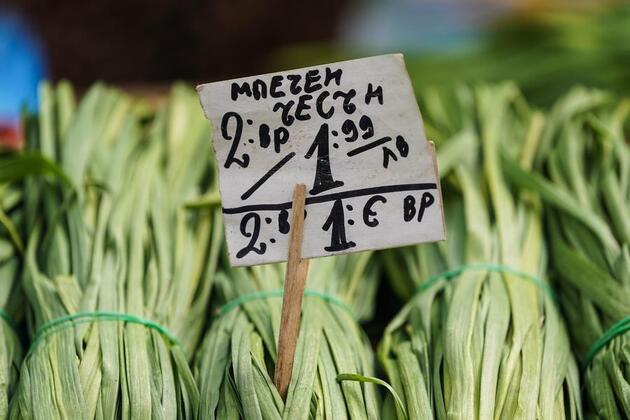
In major supermarket chains, customers were constantly reminded of the coming change. Juliana Golcheva, a restaurant owner in the southwestern town of Sandanski, told local media: "We will definitely need some time to adapt."
SOFIA, Jan. 1 (Xinhua) -- In a dimly lit supermarket, an elderly man stood at the checkout counter, his gnarled hands rummaging through his wallet for familiar lev coins. When the cashier handed him shiny new euro coins in return, he examined them carefully, a mix of curiosity and apprehension etched across his face. At midnight on Jan. 1, 2026, Bulgaria officially stepped into the eurozone.
From Aug. 8, 2025, merchants were required by law to display prices in both lev and euro, with fines imposed for non-compliance. In major supermarket chains such as Kaufland and Lidl, customers were constantly reminded of the coming change.
A recorded announcement echoed through the aisles: "Starting Jan. 1, 2026, the euro will be in use. We are now having a dual-currency price display according to law." Large signs at store entrances reinforced the message. Across the capital, subway stations were blanketed with euro-themed promotional posters, covering seats and escalators alike.
Recently, long lines formed daily at currency exchange points, including cash centers of the Bulgarian National Bank. Coin exchange machines installed in supermarkets frequently broke down under the strain of heavy use.
In the weeks before the transition, many foreigners, and Bulgarians as well, avoided cash payments altogether, especially transactions requiring change.
This posed a challenge for small street-side shops that operated on a cash-only basis. Operators of coffee and food vending machines faced particular difficulties. According to the Bulgarian Vending Association, the country has more than 30,000 food and beverage vending machines, only a small fraction of which accept card payments. Due to legal restrictions, machines could only be reprogrammed after the euro officially entered circulation.
In the first days of the new year, many of these machines were expected to stop functioning, a significant inconvenience in small towns where residents relied on them daily.
The Christmas and New Year period was among the most chaotic. Consumers carried both lev and euro in their wallets. Banks had warned that the financial system would undergo a transition from Dec. 31, 2025, to Jan. 2, 2026, involving an expected four-hour interruption. During that time, POS terminals would stop working, online banking services would be suspended, and ATMs would be out of service.
Juliana Golcheva, a restaurant owner in the southwestern town of Sandanski, told local media: "We will definitely need some time to adapt. I don't think it's wise for this change to take effect immediately after midnight. It's New Year's Eve, it will cause confusion and inconvenience."
Restaurant owners who stayed open that night encouraged customers to pay by card. After midnight, however, businesses were required to give change in euros even if customers paid in levs.
"At first, giving change will be complicated, let's not kid ourselves," said Atanas, a supermarket cashier. "I'm not worried about the operation itself, but about whether customers will understand the payment method, especially the elderly."
For months, the euro dominated Bulgaria's news cycle. Prime-time TV programs and online outlets debated whether prices would rise, often citing experiences from other eurozone countries. Economists repeatedly stressed that for integration into the EU's single market, adopting a common currency was the only practical choice.
If examples like Portugal and Austria were meant to reassure, Croatia, joining the eurozone in 2023, sparked unease. Ana Knezevic, president of the Croatian Consumer Protection Association, told Bulgarian media: "Prices have already spiraled out of control and are still rising. People are complaining about the euro, they simply can't keep up."
Official surveys suggested that Bulgaria was ready, with just over 51 percent of the population supporting euro adoption. Yet that narrow margin underscored a deep societal divide. A Gallup International Balkan survey showed that nearly 60 percent of Bulgarians feared the euro would drive up living costs.
Supporters of the euro were largely concentrated in Sofia and other large cities, especially young, well-educated professionals working in modern industries and many with experience studying or working abroad.
"I'm very happy we're moving toward the eurozone," said Sofia-based architect Yordanka Kamburova. "It's a logical path our country has followed for a long time. I feel calm and proud that we're becoming a full member of this financial world."
Large companies integrated into European supply chains predicted immediate benefits, while micro-enterprises were more cautious. Nina, who owns a small bakery in Sofia, said "When I see prices already rising, it's hard to believe they'll go down after the euro is introduced." "It's like one family against the backdrop of another, the EU's economy versus ours. I'm not sure we're truly one family."
The most anxious group remained residents of small towns and villages, often elderly. Many had stored lev coins under mattresses or floorboards, requiring patient explanations from bank staff.
"It's sad to part with the Bulgarian lev," said 80-year-old retired engineer Ivan Tsenkov. "It's connected to our dignity. Joining a fading EU feels like a mistake."
George Nikolov, a Sofia-based print shop owner and coin collector, chronicled Bulgarian currency from Ottoman times to the present. "The lev is a very beautiful currency," he said nostalgically.
Starter kits of euro coins, featuring Bulgarian Cyrillic lettering and national motifs, sold out on the first day. Though different from coins in circulation, they proved so popular that bank counters worked overtime through Christmas Eve.
"The euro is a financial instrument," said Katarina Nikolic, a business partner in a Sofia gelateria. "It won't change our cultural identity. Bulgarians will keep their culture. I believe in Europe, and today, a united continent matters more than ever."
Get a daily dose of Milwaukee Sun news through our daily email, its complimentary and keeps you fully up to date with world and business news as well.
Publish news of your business, community or sports group, personnel appointments, major event and more by submitting a news release to Milwaukee Sun.
More InformationDHAKA, Bangladesh: Bangladesh's first female prime minister, Khaleda Zia, passed away after a prolonged illness. She was 80. Zia...
TEHRAN, Iran: Huge numbers of Iranians took to the streets on December 29, in the largest protest seen in the country, following the...
BEIJING, China: Delivering a stern warning against any attempts toward Taiwanese independence, China's military stationed army, naval,...
WASHINGTON, D.C.: With the Trump administration focusing on fraud investigations against Minnesota's Somali immigrants, the FBI Director...
PALM BEACH, Florida: While acknowledging that the disputed Donbas region remains a key unresolved issue, U.S. President Donald Trump...
PALM BEACH, Florida: After weeks of legal challenges and political pushback, the White House is preparing to formally outline its plans...
WASHINGTON, D.C.: With the Trump administration focusing on fraud investigations against Minnesota's Somali immigrants, the FBI Director...
There's an invisible emergency in America: children toil in slaughterhouses, factories, and fields—night and day, unseen, unprotected,...
(Photo credit: Raymond Carlin III-Imagn Images) Few franchises, win or lose, have a knack for staying in the headlines like the Dallas...
(Photo credit: Dan Powers/USA TODAY NETWORK-Wisconsin / USA TODAY NETWORK via Imagn Images) A pair of division rivals have differing...
(Photo credit: Jim Dedmon-Imagn Images) Stephen Curry celebrated a homecoming with a team-high 26 points, nine teammates added to...
(Photo credit: Brad Rempel-Imagn Images) The Green Bay Packers are signing quarterback Desmond Ridder to their practice squad, NFL...