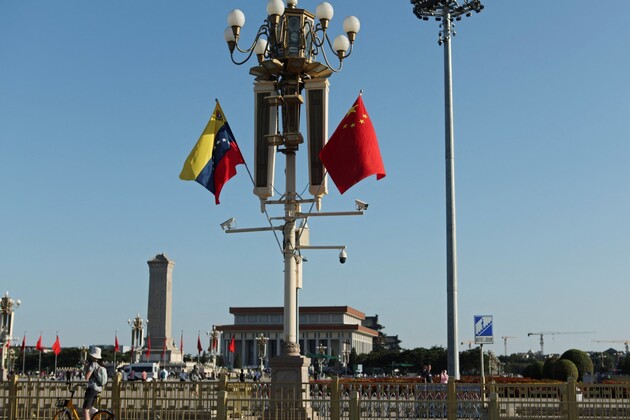
Hong Kong, January 13 (ANI): China was taken by surprise when US forces swooped in to seize Venezuelan President Nicholas Maduro on 3 January 2026. An official Chinese delegation had even been meeting with Maduro in his palace just hours before his capture. The loss of Maduro's friendship is a blow to Beijing, as Venezuela is the only Latin American country possessing a high-level strategic partnership with China.
However, China's overall reaction has been muted. China's Foreign Ministry issued an immediate rebuke, with spokesman Lin Jian saying, 'Cooperation between China and Venezuela is between two sovereign states and under the protection of international law and the laws of the two countries.' Lin added, 'China's lawful interests in Venezuela will be protected in accordance with the law.'
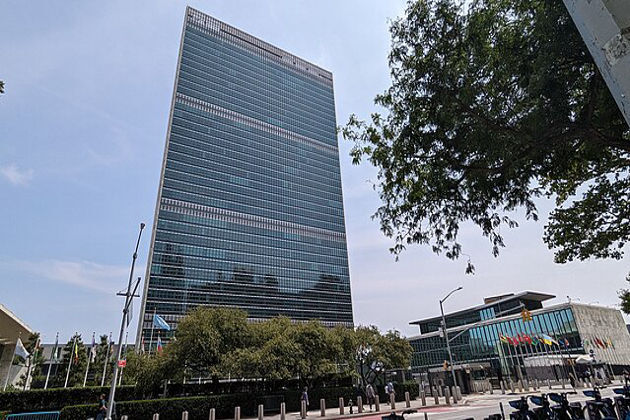
China pledged its commitment to the United Nations (UN) Charter and to international justice, Xinhua reported, decreeing that China will 'defend the bottom line of international morality, and safeguard international fairness and justice'.
Adam Ni, Co-Editor of the China Neican newsletter, observed, 'Beyond the immediate condemnation, Beijing's response is revealing in how it handles such situations more broadly. Venezuela illustrates how China reacts when US force is applied against a partner in which it has tangible but limited economic interests. In such cases, Beijing relies on diplomatic and normative opposition, while deliberately limiting material involvement, prioritizing risk containment over confrontation.'
China mouthed slogans such as non-interference and its opposition to hegemonic behavior, but there was no security or military reaction, no immediate punitive actions against the USA, or any Chinese attempt to alter the status quo on the ground in Venezuela. Ni concluded, 'Beijing's response has therefore been emphatic in rhetoric, but tightly circumscribed in material terms.'
Basically, Venezuela is not strategically vital to Beijing. The South American republic has been in a state of decay for years, and China has been forced to repeatedly renegotiate debt repayment terms and oil-for-loan arrangements. Ni concluded, 'For Beijing, the priority today is less the preservation of a particular leader or government than the management of downside risk: maintaining access where possible, limiting further losses, and resisting the normalization of externally imposed regime change as a tool of great-power competition.'
Indeed, direct confrontation with the USA in the Western Hemisphere is not in China's interests. There would be high costs and limited strategic rewards to such a stand. Ni added: 'China lacks the capacity to alter outcomes on the ground and has little incentive to test US red lines in a region Washington continues to treat as a core sphere of influence. Beijing has therefore channeled its response through diplomatic protest and institutional forums, including deliberation at the UN Security Council, rather than material countermeasures.'
However, President Donald Trump's shock military action in Venezuela does give China a signaling opportunity to remind international audiences of how erratic American behavior has become. Ni shared, 'By stressing sovereignty and international law, Beijing advances a narrative in which the United States appears
coercive and destabilizing, while China presents itself as restrained and order- oriented. In this sense, Venezuela serves as a vehicle through which Beijing restates its opposition to unilateral force and externally imposed political outcomes.'
Of course, China's own commitment to the UN and international jurisprudence totally depends on whether it helps or hinders China's own strategic purposes. Beijing warns that unilaterally seizing foreign leaders risks hollowing out sovereign protections in the international order, and it is repeating concerns that the USA is normalizing the use of 'might is right'. Ironically, this is precisely what China does with weaker neighbors like the Philippines and Taiwan, plus it viciously criticized the Permanent Court of Arbitration's 2016 verdict over its behavior in the South China Sea.
China is the largest consumer of Venezuelan oil, with the South American nation sitting atop the world's largest oil reserves. Conversely, just 4% of Chinese oil comes from Venezuela, showing how Caracas is more reliant on China than vice versa.
However, the volatile situation in Iran will also have China worried, since it imports vast amounts of oil from there too. Cutbacks in Venezuelan and Iranian oil might be a future possibility.
Chinese firms have invested in telecommunications, railways and ports too. Caracas also owes China at least USD 10 billion, with some estimating the debt is far greater than this. China is facing the prospect of agreements made by Maduro not being honored now, a painful reality that China suffered when Muammar Gaddafi was ousted in Libya, for example. Although this amount of money is not insignificant, it constitutes only a small proportion of China's global external debt.
Ni pointed out there will be economic uncertainties for Beijing. 'China has concrete interests at stake in Venezuela, most notably through energy ties, outstanding loans and infrastructure projects. These arrangements, including oil-for-loans mechanisms, have long been politically fraught and financially risky. Renewed instability directly threatens Chinese assets, repayment prospects and the viability of remaining projects.'
Trump has embellished his reputation as an unpredictable strongman. But does that mean the USA will normalize extrajudicial kidnappings of foreign leaders? And what does this mean for Chinese designs on Taiwan, for example? Some have speculated whether American actions now give China permission to act similarly without any UN mandate. Could it capture the Taiwanese president or singlehandedly invade Taiwan, following the precedent set by Trump?
Bonnie Glaser, Managing Director, Indo-Pacific at German Marshall Fund of the United States, addressed the question whether US action will embolden China. She noted: 'Washington's military strikes against Venezuela and the capture of its leader, Nicolas Maduro, provide China with an opportunity to portray the US as a global hegemon that bullies smaller countries. This advances Beijing's goal of undermining US legitimacy on the global stage. But China is unlikely to fundamentally alter its strategy toward Taiwan as a result of the American action. Beijing will not see the US disregard for international law as a useful justification for Chinese use of force against Taiwan.'
Glaser assessed: 'China has always viewed Taiwan as an internal affair, and will not draw many parallels with the relationship between Washington and Caracas.'
However, others believe Trump's administration is gradually eroding the international order. Samuel White, Senior Research Fellow in Peace and Security at the National University of Singapore's Centre for International Law, posited: 'The most obvious risk lies in the Indo-Pacific: the same logic could be invoked to justify China detaining a Taiwanese president under the guise of Chinese national security or domestic law enforcement.'
White continued, 'Precedent in this context is rarely created through express endorsement. It emerges through repetition, tolerance and analogy. When a cross-border seizure is framed as justified or legally bounded - and is absorbed without sustained diplomatic or institutional pushback - it becomes a reference point for future conduct.'
This is precisely the strategy China is already using in the South China Sea and against Taiwan. White acknowledged, 'Taiwan occupies a uniquely ambiguous position in international law and politics, existing in a space where sovereignty claims, jurisdictional assertions and security narratives routinely overlap. Actions that blur the line between law enforcement and coercion are especially potent in such an environment.'
This is why China uses 'gray zone' tactics against Taiwan and others. To give an example, Taiwan's National Security Bureau said China conducted more than 4.17 million cyberattack incidents and sent 19,000+ social media comments promoting anti-US, anti-Lai and anti-military sentiments during the two-day Exercise Justice Mission at the end of 2025.
China is watching carefully because, some think if the world tolerates American actions in Venezuela, then Beijing may expect to get away with what it claims is crossing a mere 'provincial' border between China and Taiwan. White explained, 'Of course, big states, including China, will always aim to do what they can get away with. The point is that, if detention operations of heads of state or senior leaders become normalized, China would face lower diplomatic costs in taking such action.'
As White noted, 'If a head-of-state seizure can be plausibly defended as an exercise of domestic law enforcement, under the constitutional authority of executive authority, rather than an act of aggression, then the stabilising function of existing legal categories is weakened. The distinction between political coercion and law enforcement becomes harder to sustain, particularly where status, recognition or jurisdiction are contested.'
There are accusations that China, Russia and Iran were manipulating Maduro to destabilize the USA, such as sending drugs into the country. In other words, they were conducting 'gray zone' tactics in the USA's own backyard. Unsurprisingly, the UN
Security Council was never going to support a US request to topple Maduro under the UN Charter, because China and Russia would veto such a move.
Glaser is certain that the action against Maduro will not form a blueprint for the People's Liberation Army (PLA) against Taiwan's leadership, however. 'Capturing Taiwan President Lai Ching-te would not likely help Beijing achieve reunification.
Chinese President Xi Jinping's approach toward Taiwan is based on his own logic and strategy. He's unlikely to be influenced by developments such as the recent US action or Russia's invasion of Ukraine.'
Yet another question is whether the PLA possesses the military nouse to perform such a surgical operation against Taiwan in any case. Glaser explained: 'As the recently released Department of Defense report on China's military power noted, corruption and purges within the PLA are hindering, at least temporarily, China's military capabilities, including the PLA's ability to seize and control Taiwan at an acceptable cost. Beijing is instead relying on a vast toolkit of gray-zone tactics to instil despair among Taiwan's citizens so that they eventually capitulate. The Chinese believe that time is on their side to achieve reunification without sacrificing blood and treasure.'
Glaser further assessed: 'China will do its utmost to protect its economic and commercial interests in Venezuela, but it'll seek to stay out of US President Donald Trump's crosshairs in a region that is geographically distant and not among Beijing's core interests. This is especially so in the run-up to the planned US-China summit in April in Beijing. That is where China will push for US concessions on its own priority list, which likely includes Taiwan.'
Some other commentators argue that Trump's actions in Venezuela have shattered Chinese ambitions in Latin America or farther afield. Yet such a sentiment is also unwarranted.
Ryan Hass, Director of the Brookings Institution's John L Thornton China Center, weighed in, saying, 'Many US analysts want to view Venezuela as a blow to China's global ambitions. Maduro's ouster embarrassed and exposed limits to the value of the Venezuela-PRC 'all-weather partnership'. Arguably, though, events in Venezuela haven't derailed or diverted the PRC from its path.'
Hass said, 'Beijing is displeased and will seek to dial up reputational costs for the US, but it's far from being hamstrung by events. While the US has been focused on Latin America, China has been pushing to make gains elsewhere. It recently hosted French, Irish and South Korean leaders. Beijing in the coming period likely will host Canadian, British and Russian leaders. The PRC is also working to ease tensions with India.'
Instead, Hass pointed out, 'Beijing's diplomatic priorities appear to be stabilizing its periphery, keeping markets open for PRC exports, making progress toward self-reliance, deterring further involvement by Japan or others in cross-strait relations, and laying the groundwork for Trump's planned visit.'
This episode of American intervention reminds us that international law is only relevant insofar that it can be enforced. Countries will continue doing whatever they wish, just as China does in the South China Sea.
China does feel some humiliation, and it will want redress. Hass concluded: 'In short, Beijing seems to have been caught off guard and frustrated by events in Venezuela. At a geopolitical level, though, Beijing is playing a different game, and Venezuela is not a huge piece of it. PRC leaders aren't burning the midnight oil over Venezuela.' (ANI)



 Share
Share
 Tweet
Tweet
 Share
Share
 Flip
Flip
 Email
Email