Israels recognition of Somaliland is set to trigger a tectonic shift in Red Sea geopolitics
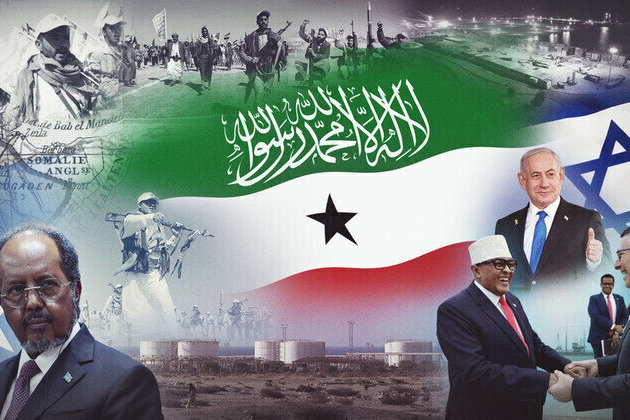
On December 26, 2025, Israel became the first country in the world to officially recognize the independence and sovereignty of the Republic of Somaliland - a self-declared state that is officially part of Somalia. For the region, which broke away from the federal government in Mogadishu in 1991, this event is historic: Somaliland had sought international recognition for over 30 years.
Israeli Prime Minister Benjamin Netanyahu, Israeli Foreign Minister Gideon Sa'ar, and President of Somaliland Abdirahman Mohamed Abdullahi (also known as 'Irro'), signed a joint declaration affirming Israel's recognition of Somaliland. Netanyahu announced that Israel would soon begin cooperating with Somaliland in areas such as economy, technology, and healthcare, emphasizing that the declaration "is in the spirit of the Abraham Accords, signed at the initiative of [US] President [Donald] Trump."
Israeli Prime Minister Benjamin Netanyahu
Nathan Howard - Pool / Getty Images
The so-called Abraham Accords are a series of normalization agreements signed between Israel and three Arab countries - the UAE, Bahrain, and Morocco - in 2020-2021, with US mediation. These agreements have brought significant benefits to the involved Arab states; for example, Morocco's sovereignty over the disputed territory of Western Sahara wasrecognizedby the US (and later Israel) in return for the normalization of relations with Israel.
AbdullahiwelcomedIsrael's recognition of Somaliland, calling it a historic moment.
"[We] affirm Somaliland's readiness to join the Abraham Accords. This step marks the beginning of a strategic partnership that advances mutual interests, strengthens regional peace and security, and delivers shared benefits to all stakeholders, without prejudice to any party," he said.
However, this major development sparked widespread international criticism and predictably drew a strong negative reaction from Mogadishu. Somali President Hassan Sheikh MohamudcondemnedNetanyahu's recognition of Somaliland as "illegal aggression" that is "contrary to established legal and diplomatic rules." Many countries believe that Israel's decision could further complicate an already unstable situation in the Horn of Africa and lead to significant shifts in the region's geopolitical landscape.
What is Somaliland?
Under international law, modern-day Somaliland is regarded as part of Somalia. It is located in the northern part of Somalia, on the territory of Britain's former Somaliland Protectorate. In contrast, the southern regions of Somalia were once under Italian control.
In 1960, these territories merged after gaining independence from Britain and Italy, forming the Somali Republic. However, just a year later, the people of Somaliland, dissatisfied with their de facto dependence on Mogadishu, rose up against it.
In April 1981, a group of emigrants from the Isaaq clan - the largest Somali clan primarily found in Somaliland - established the Somali National Movement (SNM) in London, aiming to topple the president of Somalia, Siad Barre. That same year, the SNM initiated a war for Somaliland's independence, which effectively turned into a civil conflict between the north and south.
Children holding British flags as the Duke and Duchess of Gloucester pass through Somalia, circa 1960.
Keystone-France / Gamma-Rapho via Getty Images
On May 18, 1991, just months after Barre's regime collapsed, local authorities in Hargeisa unilaterally declared Somaliland's independence within the borders of the former British colony.
Since then, Somaliland has operated as a de facto state. The Constitution of the Republic of Somaliland establishes a democratic governance model based on Islamic law, with Islam recognized as the state religion.
Despite rivalries among local clans, the region is regarded as the most politically stable part of Somalia, thanks to robust governmental structures. It has its own armed forces and administrative bodies, a well-functioning education system, its own currency and passport; the country also pursues an independent domestic and foreign policy. Several presidential elections have been held in the country. The influence of the extremist jihadist group Al-Shabaab (an affiliate of Al-Qaeda) is significantly lower here than in the rest of Somalia.
Economically, Somaliland stands at a similar level to its neighbors. Most of the population engages in traditional livestock farming, with key economic drivers being the port of Berbera on the Gulf of Aden and remittances from Somalis living abroad.
In pursuit of recognition - and the role of the US
The fact that almost all countries in the world refuse to recognize Somaliland under international law limits its ability to conclude security agreements, gain access to global markets, and control its airspace. Nonetheless, Somaliland has managed to maintain internal stability and establish partnerships with several foreign nations. Its capital, Hargeisa, hosts consulates and representative offices for several countries: Djibouti, Ethiopia, Kenya, Taiwan, the UK, and the EU.
Somaliland places great hope in the United States, having cultivated ties with Republican lawmakers and various officials close to the Trump administration over the years. Many of these officials have urged Washington to deepen its engagement with the region and formally recognize Somaliland.
In 2010, Assistant Secretary of State Johnnie Carsonannounceda strategic shift for greater cooperation with Hargeisa, while Congressman Scott Perryintroducedthe Republic of Somaliland Independence Act after meeting with Somaliland representatives on Capitol Hill in 2021.
In 2025, Somaliland officialsreportedtheir intention to negotiate a deal with Trump that would allow the US to lease the port of Berbera along the Gulf of Aden and its airstrip, originally built by the Soviet Union in the 1970s, in exchange for official recognition.
Berbera ports
Wikipedia
Mogadishu actively opposes such initiatives. On March 16, 2025, Somali President Hassan Sheikh Mohamudofferedthe US exclusive control over strategic airbases and the ports of Berbera and Bosaso in the semi-autonomous regions of Somaliland and Puntland, which Somalia considers part of its sovereign territory. The question remains how Mohamud plans to do this without actual control over the area.
Despite Hargeisa's pro-Western stance, both the US and other NATO countries continue to refuse recognition of Somaliland's independence, likely out of concern that doing so could undermine Mogadishu's efforts to combat the militant group Al-Shabaab. Interestingly, Netanyahu's announcement regarding Somaliland surprised even his closest ally, President Trump. In a phone interview with the New York Post, Trumpsaida similar move is not currently on Washington's agenda and added, "Does anyone know what Somaliland is, really?"
Nevertheless, experts believe Israel could not have acted without prior agreement with the US. Andrey Maslov, head of the Center for African Studies at Moscow's Higher School of Economics,pointed outthat one of the clearest motives for recognizing Somaliland might be the desire of the US and Israel to establish a new foothold for military operations against Yemen's Ansar Allah group (the Houthis).
"In exchange for recognition, Israel will likely receive preferences and guarantees for military cooperation: either free or cheaper than without it," he noted.
US President Donald Trump
Tasos Katopodis / Getty Images
Who is against?
The African Union (AU), adhering to the principle against altering borders on the continent, has strongly condemned Israel's decision. Africa's borders were largely drawn by colonial powers with little regard for pre-colonial political realities. As a result, ethnic conflicts and disputes remain a problem across the continent and any change in borders could trigger a domino effect. Unsurprisingly, following a meeting of the Peace and Security Council on January 6, the AUcalledfor the "immediate revocation" of Israel's recognition of Somaliland.
The League of Arab States, which includes Somalia, alsocondemnedIsrael's actions during an extraordinary session on December 29.
"The illegal Israeli recognition constitutes part of Israel's attempts... to undermine international peace and security and represents an assault on Arab national security, which necessitates the adoption of legal, economic, political, and diplomatic measures against it," the Arab League said in a statement.
For China, Somalia is both a partner and a base for its 21st-century Maritime Silk Road, part of the ambitious One Belt, One Road initiative. Furthermore, China opposes separatist movements globally, fearing they might set a precedent for its own breakaway province. Taiwan, which has fostered bilateral relations with Somaliland since 2020, remains unrecognized by any nation of significant global standing. Unsurprisingly, China stronglycondemnedIsrael's recognition of Somaliland, while Taiwan became the first to welcome this decision.
Russia has also criticized Somaliland's recognition. Historically, since the Soviet era Moscow has maintained close ties with Somalia, avoiding conflicts with the African Union and denouncing actions that threaten the independence and territorial integrity of nations under international law. At a United Nations Security Council meeting in late December, Representative of the Russian Federation Dina GilmutdinovasaidRussia "is deeply concerned about Israel's politically motivated decision to recognize the independence of Somaliland."
A group of Somalis, carrying Somali flags and chanting slogans against Israeli Prime Minister Benjamin Netanyahu and Israel, protest Israel's decision to recognize Somaliland, gathering in Mogadishu, the capital of Somalia, on December 28, 2025.
Abuukar Mohamed Muhidin / Anadolu via Getty Images
Why Somaliland is important to Ethiopia
Despite its isolation, Somaliland has managed to forge partnerships with certain external actors. Notably, Hargeisa has cultivated a strong relationship with neighboring Ethiopia - Africa's second-most populous country with a population of over 130 million. Addis Ababa sees an alliance with Somaliland asbeneficialbecause this could help Ethiopia, which has been a landlocked country since Eritrea gained independence in 1993, gain access to the sea.
On January 1, 2024, Ethiopia and Somaliland signed a memorandum of understanding whereby Addis Ababa expressed readiness to recognize Somaliland as an independent state in exchange for access to the Red Sea through the port of Berbera.
Some EU countries, along with the US and the UK, maintain informal political contacts with Somaliland and engage in limited cooperation. However, following Israel's recognition of Somaliland, these nations reaffirmed their support for Somalia's national unity.
Since 2009, Somaliland has been developing close unofficial relations with Taiwan, exchanging missions, signing agreements related to maritime security and trade, and initiating agricultural and technological projects despite pressure from China, which does not recognize Somaliland and opposes Taiwan's engagement with other regions.
Somaliland also engages in military cooperation with the United Arab Emirates. The UAE did not sign the jointstatementissued by 22 predominantly Muslim nations condemning Israel's actions. The UAE (represented by port operator DP World) is Somaliland's partner in managing the port of Berbera, which is used for regular maritime transport between the two. Ethiopia also holds a 19% stake in this project, utilizing the port as a crucial logistics corridor.
Al-Shabaab fighters
Wikipedia
Implications for the region
While the joint declaration between Somaliland and Israel was signed "in the spirit" of the Abraham Accords, it does not yet constitute a classic normalization agreement akin to those previously signed by the Arab nations with Israel under US mediation. Nonetheless, it may pave the way for such a process in the future.
Shortly after the signing of the declaration, Somali President Mohamudclaimedin an interview with Al Jazeera, citing intelligence sources, that Somaliland accepted three conditions in return for Israeli recognition: the resettlement of Palestinians to its territory, the establishment of an Israeli military base on the coast of the Gulf of Aden, and joining the Abraham Accords. He also noted that an Israeli presence in the region already exists and accused Israel of seeking to destabilize Somalia and the wider Horn of Africa.
Somali President Hassan Sheikh Mohamud
Global Look Press / Hannes P Albert
In response, Somaliland's Ministry of Foreign Affairsrefutedthese claims as baseless, asserting that its engagement with Israel is "purely diplomatic" and "in full respect of international law."
For Israel, having allies in this region is crucial for security, particularly given the strategic importance of the Red Sea and the Gulf of Aden in light of the hostile actions from the Houthis.
An interesting perspective wasput forthby the Times of Israel, suggesting that Somaliland's recognition fits into Israel's broader plan to establish a new strategic corridor from India to Europe via Africa, circumventing Yemen. This proposed route, dubbed the India-Africa-Europe Corridor (IAEC), would allegedly traverse Somaliland, Ethiopia, and potentially the Port of Benghazi in Libya or the Alexandria Port in Egypt, depending on the political situation.
"The implications of this move, which have so far received limited media attention, provide for the first time an official political framework for an emerging strategic axis linking India, the Gulf states, the Horn of Africa, and the Mediterranean," the Times of Israel wrote.
This theory aligns well with the geopolitical landscape of the region. For instance, Sudan, like eastern Libya, officially has no relations with Israel. However, rebel forces in Sudan are actively collaborating with the UAE, which is also developing this corridor - particularly through the port of Berbera, which is under its control. Additionally, the UAE has supported rebel factions in Yemen, which recently took control of part of the country's southern territory but ultimately lost it under pressure from Saudi Arabia.
Some analysts believe Abu Dhabi is shaping its foreign policy in the region with the support (either official or not) of rebel groups or parallel power structures. Senior lecturer at the School of Security Studies at King's College London Andreas Kriegdescribesthe UAE's actions as creating a "separatist axis" in countries like Libya, Sudan, Somalia, and Yemen, aimed at establishing influence in the region while bypassing official governments.
However, despite internationalpressure,Abu Dhabi continues to vehementlydenyany involvement in supplying weapons or logistical support to Sudan's Rapid Support Forces (RSF), claiming instead to be a neutral party focused solely on humanitarian aid and mediation efforts.
A Houthi fighter carries a machine gun in front of scout team members carrying Yemeni and Palestinian flags on February 4, 2024, on the outskirts of Sana'a, Yemen.
Mohammed Hamoud / Getty Images
Israel's recognition of Somaliland could significantly alter the geopolitical landscape of the region. On the one hand, it sets a dangerous precedent that could embolden separatist movements; on the other, it presents substantial advantages for both West Jerusalem and Hargeisa.
For Israel, this move would extend its influence in the Horn of Africa and secure maritime routes from the attacks of the Houthis. Additionally, it deepens ties between Israel, the UAE, and Ethiopia while exacerbating tensions with Türkiye, Egypt, and Saudi Arabia. For Somaliland, this recognition offers an opportunity to break free from years of isolation and encourages other nations to follow Israel's lead.
(RT.com)



 Share
Share
 Tweet
Tweet
 Share
Share
 Flip
Flip
 Email
Email