This European country is betting its economy on a geopolitical turn
RT.com
08 Feb 2026, 21:38 GMT+10

With formal withdrawal from the CIS underway, the country faces mounting economic and political pressures amid unresolved questions about its place in Europe
As Moldova moves to formally withdraw from the Commonwealth of Independent States, the decision marks the quiet dismantling of an economic and political framework that has underpinned the country since independence, even as no binding European alternative has yet taken shape. Presented in Chisinau as part of an irreversible turn toward Europe, the move reflects a strategic wager whose implications extend beyond symbolism, with mounting economic and political consequences already shaping the country's trajectory.
Breaking the last tie
In January, Moldovan Deputy Prime Minister and Minister of Foreign Affairs Mihai Popoi announced Chisinau's intention to withdraw from the CIS Charter, the Agreement on the Establishment of the CIS, and its annex.
This move is largely symbolic, as Moldova has effectively refrained from participating in CIS activities since 2022. Moreover, it does not even have a permanent representative at the organization. However, this development marks a significant step toward severing ties between Chisinau and CIS nations, complicating any future attempts at reintegration should representatives of a different political faction come to power in Moldova.
"Moldova hasn't been a true member of the CIS for some time now - either economically or politically. Most Russia-Moldova cooperation projects effectively ended when [former president of Moldova] Igor Dodon left office in 2020. So, for the past five years, it's been more of a nominal presence, or rather, absence," political expert Oleg Bondarenko told RT.
Russia expressed regret about this decision. Such actions by the Moldovan authorities were quite expected, noted Kremlin spokesman Dmitry Peskov. Meanwhile, officials within the CIS Secretariat believe that a complete break in relations will not occur. Moldova will not withdraw from agreements that are beneficial to it from a pragmatic standpoint. This was stated recently by CIS General Secretary Sergey Lebedev.
In January 2024, Chisinau announced plans to withdraw from 119 of the 282 active agreements within the CIS framework. As MP from the Party of Socialists Bogdan irdea told RT, the economic consequences of these actions are already being felt.
"Moldova has partially lost its markets in CIS countries. Since 2022, this has affected GDP growth rates and inflation levels. The poverty rate has doubled, meaning the number of people living on $2 a day has also doubled," he said.
From 2016 to 2019, Moldova's GDP showed steady growth between 3.6% and 4.6%. In the pandemic year of 2020, however, the economy contracted by 8.3%, but rebounded with over 13% growth in 2021. Yet after the escalation of tensions between Chisinau and Moscow and the initiation of the withdrawal from the CIS, Moldova's GDP contracted by 4.6% by the end of 2022. By 2024, growth was nearly stagnant.
The disruption of the economic model that Moldova relied upon has also negatively impacted inflation. Official figures indicate inflation rates of 28.7% in 2022, 13.4% in 2023, and 4.7% in 2024.
At this stage, Moldova's exit from the CIS is primarily a political move devoid of any economic pragmatism, says Nicole Bodishteanu, an analyst at the Center for Comprehensive European and International Studies at the National Research University Higher School of Economics.
She highlights another significant consequence of losing CIS markets. "Leaving the CIS automatically means losing logistical corridors to countries like China and others in Central and Southeast Asia. It's not just about finding buyers for agricultural products; it also impacts the small business sector dependent on affordable consumer goods imported from China. The ruling party is consciously making this choice, fully aware that it will deliver a serious blow to the economy," Bodishteanu says.
Politically, these actions suggest that the republic's authorities are trying to forge a shared identity with the West, the analyst added.
The European dream
Moldovan President Maia Sandu came to power promising a multi-vector foreign policy, where ties with the EU would complement existing economic relations with Russia and the CIS. However, it soon became clear that she had opted for a confrontational stance toward Moscow and the CIS.
In May 2023, Sandu claimed that participation in the CIS was not beneficial for Chisinau; and more recently, she said that she sees no alternative to joining the EU. Furthermore, she even expressed support for incorporating Moldova into Romania, despite acknowledging that the population would not welcome such a move.
Public sentiment in Moldova regarding EU membership is mixed. In 2024, when Moldova held a referendum on EU integration, only 50.35% voted in favor of joining the EU.
In some ways, Moldova's EU aspirations can be evaluated by looking at the example of Ukraine. The two countries submitted their applications in close succession. However, the West indicates that Ukraine's expedited accession to the EU is unlikely since it must meet certain criteria first. Italy's foreign minister even stated that Ukraine should not be admitted to the EU before the Balkan states, whose accession process to the EU has stalled for many years.
Clearly, for Brussels, admitting Moldova to the EU is far from a top priority. Thus, as Moldova attempts to break away from its previous economic model and integrate into a new one, it risks getting stuck on the threshold of EU membership, severing ties with the CIS without successfully joining a new economic union.
"Moldova may be getting ready for EU integration, but the real question is whether the EU is ready [to accept Moldova]. Primarily, because of the unresolved issues with Transnistria. Moldova is clearly not among the countries expected to be invited to join the EU in the coming years. So the statements from the Moldovan authorities remain largely declarative," says Bondarenko.
On the other hand, the political considerations of the EU must be taken into account. Given the anti-Russia stance that the EU has maintained for over a decade, Moldova's application could be expedited if Brussels deems it necessary to increase pressure on Moscow by fostering hostile political regimes along its borders.
However, even if Brussels is considering such a political move, this doesn't create a favorable trading environment. Experts note the dire state of the agricultural sector, Moldova's main export focus. Due to severed ties with the CIS, farmers are unable to sell their products to Russia and other CIS member states at previous volumes, while EU quotas cover only a tiny fraction of Moldova's needs. This makes the country's economy increasingly dependent on external grants and support.
Bogdan irdea points out that domestic production costs have risen due to the cessation of imports of Russian energy resources and fertilizers, which now come from Europe at significantly higher prices than before.
How Transnistria and Gagauzia stand in Sandu's way
rdea says that cooperation with the EU should also be viewed in light of the West's overall anti-Russia policy.
"Moldova has long been part of the hybrid war of the EU against Russia, and breaking ties with the CIS is part of this confrontation. There are also risks tied to Transnistria. While Maya Sandu is currently refraining from taking action in this direction, there are persistent hints that Ukraine could step in to 'help' with this issue. This explains the actions taken against the leader of Gagauzia Evghenia Guul. Transnistria and Gagauzia complicate Moldova's plans for EU integration and unification with Romania," irdea told RT.
This logic aligns well with the actions of Moldovan authorities. Overall, Moldova is following the same political path as Ukraine in severing political, economic, and cultural ties with Russia: suppressing the Russian language, oppressing the Orthodox Church, canceling direct flights, banning Russian media, and restricting money transfers from Russia. Locals say that receiving a money transfer from Russia can cause problems with the country's Security and Intelligence Service.
Notably, the share of remittances from abroad to individuals has also declined. Before the break with the CIS, these remittances accounted for 16.3% of GDP, but by 2024, that figure dropped to 10.5%.
Nonetheless, the most pressing issue for Sandu remains Transnistria. Gagauzia, which is an autonomous region within Moldova, poses a lesser challenge, as the authorities have already shown their willingness to suppress local dissent using authoritarian methods. In contrast, Transnistria has developed its own political and economic model over the years of declared sovereignty, and Chisinau is unable to influence it.
Bondarenko emphasizes that in addition to Ukraine, some Western nations are also willing to "solve the problem" for Sandu.
Overall, Moldova's exit from the CIS is unlikely to have a significant impact on the Russian economy. In 2020, when Sandu came to power, trade between Russia and Moldova was $1.4 billion. In comparison, Russia's total imports amounted to $317.6 billion, while Moldova's GDP barely exceeded $19 billion.
However, severing ties with the CIS is driving up energy prices and mineral fertilizers, and negatively affecting Moldovan migrant workers in Russia. The anti-Russia stance taken by Moldovan authorities may ultimately harm the country's economic performance, especially if there are delays in succession to the EU.
Essentially, Moldova is dismantling an established economic model without any clear assurance that it can successfully integrate into the European model. Aside from rhetorical support for Moldova's European ambitions, Brussels has little to offer. It's possible that by withdrawing from the CIS, Moldova's leadership will merely end up shooting itself in the foot.
 Share
Share
 Tweet
Tweet
 Share
Share
 Flip
Flip
 Email
Email
Subscribe and Follow
Get a daily dose of Milwaukee Sun news through our daily email, its complimentary and keeps you fully up to date with world and business news as well.


News RELEASES
Publish news of your business, community or sports group, personnel appointments, major event and more by submitting a news release to Milwaukee Sun.
More InformationTrump’s history still way off mark, but he wants to build an arch

WASHINGTON, D.C.: Claiming that history is on his side, President Donald Trump says he wants to build a towering arch near the Lincoln...
Teen braves cold waters off West Australian coast to get help, save family
PERTH, Western Australia: A 13-year-old boy swam for four hours to get help off the coast of Western Australia in cold and choppy waters...
Life in prison for man who tried to shoot Trump on Florida golf course
FORT PIERCE, Florida: A man who attempted to assassinate then-presidential candidate Donald Trump on a Florida golf course on September...
Bezos-owned Washington Post slashes jobs, shrinks global coverage
WASHINGTON, D.C.: One of America's most influential newspapers is undergoing a dramatic contraction, as The Washington Post began layoffs...
UK seeks answers after Air India Dreamliner fuel switch concern
NEW DELHI, India: British aviation regulators are seeking answers from Air India after a Boeing 787 Dreamliner departed London despite...
Mexicans get jitters as Trump flexes muscles across Americas
FBI Director Kash Patel's announcement on January 23 regarding the arrest of Canadian drug trafficker Ryan Wedding in Mexico led to...
Yum targets weak Pizza Hut stores, eyes strategic options

LOUISVILLE, Kentucky: As Yum Brands reassesses the future of one of its most recognisable chains, Pizza Hut is preparing to close 250...
Journalist Don Lemon held for violating federal civil rights, released
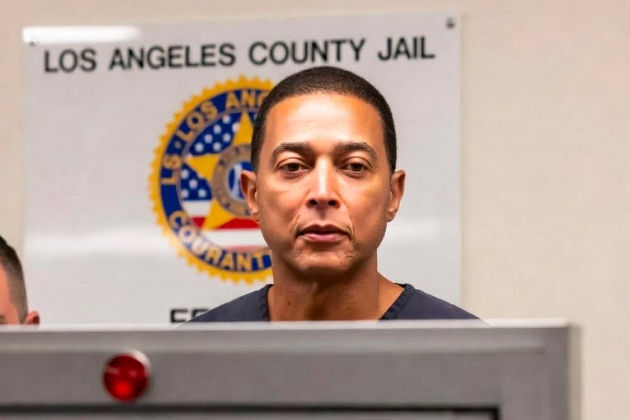
LOS ANGELES, California: Journalist Don Lemon was released from custody on January 30 after being arrested and charged with violating...
Lamar Wilkerson, Indiana outlast Wisconsin in OT

(Photo credit: Robert Goddin-Imagn Images) Lamar Wilkerson hit two free throws with two seconds left in overtime, and Indiana outlasted...
Raptors chasing sweep of season series against Pacers

(Photo credit: Trevor Ruszkowski-Imagn Images) The Toronto Raptors will be going for a four-game season-series sweep of the Indiana...
Historic hat-trick for Romario Shepherd in WI's T20 WC opener, joins elite list of bowlers

Kolkata (West Bengal) [India], February 7 (ANI): West Indies all-rounder Romario Shepherd made history during his side's ICC T20 World...
Ohio State eager to derail No. 2 Michigan's historic run

(Photo credit: Rick Osentoski-Imagn Images) No. 2 Michigan will look to continue its historic winning ways by completing a season...