NEW YORK CITY, New York: Anthropic sued the U.S. Defense Department to block its designation as a national security supply-chain risk, escalating a dispute with the Pentagon over restrictions on how the company's artificial intelligence technology can be used.
The lawsuit, filed in federal court in California, argues that the designation is unlawful and violates the company's constitutional rights. Anthropic asked the court to reverse the decision and prevent federal agencies from enforcing it.
"These actions are unprecedented and unlawful. The Constitution does not allow the government to wield its enormous power to punish a company for its protected speech," Anthropic said.
The Pentagon formally labeled Anthropic a supply-chain risk on March 5, limiting the use of its AI technology in military-related work. Two sources said the company's systems had previously been used for operations connected to the conflict involving Iran.
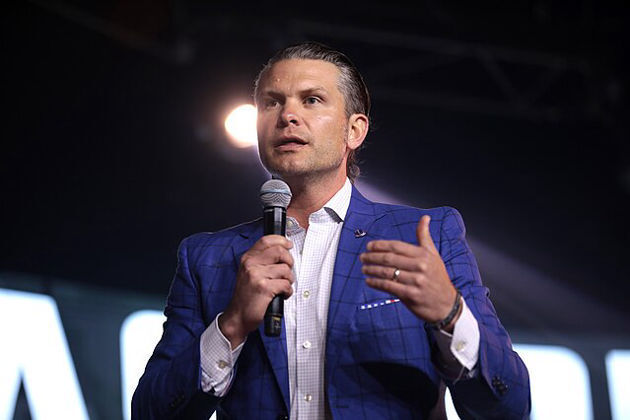
Defense Secretary Pete Hegseth issued the designation after Anthropic refused to remove guardrails that prevent its AI from being used for autonomous weapons or domestic surveillance.
The two sides had been locked in increasingly contentious negotiations over those restrictions for months.
President Donald Trump also weighed in on the dispute, ordering federal agencies in a social media post to stop using Anthropic's chatbot, Claude. Axios reported on March 9 that the White House is preparing an executive order that would formally direct the government to remove the company's AI tools from federal operations.
Anthropic and the White House did not immediately respond to Reuters requests for comment on the report.
The clash is widely seen as a test of how much control governments can exert over AI companies and whether private developers or federal agencies will ultimately determine how advanced AI systems can be used.
Clash Over AI and National Security
The dispute is notable because Anthropic had actively sought partnerships with U.S. national security agencies earlier than most AI companies.
Chief Executive Dario Amodei has said he does not oppose the concept of AI-enabled weapons, but believes the current generation of AI systems is not reliable enough for fully autonomous targeting.
Anthropic officials said the lawsuit does not rule out renewed negotiations with the U.S. government.
The Pentagon declined to comment on the litigation. A department official said last week the two sides were no longer engaged in active talks.
The designation could significantly damage Anthropic's government business and may influence how other AI companies structure restrictions on military uses of their technology.
Amodei said last week the designation had "a narrow scope" and businesses could still use Claude for projects unrelated to Pentagon contracts.
Still, analysts say the fallout could ripple beyond government contracts. "This could have a ripple impact for Anthropic and Claude potentially on the enterprise front over the coming months as some enterprises could go pencils down on Claude deployments while this all gets settled in the courts," said Wedbush analyst Dan Ives.
Anthropic executives warned in court filings that the blacklist could reduce the company's 2026 revenue by several billion dollars and damage its reputation.
"The government's actions immediately and irreparably harm Anthropic," said Thiyagu Ramasmy, the company's head of public sector.
Finance chief Krishna Rao added that if the designation remains in place, the damage could be "almost impossible to reverse."
Executives cited specific examples of lost business. Chief Commercial Officer Paul Smith said that one partner with a multi-million-dollar annual contract had switched from Claude to a competing generative AI model, eliminating a projected revenue pipeline of over US$100 million.
Negotiations with financial institutions worth roughly $180 million combined had also been disrupted, Smith said.
Broader Blacklist Risk
In a separate lawsuit, Anthropic also challenged a broader government designation labeling the company a supply-chain risk under a separate law.
The second case, filed in the U.S. Court of Appeals for the District of Columbia Circuit, argues that the designation violates the company's constitutional rights.
The full impact of that label remains uncertain. The government must conduct an interagency review to determine how widely restrictions should apply, according to a person familiar with the company's legal strategy.
Support for Anthropic's challenge also came from outside the company. A group of 37 researchers and engineers from OpenAI and Google filed an amicus brief backing Anthropic's position.
The group, which included Google chief scientist Jeff Dean, warned that the government's actions could discourage open debate among AI researchers.
"By silencing one lab, the government reduces the industry's potential to innovate solutions," they said.
Anthropic's investors have also been working to limit the fallout from the dispute with the Pentagon, according to previous Reuters reporting.
The standoff followed months of discussions between Anthropic and U.S. defense officials about whether the company's policies could constrain military operations. Amodei met with Hegseth shortly before the Pentagon moved forward with the designation.
The Defense Department informed Anthropic of the decision on March 3 after announcing its intention to declare the company a supply-chain risk on February 27.
Pentagon officials said U.S. law — not private companies — must determine how artificial intelligence is used to defend the country. They insisted the military must retain the flexibility to use AI for "any lawful use," arguing that Anthropic's restrictions could endanger American lives.
Anthropic has said current AI systems are not reliable enough to operate fully autonomous weapons and warned that using them that way could be dangerous. The company has also drawn a firm line against the use of its AI for domestic surveillance, calling such practices a violation of fundamental rights.
Following the Pentagon's announcement, Anthropic said the designation was legally unsound and set a dangerous precedent for companies negotiating with the government. Amodei said the company would challenge the decision in court and would not be intimidated by "punishment."
He also apologized for an internal memo that surfaced in the tech publication The Information. In the memo, written on March 6, Amodei said Pentagon officials disliked the company partly because "we haven't given dictator-style praise to Trump."
The Pentagon has signed agreements worth up to $200 million each with major AI companies over the past year, including Anthropic, OpenAI, and Google.
Microsoft-backed OpenAI announced shortly after the Pentagon's decision that it had secured a deal to deploy its technology on the Defense Department's network.
OpenAI CEO Sam Altman said the Pentagon shares the company's principles of maintaining human oversight of weapon systems and opposing mass surveillance of Americans.



 Share
Share
 Tweet
Tweet
 Share
Share
 Flip
Flip
 Email
Email