Xinhua
02 Apr 2026, 18:46 GMT+10
"If Trump decides to escalate, (it) would be very costly, regardless of which option the president chose," Ali Vaez, Iran Project Director of the International Crisis Group think tank, told Foreign Policy. "There is no good option for him to get out of this."
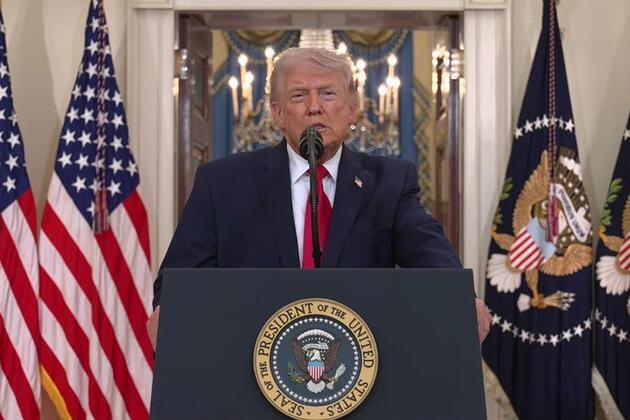
WASHINGTON, April 2 (Xinhua) -- U.S. President Donald Trump addressed the nation Wednesday night on the strikes against Iran, saying that the U.S. military was nearing completion of operational objectives.
On Feb. 28, Israel and the United States launched joint attacks on Tehran and several other Iranian cities, killing Iran's Supreme Leader Ali Khamenei, along with senior military commanders and civilians. Iran responded by firing missiles into Israel and attacking U.S. assets in the Gulf region.
What did Trump say about the ongoing conflict in the Middle East? And is the conflict actually winding down?
A VICTORY?
In his speech, Trump declared "swift, decisive, overwhelming victories" on the battlefield, claiming that Iran was "essentially decimated" both militarily and economically.
"Our core strategic objectives are nearing completion," he said, adding that the operation will end "very fast."
"Iran's navy is gone. Their air force is in ruins ... Their ability to launch missiles and drones is dramatically curtailed; their weapons factories and rocket launches are being blown to pieces," Trump said.
Speaking on "regime change," Trump claimed it was not "our goal."
He also brought up Iran's nuclear program, arguing that Iran was on the cusp of developing a weapon. Tehran sought to rebuild its nuclear program and showed no intention of abandoning its pursuit of nuclear weapons, he said.
U.S. intelligence has long assessed that it would take months or more than a year to produce a nuclear weapon with Iran's stockpile of highly enriched uranium.
"I would never allow Iran to have a nuclear weapon," Trump stressed, accusing Tehran of trying to carry out "campaigns of terror, coercion, conquest and mass murder from behind a nuclear shield."
WHAT'S NEXT?
Over the next two to three weeks, Trump said, the United States would intensify operations in Iran, aiming to permanently disable its ability to project power outside its own borders.
"We are going to hit them extremely hard over the next two to three weeks," Trump said. "We're going to bring them back to the Stone Age where they belong."
Meanwhile, he said negotiations are ongoing and threatened strikes on Iran's energy facilities if a deal is not reached soon.
Without mentioning the possibility of ordering ground operations, Trump offered little new detail on how or when the war would end. His remarks largely echoed his recent social media posts and media interviews.
"Anyone watching that speech has no idea whether Trump is escalating or deescalating the war with Iran. But to be fair, neither does he," Democratic U.S. Senator Chris Murphy wrote on X.
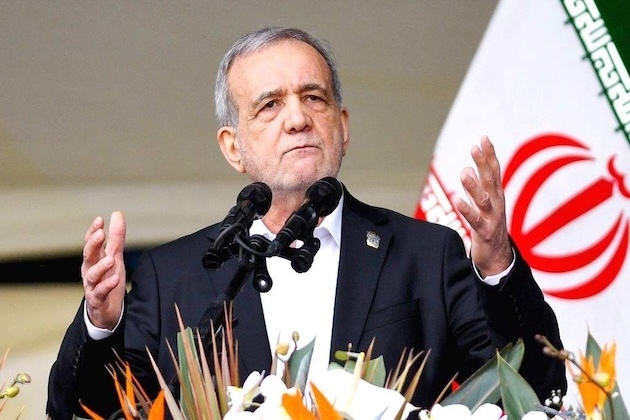
Earlier Wednesday, Trump said Iranian President Masoud Pezeshkian was seeking a ceasefire, a claim swiftly denied by Iran's foreign ministry, accusing Washington of "maximalist and irrational" demands.
Pezeshkian said in an open letter that the Iranian people harbor no enmity toward the American people, accusing the U.S. administration of fighting Iran as a "proxy for Israel."
Robert Pape, a Political Science professor at the University of Chicago, warned that the United States risks falling into an escalation trap. "This is not de-escalation. It's controlled escalation," he said in an X post, referring to Trump's national speech.
Ali Vaez, Iran Project Director of the International Crisis Group think tank, also questioned what an off-ramp from the conflict would look like for Trump.
"If Trump decides to escalate, (it) would be very costly, regardless of which option the president chose," he told Foreign Policy on Wednesday. "There is no good option for him to get out of this."
As the conflict appears to be heading toward a potential stalemate, U.S. news website Axios posed an appropriate question: What does winning actually look like?
DOMESTIC CONCERNS
Amid spiking oil prices and declining poll numbers, Trump's speech sought to ease voters' concerns and calm Wall Street's unease, despite offering very little new information.
"It's very important that we keep this conflict in perspective," Trump said, describing the recent domestic gasoline price rise as "short-term."
He blamed Tehran for the price surge, accusing it of attacking commercial oil tankers and neighboring countries. He added that prices would rapidly fall once the conflict ends and the Strait of Hormuz "opens up naturally."
"The United States has never been better prepared economically to confront this threat (brought by Iran)," he said.
Gasoline prices in the United States have climbed above 4 U.S. dollars per gallon for the first time since 2022, weighing on Trump's economic standing.
Trump's approval rating has dropped to its lowest level since the start of his second term, at 36 percent, according to a Reuters/Ipsos poll released on March 24.
About 61 percent of Americans disapprove of Trump's handling of the conflict, according to a Pew Research report published March 25.
Mounting political pressure at home and economic uncertainty have left the Trump administration increasingly vulnerable ahead of the midterm elections, analysts said.
Trump's speech "did little to answer the most basic questions the American people deserve when our nation is engaged in a costly and dangerous conflict with Iran," Senator Mark Warner, the top Democrat on the Senate Intelligence Committee, wrote on X.
Senate Minority Leader Chuck Schumer accused Trump's actions of being "one of the greatest policy blunders in the history of our country," failing to articulate objectives and "ignoring the kitchen table problems Americans are facing."
As Trump concluded his speech, stock futures fell following a two-day rebound, while oil prices surged again in early Thursday trading.
Get a daily dose of Milwaukee Sun news through our daily email, its complimentary and keeps you fully up to date with world and business news as well.
Publish news of your business, community or sports group, personnel appointments, major event and more by submitting a news release to Milwaukee Sun.
More InformationWASHINGTON, D.C.: Following the Trump administration's ouster of Venezuelan President Nicolas Maduro in early January, the United States...
Full text of letter pubiished 1 Aoril 2026 by Iran's President Masoud Pezeshkian To the people of the United States of America,...
JUBA, South Sudan: A gold mining row on the outskirts of the capital over the weekend led to gunmen massacring more than 70 people...
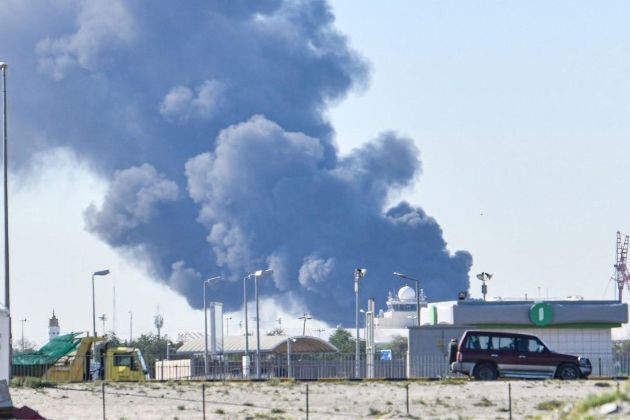
DUBAI, U.A.E.: Iran continued its attacks on its Middle East Arab neighbors, hitting a tanker off the coast of Qatar and Kuwait International...
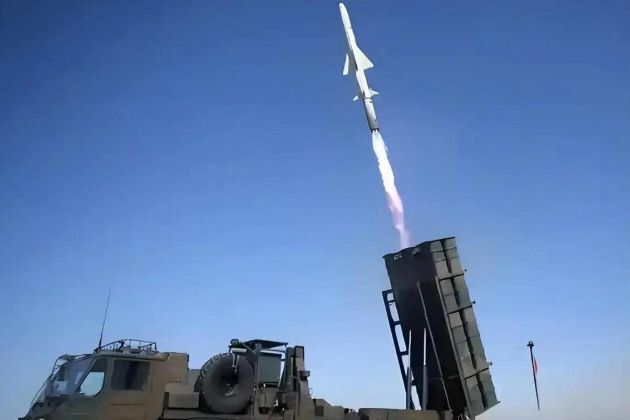
TOKYO, Japan: Japan's deployed its first long-range missile at a southwestern army camp, officials said on March 31. With the country...
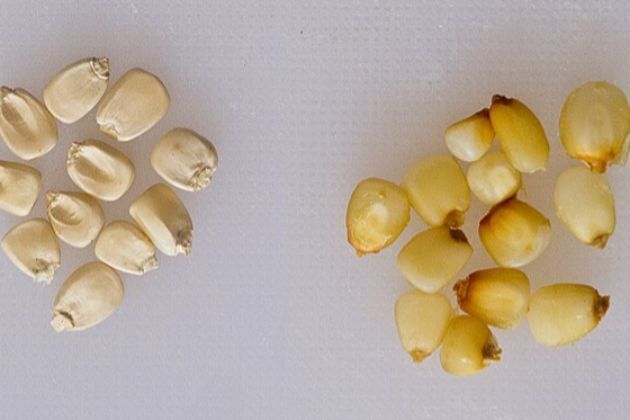
SACRAMENTO, California: California became the first state in January to require food makers to add folic acid, an important vitamin,...
(Photo credit: Jim Rassol-Imagn Images) Sandy Alcantara pitched a three-hit shutout and Liam Hicks drove in four runs, leading the...
(Photo credit: Cary Edmondson-Imagn Images) Victor Wembanyama matched his season-high with 41 points and had a game-high 18 rebounds...
(Photo credit: Troy Taormina-Imagn Images) Reed Sheppard scored 27 points, Alperen Sengun added 25 and the Houston Rockets fended...
(Photo credit: Wendell Cruz-Imagn Images) Liberty stars Breanna Stewart and Sabrina Ionescu both said Wednesday that they will re-sign...
(Photo credit: Michael McLoone-Imagn Images) Christian Yelich chopped a tiebreaking two-run single in a six-run eighth inning, and...
(Photo credit: Jeff Hanisch-Imagn Images) Former Wisconsin tight end Jack Pugh, who cited his mental health when he retired from...