Bob Labriola
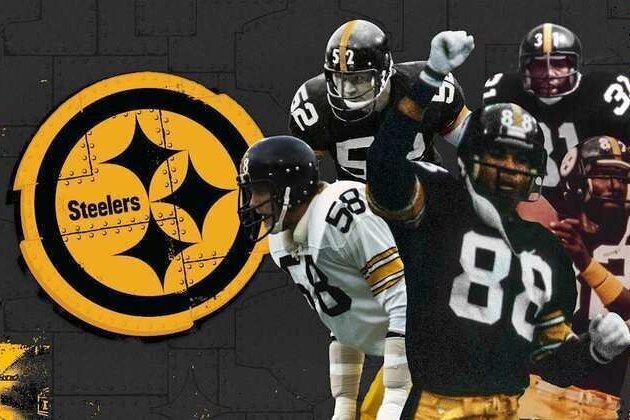
It's acknowledged as the greatest draft class in NFL history and has to be on a short list for the best draft class in the history of all professional sports. And the specific piece of history the Pittsburgh Steelers authored during the 1974 NFL Draft almost didn't happen.
At the end of the 1973 season, the Steelers were at something of a crossroads. There had been the unbelievable high of 1972 when they had completed an 11-3 regular season to win the first division championship in franchise history and then tacked on the exclamation point of the first playoff win in franchise history with a 13-7 victory over Oakland made possible by the Immaculate Reception.
Art Rooney Sr.'s franchise then was a feel-good story in the classic sense of a downtrodden team flipping the switch. The transformation began when the Steelers hired Chuck Noll in January 1969 and committed to using the draft to build a championship team, and by the end of 1972 they were seen as a contender. For the first time since they opened for business in 1933, a legitimate contender.
But what they were learning was it was easier to go from bad to good than it was to get from good to great. A book written by Sports Illustrated's Roy Blount Jr. about the 1973 Steelers was titled, "Three Bricks Shy of a Load," and the team was exactly that in losing 3 of their last 5 to finish 10-4 in the regular season before a decisive one-and-done in the playoffs.
When preparations began for the 1974 NFL Draft, the Steelers knew they had to get better, especially on offense. And with 38 days between the end of their 1973 season and the first day of picking, they had to work fast.
But the groundwork had been laid. Several months earlier, their scouts had been scouring the country for more of the college talent that had given Noll the material to transform a team that finished 1-13 in 1969 into a group that was 21-7 with back-to-back playoff appearances in 1972-73.
As usual, Bill Nunn was working his magic with the HBCUs, where the trust he had engendered with those coaches and the respect he had earned with their players opened doors and loosened tongues.
Back then, NFL scouts traveled that circuit in a caravan of cars. When it came to a stop at Alabama A&M, the man they came to see was Johnny Lee Stallworth, a receiver then lighting up the Southern Intercollegiate Athletic Conference while averaging 19.7 yards per catch as a senior. But when Stallworth ran the 40 for the scouts that day on a wet, soft field, his time was disappointing. For some of them, it was eliminating.
Nunn believed Stallworth had the skill-set to be a quality NFL receiver and that one bad 40-time shouldn't negate that. So when the caravan was set to move on, Nunn said he was under the weather, that he would rest up and meet everyone at the next stop.
"No one told me my time, but the looks on the faces of the scouts wasn't one that made me feel a whole lot of confidence," said Stallworth. "As they were leaving, Bill kind of hung around, and I, not knowing what to do, kind of hung around myself a little bit. And the next day Bill came back and suggested we go somewhere else to run, and we did that at a local high school. We went over there and I ran a better time. Bill still didn't tell me what time I ran. He just told me I did OK."
Another receiver in this draft class who had NFL-caliber skills was Lynn Swann, and he had spent his college career in Los Angeles playing for USC. He had been on television in an era when only one college game was televised each week. If the Steelers wanted both, they would have to pick Swann first because he was more well-known.
As Round 2 unfolded and with Stallworth's name still high on their draft board, the Steelers were weighing the possibility of spending their first two picks on receivers. But the NFL of 1974 was a still a league of run-the-ball-and-play-defense. There was no such thing as an offense with a tandem of receivers, but as an AFL defensive assistant with the Chargers under Sid Gilman, Noll had seen the potential for down-the-field passing.
Still, the 1973 Steelers' 33-14 playoff loss in Oakland was traced to a run defense that allowed 232 yards and 2 touchdowns. And there was this linebacker from Kent State who had impressed Player Personnel Director Art Rooney Jr.. Jack Lambert was agile, mobile, and hostile, and Rooney was there when rain moved practice to a parking lot and this tall, skinny linebacker was going 100 miles an hour and picking cinders out of his knees and elbows.
Noll saw the logic of picking Lambert, but he knew he had no pick in Round 3 because of a 1973 trade to bring DT Tom Keating from the Raiders. So before the Steelers used their 46th overall pick on Jack Lambert, Noll went to Nunn. Would Stallworth still be there for their next pick (82nd overall)?
Nunn shared Noll's opinion of Stallworth but believed it was worth the risk to wait, because Lambert was an enticing addition to play behind the White-Holmes-Greene-Greenwood front four, and Johnny Lee Stallworth from Alabama A&M was not a household name.
"When Bill was working for The Pittsburgh Courier, he picked the Black College All-America Team. He had carte blanche into the black schools, and as he would share with me later when I worked in scouting, most (scouts) were afraid to go to those schools," said Joe Greene. "When he went, they treated him with favor and he had access to all those schools. They would tell him about certain players, and that's what you're looking for as a scout getting some information that's maybe not privy to other people."
The gamble paid off, because Stallworth was there to be picked at No. 82 overall. The Steelers then added Jimmy Allen, a CB from UCLA with their second pick of the fourth round, and Mike Webster, a C-G from Wisconsin with their No. 5 pick (125th overall) to complete their first day of the 1974 NFL Draft.
The haul was historic. Five picks. Four Hall of Famers. Four Super Bowls over 6 seasons. A 13-2 playoff record in those same 6 seasons. Four transcendent players who immediately helped the Steelers make that step from good to great and then later helped them instantly take advantage of the rules changes the NFL enacted in 1978 to open up the passing game.
Lynn Swann. Jack Lambert. John Stallworth. Mike Webster.
The greatest exhibition of drafting in NFL history. Arguably the greatest exhibition of drafting in the history of professional sports. But not necessarily recognized for what it would become.
The 1974 NFL Draft was a 2-day affair, with Rounds 1-5 on Tuesday, Jan. 29 and Rounds 7-12 set for Wednesday, Jan. 30. In the Wednesday morning edition of the Pittsburgh Post-Gazette, a sports columnist's instant analysis would not age well:
"The Steelers seem to have come out of the first five rounds of the draft appreciably strengthened at wide receiver but nowhere else. They didn't get a tight end, and the ones remaining are more suspect than prospect. They didn't get a punter, although none of the nation's best collegiate punters went in the first five rounds. They didn't get an offensive tackle who might've shored up what could well become a weakness. What they did get was Swann, who seems to be a sure-pop to help; Lambert, who figures to be the No. 5 linebacker if he pans out; and three question marks."
Day 2 of the 1974 NFL Draft had the Steelers make 16 more picks, but only 4 of those players survived their rookie training camp. Offensive lineman Rick Druschel, defensive linemen Jim Wolfe and Charles Davis, and running back Tommy Reamon all were backups fighting for jobs back then, but today they are the answer to a trivia question about the greatest draft in NFL history.
But wait. There's more
When the picking concluded, when the Miami Dolphins ended the 17th round by selecting DB Ken Dickerson from Tuskegee (442nd overall), the Steelers got on the phone to South Carolina State, where Donnie Shell was an undersized linebacker with maybe some raw athletic skills to play safety in the NFL.
Bill Nunn had been paying attention, and his relationship with the HBCUs gave South Carolina State Coach Willie Jeffries the confidence to tell Donnie Shell that he would get a fair chance to make the Steelers roster. That was enough for Shell, who signed with the Steelers as an undrafted rookie free agent.
Donnie Shell would end his 14-year career with 51 interceptions as well as a playing style that earned him the nickname, "Torpedo," and he showed Noll enough of that potential to earn a roster spot coming out of the preseason. Just as Wille Jeffries had said, Shell got a fair chance to make the roster. When Shell was fitted for his Gold Jacket as part of the Class of 2020, he became the fifth Hall of Fame player, the cherry on the sundae that was the Steelers 1974 Draft Class.
"There are times, though seldom, when everything comes together," said Dan Rooney during his Hall of Fame induction speech in July 2000. "When a group of young men become a special team. Where their accomplishments give them a time in history. Not only winning, but being the best, and doing so with unselfish determination to be the best team. Making the goal together. That happened in Pittsburgh. It was a glorious time."
Their 1974 Draft class was the final piece.



 Share
Share
 Tweet
Tweet
 Share
Share
 Flip
Flip
 Email
Email