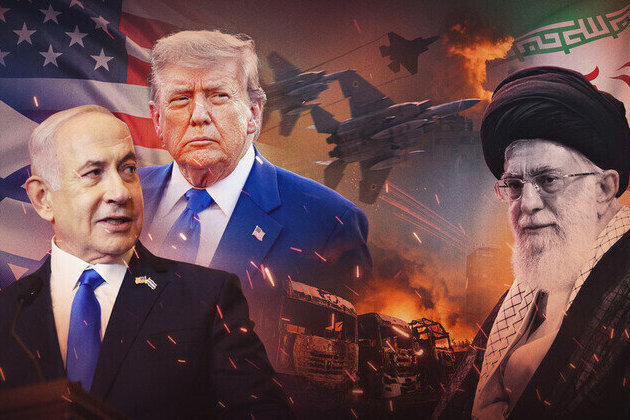
Donald Trumps misadventure in the Persian Gulf has become a quagmire
Sixty days into the US-Israeli war on Iran, peace talks are stalled and the world is bracing for yet more economic pain. RT asks how we got here, and who - if anyone - is really winning in the Persian Gulf?
April 29 marks 60 days since the US and Israel launched their war on Iran. The initial hours of the conflict were marked by extreme brutality. An American missile strikekilled more than 160 schoolgirlsat an elementary school in Minab and dozens of the Iranian political and clerical elite were killed along with their families in missile attacks. A quick and decisive victory, it seemed, was at hand for Washington and West Jerusalem.
width="560"
height="315"
src="https://mf.b37mrtl.ru/files/2026.04/69f20bd685f5407a5e3de407.mp4" frameborder="0"
>
Things did not go according to plan. Iran struck back against US bases and Gulf energy infrastructure, blockaded the Strait of Hormuz, and with its government still intact, now insists that any peace deal leave its nuclear program off the table. Meanwhile, US President Donald Trump'sapproval rating is in freefalland his NATO 'allies' havedeserted himwhile struggling to deal with the economic fallout at home.
Following the announcement of a US-Iran ceasefire deal, Israel launched a brutal invasion of Lebanon, killing hundreds of people in attacks on urban areas within minutes, invading the south of the country and triggering another spiral of violence where dozens of people are killed every day despite the announcement of a truce.
Did Israel drag the US into war with Iran?
Trump and his cabinet struggled from the outset to describe both their objectives and their rationale for attacking Iran. Trump initially told the public that the US faced "imminent threats from the Iranian regime," later claiming that Tehran was "two weeks away" from developing a nuclear weapon. Six months earlier, Trump proclaimed Iran's nuclear program "totally obliterated" after US strikes on several key nuclear sites in Iran.
width="560"
height="315"
src="https://mf.b37mrtl.ru/files/2026.04/69f20b7985f540256217edf2.mp4" frameborder="0"
>
Secretary of State Marco Rubio told reporters that the US knew that Israel was going to attack Iran with or without American support. The US joined in the attack, he said, believing that "if we didn't preemptively go after them before they launched those attacks, we would suffer higher casualties."
Has the US achieved its objectives in Iran?
The US' military goals - as laid out by Trump - remain unchanged since February 28: "obliterate Iran's missiles and production, annihilate its navy, sever its support for terrorist proxies, and ensure it never acquires a nuclear weapon."
width="560"
height="315"
src="https://mf.b37mrtl.ru/files/2026.04/69f21055203027196c3cbaff.mp4" frameborder="0"
>
Prior to the first attacks on Iran, the CIApredictedthat Khamenei would be immediately replaced by a successor, and that hardliners within the Islamic Revolutionary Guard Corps (IRGC) would strengthen their position in Tehran, Reuters reported. This prediction has been proven correct.
Trump has claimed that Iran's navy is "completely obliterated," while Secretary of War Pete Hegseth has described Iran's missile arsenal as "functionally destroyed" and "combat ineffective for years to come." However, US and Israeli military officials believe that aroundhalf of the Islamic Republic's missile launchersand thousands of one-way attack drones are still operational, and roughly 60% of its navy - mostly fast-attack speedboats - is intact.
Iran's support for Lebanon's Hezbollah movement is degraded, but not severed. Meanwhile, the status of Tehran's nuclear weapons program remains unchanged: both Iran and US intelligence assessments maintain that it has been paused since 2003.
How has Iran defended itself?
Iran has, in the words of Foreign Minister Abbas Araghchi, "had two decades to study defeats of the US military to our immediate east and west," and has "incorporated lessons accordingly."
The most valuable of these is the concept of "mosaic defense" where commanders of Iran's regional military districts are empowered to conduct strikes without approval from Tehran. This has allowed the IRGC to order attacks on Israeli and Gulf targets despite dozens of its senior leaders in the Iranian capital being killed.
Iran responded to the US-Israeli attacks by launching ballistic missiles at Israel and atAmerican bases and interestsin the Gulf region. Israel's military censorship regime makes assessing the damage to the Jewish state difficult. A combination of satellite footage, media reports, and social media footage makes, it possible to confirm that the following US bases have been hit, often more than once:
Naval Support Activity, Bahrain
Erbil International Airport, Iraq
Al-Asad Airbase, Iraq
Victory Base complex (Baghdad International Airport area)
Muwaffaq Salti Air Base, Jordan
Ali Al-Salem Air Base, Kuwait
Camp Buehring, Kuwait
Camp Arifjan, Kuwait
Mohammed Al-Ahmad Naval Base, Kuwait
Al-Udeid Air Base, Qatar
Al-Dhafra Air Base, UAE
Jebel Ali Port, UAE
Prince Sultan Air Base, Saudi Arabia
These facilities account for more than half of the US' temporary and permanent military bases in the region, which together host between 40,000 and 50,000 American troops at any given time.
Iran's target selection appears methodical, with radar installations prioritized in the early days of the conflict. Among the equipment hit was an AN/FPS-132 early warning radar system at Al Udeid Air Base, one of only six worldwide, and an AN/TPS-59 radar dome at Naval Support Activity Bahrain.
width="560"
height="315"
src="https://mf.b37mrtl.ru/files/2026.04/69f213672030274b9c33ac97.mp4" frameborder="0"
>
Iran has also struck energy infrastructure in Gulf states hosting the US military. Saudi Arabia's Ras Tanura oil refinery and Qatar's Ras Laffan LNG hub were both hit by drones on March 2. Production at Ras Laffan has since been indefinitely halted, wiping out a fifth of the world's LNG supply. Iran broadened its campaign of energy strikes after an Israeli attack on its Pars gas field on March 18, and has since struck dozens of refineries, pipelines, and extraction sites in Bahrain, Qatar, Saudi Arabia, and the UAE, while its allied militias have struck oil fields and refineries in Iraq.
How has the US military performed against Iran?
Despite inflicting severe damage on Iran, the Pentagon suffered several humiliations in the opening weeks of the conflict:fires and plumbing failuresaboard the USS Gerald R. Ford; the forced retreat of two aircraft carriers - the Ford and the USS Abraham Lincoln - out of range of Iranian missiles; the evacuation of tanker aircraft from Al-Udeid and Prince Sultan airbases under Iranian fire; the downing of five fighter jets; and a series of'friendly fire' incidentsthat Tehran claims were concocted to conceal the US' true losses.
Damage to American bases in the region is far more extensive than publicly acknowledged by the Pentagon, and may take several years and "up to $5 billion to repair," NBC News reported in late April.
Satellite footage released by Iranian media shows destroyed KC-135 tanker aircraft at Prince Sultan Air Base in Saudi Arabia
At least 15 US service personnel have been killed and more than 520 wounded since February 28, although the Pentagon has been accused ofmanipulating casualty liststo hide its true losses.
Which Iranian elites did the US and Israel target?
Iranian mourners hold portraits of Ayatollah Ali Khamenei during a funeral for Ali Larijani and other top security officials in Tehran, Iran, March 18, 2026
Getty Images; Morteza Nikoubazl
At least 48 senior Iranian political, clerical, and defense officials have been assassinated, including seven Defense Ministry and IRGC leaders killed at the same Iranian Defense Council meeting on February 28. The list of officials includes:
Supreme Leader Ayatollah Ali Khamenei
Iranian Defence Council Secretary Ali Shamkhani
IRGC Commander-in-Chief Mohammad Pakpour
Iranian Armed Forces Chief of the General Staff Abdolrahim Mousavi
Defense Minister Aziz Nasirzadeh
Head of the Military Office of the Supreme Leader Mohammad Shirazi
Secretary of the Supreme National Security Council Ali Larijani
Intelligence Minister Esmaeil Khatib
Several officials were killed along with their families. Khamenei's daughter, son-in-law, and granddaughter were killed alongside the supreme leader, while former Foreign Minister Kamal Kharazi and IRGC budget chief Jamshid Eshaghi, among others, lost their wives and children to US and Israeli missiles.
According to Tehran's figures, almost 3,500 people have been killed and 26,500 wounded in Iran since the conflict began, just under half of them civilians.
What is the situation in the Strait of Hormuz?
The Strait of Hormuz, a vital waterway through which just under a third of the world's seaborne oil and a fifth of its LNG flows, has been de-facto closed since the beginning of the conflict. Iran formalized the blockade on March 4, with the IRGC announcing that it alone would decide which ships could pass through the 34km-wide strait. In late March, passage was opened up to shipping from neutral countries willing to pay tolls, but shut down again in April after the US imposed its own blockade on the strait.
Marine traffic backed up on either side of the Strait of Hormuz, April 29, 2026
MarineTraffic
The American 'double blockade' is Trump's latest strategy to resolve the crisis. Within the span of two weeks Trump declared the strait open, begged his NATO "allies" and China to help open it, threatened to unleash "hell" on Iran if it did not allow shipping through, before settling on imposing a blockade of his own on the Strait on April 13.
Iran maintains that it is able to export its oil by other means, and insists that the US must lift its blockade or bear responsibility for the wider economic damage resulting from the closure. "One cannot restrict Iran's oil exports while expecting free security for others," Iranian First Vice President Mohammad Reza Aref wrote on X on April 19. "The choice is clear: either a free oil market for all, or the risk of significant costs for everyone."
What kind of economic damage has the war caused?
Global energy markets have been thrown into chaos. The closure of Hormuz is the main bottleneck but it isn't the only problem: key pieces of energy infrastructure in the Middle East have sustained damage that will be expensive and could take years to repair.
Major international energy agencies, including the International Atomic Energy Association (IAEA), the International Air Association (IATA), the International Monetary Fund (IMF), as well as shipping giants such as Vitol have warned of an energy crisis that could be substantially larger than the oil shocks of the 1970s. OPEC, the oil producing cartel, has also fractured, with the United Arab Emirates leaving in April 2026.
Meanwhile, shortages have emerged across numerous petroleum products, from naphtha to diesel and jet fuel. Rationing has been introduced in some countries, especially in Asia. Around one-third of the global fertilizer trade passes through the region, making this disruption a particularly ominous one for food prices.
Analysts warn of a slow-moving hurricane stalking the global economy as supply chains are pressured, inventories run low, and the specter of inflation returns. Although a global recession would eventually reach all corners of the globe, the effects so far have been disproportionately felt in Asia, which is more reliant on energy flows through Hormuz.
Oddly, stock markets have in many cases surged to new highs. This has led some analysts to talk about a disconnect between financial markets and physical reality. Such a disconnect is also evident in the often vast spread between the spot price of oil (for physical cargoes) and the much lower futures price. On the other hand, a new bout of inflation would be bullish for stocks - as long as the economic carnage is contained.
How are peace talks progressing?
A ceasefire between the US and Iran took effect on April 8, with Israel and Hezbollah entering a fragile truce a week later. Talks between Washington and Tehran, however, have shown little sign of a breakthrough. Iran wants an immediate end to hostilities, security guarantees, and the lifting of the US blockade, while the US wants any deal to involve restrictions on Iran's nuclear enrichment.
Iranian Foreign Minister Araghchi has spent the last week meeting with mediators in Pakistan and Oman, and shoring updiplomatic support in Moscow. According to Reuters, however, Trump is unhappy with Tehran's latest proposal, and talks remain at an impasse.
What happens next?
Two months since the war began, the US is bogged down in a conflict that Trump predicted would be over four weeks ago, with few of its objectives achieved. Washington's European allies have refused Trump's pleas and admonishments for help, American warplanes are banned from NATO airbases in multiple European countries, and even former backers of Trump, like Italian Prime Minister Giorgia Meloni, have distanced themselves from the US president.
At home in the US, the war on Iran is the least popular military escapade in American history. With Trump's approval rating sinking to a new low of 34% on April 29, the embattled president faces a new legal threat on May 1, when, 60 days after he first notified Capitol Hill of the war, Congress is formally required to authorize its continuation. Should Trump return to hostilities after that date, Democrats are reportedlyplanning legal actionto end the war.
Israel has continued towage war on Lebanon, regardless of the insistence by two parties to the negotiations that the Jewish state was bound to a ceasefire agreement.
Iran has been significantly damaged, but has emerged in control of the Strait of Hormuz and therefore much of the world's oil supply. Although the US is now preventing Iranian vessels from transiting the strait, Tehran - sanctioned for decades by the West - is betting that it can withstand more economic pain than Trump and his allies can.
Trump now faces an unenviable choice: cut his losses, take a deal, and retreat, or drag the US and the world economy into the kind of Middle Eastern quagmire he once swore he'd never end up in.
(RT.com)



 Share
Share
 Tweet
Tweet
 Share
Share
 Flip
Flip
 Email
Email