WASHINGTON -- As the White House signals a pause in Project Freedom while insisting that a key phase of military operations against Iran has concluded, the broader trajectory of the conflict remains uncertain. Is this a genuine step toward de-escalation -- or merely a tactical lull before the next phase?
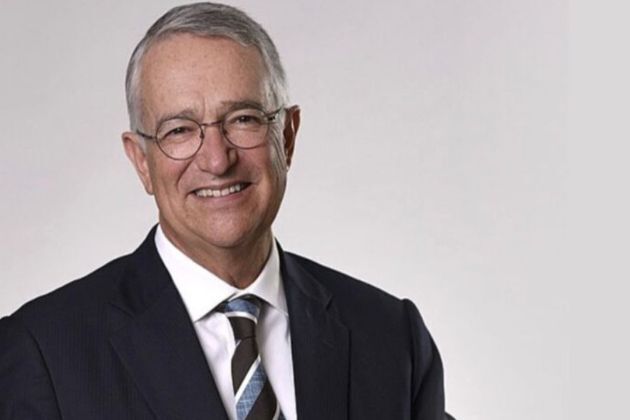
In an interview with RFE/RL, Barry Pavel, a former senior director for defense policy and strategy at the National Security Council, who served as a special assistant to the president under George W. Bush, unpacks the strategic meaning behind recent developments.
From shifting military postures in the Strait of Hormuz to changes in the Middle Easts balance of power -- and the role of global actors such as China and Russia -- Pavel outlines the current state of the conflict.
RFE/RL: President Donald Trump has announced a pause in Project Freedom while declaring success. Are we looking at the end of the conflict, or just the end of one chapter?
Barry Pavel
Barry Pavel:We certainly hope its the end of the conflict, but I think, in light of the incentives and perceived interests of the parties, it might just be another chapter. We dont know the details of the conversations between Iran and the United States, but the Iranians are notorious negotiators, and this administration also prides itself on negotiating.
We do know that President Trump likely does not want to resume high-intensity combat operations, for obvious reasons. But there are various issues on the table, and Im not sure those are easy to resolve in one fell swoop.
RFE/RL: Secretary of State Marco Rubio has said that the Epic Fury phase is over, even as the US Navy remains active in the Strait of Hormuz. What does over mean in military-strategic terms?
Pavel:Its a great question -- and one youd have to ask him directly. But strategically, you have to consider what leverage each side brings to the conflict. One of the key leverage points the United States brings to bear is the potential resumption of military operations.
SEE ALSO:
Trump Says US Will Pause Operation To Guide Ships Through Hormuz Strait
So its possible the secretary meant that, in its previous form, Operation Epic Fury is over. But that doesnt mean the end of potential military action. If Iran starts attacking ships, or if Iran doesnt do X, Y, or Z as the US administration asks, the United States could use various military tools in a potentially kinetic fashion to force Iran to meet its objectives.
In other words, it may mark the end of a specific phase -- not the end of potential military operations across the different domains and issues that the parties are fighting about.
Maritime Moves, Regional Power Shifts
RFE/RL: The US is now focused on escorting commercial vessels through the Strait of Hormuz. Does this shift signal de-escalation, or could it risk widening the conflict?
Pavel:I dont think it necessarily widens the conflict. We already saw geographic expansion earlier -- for example, a US naval strike near Sri Lanka, as I recall.
This particular operation appears limited and did not seem to have a long shelf life. Now that its paused, it suggests it was not intended as a sustained escalation.
RFE/RL: Has this conflict already reshaped the balance of power in the Middle East, or are we only seeing the early stages of a longer geopolitical realignment?
Pavel:This is a really important question, and Id like to keep an eye on the broader geopolitical picture. I think this is part of an ongoing, yearslong reordering of the international system. This transition between what we were more comfortable with five or 10 years ago and where the world is headed is going to continue for some time.
This affects every region and great-power relations. In the Middle East, were already seeing shifts. For example, the UAE appears to be deepening ties with the United States and Israel, including cooperation on missile defense, as well as expanding economic and diplomatic linkages.
We also saw the UAE formally announce it is leaving OPEC, and the Gulf Cooperation Council is likely to be less unified than it was. The days when the UAE simply followed the regional consensus on every issue are probably over.
So we are seeing a more fragmented regional landscape, alongside broader global geopolitical shifts.
Scenarios, Signals, And Role Of Global Powers
RFE/RL: You and your colleagues outlined four post-war scenarios. Which one now appears most likely?
Pavel:Yes, my colleague Jeff Cimmino and Ioutlinedfour post-war scenarios, largely focused on the US-China relationship, which I think is the most important one to watch.
At this point, we are seeing more of what we called managed erosion of US primacy, where the United States plays a limited role and does not escalate fully, while China remains relatively passive and does not act overtly to support Iran.
This suggests a continuation of existing trends. I dont see China taking a much more activist role.
SEE ALSO:
Beijing Urges Immediate Cease-Fire In Iran As Trump-Xi Summit Nears
Stepping back, no one really comes out of this looking better. But all parties are learning lessons. One early lesson for China and Russia may be that the US military is operationally highly effective -- able to strike tens of thousands of targets in a short period of time -- but strategically limited in terms of the political outcomes those operations produce.
RFE/RL: What key indicators should we watch in the coming days to understand where this is headed?
Pavel:One obvious indicator is whether there are renewed military operations by either side. Iran has already launched missiles at the UAE, causing some damage, and further actions like that would be important signals.
We should also watch for more discreet actions by the United States, as well as how negotiations are progressing and whether either side feels its objectives are being met.
There are a number of issues on the table, and while I hope they can be resolved through negotiations, that will be difficult. This could evolve into a kind of frozen conflict, particularly centered around maritime issues and other unresolved disputes.
RFE/RL: The House of Representatives has expressed optimism about progress toward a deal. Is this a genuine diplomatic opening or a pressure tactic?
Pavel:It could be both. The president is very good at using those kinds of leverage points to achieve negotiating outcomes.
At the same time, I am concerned about the internal dynamics within Irans leadership. There are indications that it may be fragmented and constrained. They likely want a deal, and may need one, but its not entirely clear who is in charge or how decisions are being made.
That uncertainty makes negotiations more difficult and may explain the back-and-forth signals about whether progress is being made.
RFE/RL: How do China and Russia interpret this pause? Does it alter their strategic calculus?
Pavel:I dont think the pause fundamentally changes their long-term strategic calculus. Both are playing a long game.
China likely prefers the United States to remain distracted in the Middle East, tying down military resources and attention. That keeps the US focused away from Chinas immediate region.
SEE ALSO:
Mark Katz: With Iran, Russia's Balancing Act Is Wobbling
Russia benefits from instability and higher oil prices and often seeks to play a spoiler role against the United States. However, it is also preoccupied with its ongoing war in Ukraine, which has presented challenges for Moscow in recent weeks.
So while both are watching closely, this pause alone does not significantly alter their broader strategies.
Peace In Motion Or Conflict On Pause?
RFE/RL: Bottom line: is this a peace in motion or a conflict on pause?
Pavel:Its a little bit of both, as it often is in the real world.
Stepping back, this is the largest country by population that the US has been in a war with since the Korean War. That alone gives some perspective -- this was never going to be an easy conflict.
Iran is a resilient state -- a former empire with a rich culture and a deeply entrenched political system. So its not surprising that it can absorb pressure and continue operating.
That resilience means any resolution will be complicated, and the line between peace and pause is likely to remain blurred.
Barry Pavel: The US Strategy In Iran, And What Comes Next
Share
Share
Copy link
Facebook
X (Twitter)
LinkedIn
Email
Share
Share
Copy link
Facebook
X (Twitter)
LinkedIn
Email
Print



 Share
Share
 Tweet
Tweet
 Share
Share
 Flip
Flip
 Email
Email