Xinhua
14 May 2026, 12:15 GMT+10
Solid trade data fully testify to the tangible value brought by China-Africa economic ties. In 2025, bilateral trade between China and Africa maintained robust momentum, delivering substantial surpluses for numerous African nations and bringing genuine economic benefits across the continent.
by Dereck Goto
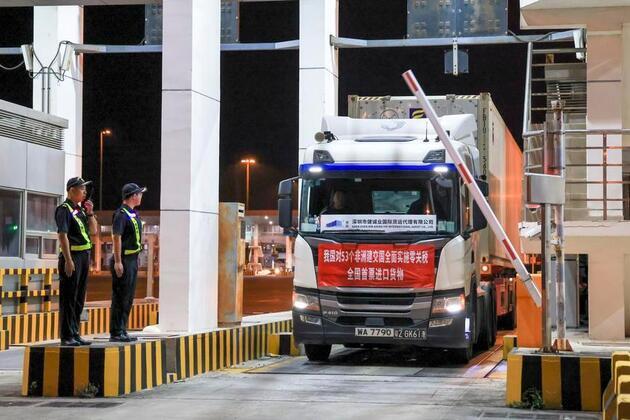
During the 39th African Union Summit on Feb. 14, Chinese President Xi Jinping sent a congratulatory message and unveiled a major decision to fully implement zero-tariff treatment to 53 African countries having diplomatic relations with China. The policy officially took effect on May 1.
With no political strings attached, no governance prerequisites and no demands for reciprocal trade liberalization, the world's second-largest economy has made a landmark unilateral commitment to open its market entirely for the African continent.
It is hardly surprising that Western mainstream financial media have remained muted over this milestone initiative. Nevertheless, history will record this significant move objectively regardless of biased narratives.
To fully appreciate the value of China's zero-tariff policy, it is essential to review the long-standing unfair trade practices Africa has endured.
For decades, Western-developed market access for African nations has always come with harsh conditions. The United States and the EU have long imposed rigid structural adjustment requirements, strict governance benchmarks and mandatory reciprocal opening terms on African countries seeking preferential trade arrangements. The European Union's Economic Partnership Agreements force African states to dismantle trade barriers in exchange for limited market access, while the United States' African Growth and Opportunity Act (AGOA) constantly adjusts its political eligibility rules following changing geopolitical priorities.
Such practices are built on a biased premise that regards Africa's access to global markets as a conditional privilege rather than an inherent right for inclusive development. Breaking away completely from this unfair mindset, China's new tariff policy never interferes in African internal governance, never links economic cooperation with political alignment, and asks for nothing in return.
Solid trade data fully testify to the tangible value brought by China-Africa economic ties. In 2025, bilateral trade between China and Africa maintained robust momentum, delivering substantial surpluses for numerous African nations and bringing genuine economic benefits across the continent. Such robust figures demonstrate that China-Africa partnership rejects the old paradigm of unequal dependency.
Even so, there remains ample room for upgrading cooperation across Africa. Current trade volumes for many African states are largely driven by raw mineral resources and unprocessed agricultural products, with high-value processing links, job opportunities and core technologies still concentrated outside the continent. The zero-tariff policy will fundamentally reshape this trade structure.
With zero-tariff treatment, Africa's competitive products ranging from avocados and macadamia nuts to processed textiles and essential oils can smoothly enter China's 1.4-billion consumer market, where avocado imports alone see an annual growth of over 20 percent. This creates unprecedented incentives for African nations to accelerate domestic industrial upgrading and value-added processing.
Practical results have already proven the policy's effectiveness: after China granted zero-tariff access to 33 least developed countries in Africa in December 2024, related imports reached 21.42 billion U.S. dollars by March 2025, marking a 15.2 percent rise year-on-year. By the first quarter of 2026, total China-Africa trade exceeded 90 billion dollars, achieving a year-on-year growth of 23.7 percent. These are solid achievements, not empty projections.
Meanwhile, China's commitment to helping African partners meet international technical and phytosanitary standards focuses on capability empowerment rather than mere rule compliance, effectively bridging the capacity gap that simple market access cannot resolve.
Africa is set to be an active beneficiary and key participant in this historic opportunity. As African nations broadly advance national transformation agendas and open wider to global business, the zero-tariff policy is a powerful tool for continental revitalization.
To maximize the dividends, African countries should prioritize developing export-oriented agricultural industrial chains, accelerate alignment with Chinese import standards, and consolidate hard-won cooperation gains.
What is unfolding before us is a profound shift reshaping the economic landscape of the Global South, poised to leave far-reaching influences for years to come. China's zero-tariff offer stands as the most comprehensive unilateral market-opening initiative ever extended by a major economy to Africa. Timely, unconditional and people-centered, it sends a clear message that the existing international economic order is not immutable. Fairer, more inclusive alternatives are always within reach through joint efforts.
Standing at this pivotal historical crossroads, Africa now faces a rare strategic opportunity. The ultimate question lies ahead: how will the continent seize this precious chance to build a more prosperous and promising future?
Editor's note: The author is an independent commentator based in Harare, Zimbabwe.
The views expressed in this article are those of the author and do not necessarily reflect the positions of Xinhua News Agency.
Get a daily dose of Milwaukee Sun news through our daily email, its complimentary and keeps you fully up to date with world and business news as well.
Publish news of your business, community or sports group, personnel appointments, major event and more by submitting a news release to Milwaukee Sun.
More InformationBEIJING, China: President Donald Trump and an entourage that included Nvidia's Jensen Huang and Elon Musk landed in Beijing to a lavish...
MADRID, Spain: A U.S.-German couple who locked up their three children at home for three-and-a-half years, after developing a fear...
WASHINGTON, D.C.: A Reuters/Ipsos poll completed on May 11 showed that two out of three Americans believe President Donald Trump has...
BEIJING, China: The families of two Americans who have been in prison in China for over 10 years are asking U.S. President Donald Trump...
DUBAI, U.A.E.: U.S. President Donald Trump rejected Tehran's latest offer to end the war, deepening the standoff on May 11 between...
BEIRUT, Lebanon: Nobel Peace laureate and activist Narges Mohammadi was finally shifted to a Tehran hospital, her foundation said on...
AUSTIN, Texas: Tesla is recalling 173 Cybertrucks over a wheel-related defect and more than 200,000 additional vehicles because of...
(Photo credit: Benny Sieu-Imagn Images) For the second time in three starts, Milwaukee Brewers flamethrower Jacob Misiorowski left...
(Photo credit: Benny Sieu-Imagn Images) Gavin Sheets drilled a three-run homer with two outs in the ninth inning to give the visiting...
(Photo credit: Kirby Lee-Imagn Images) Netflix finalized a deal to stream the NFL Honors ceremony in 2027, the streaming service...
(Photo credit: Robert Hanashiro-Imagn Images) The Los Angeles Rams will host the Green Bay Packers on Thanksgiving Eve this season...
(Photo credit: Mark Hoffman/Milwaukee Journal Sentinel / USA TODAY NETWORK via Imagn Images) The visiting San Diego Padres will have...