ANI
26 May 2026, 21:08 GMT+10
NewsVoir
Mumbai (Maharashtra) [India], May 11: Industry watchers argue the two recent statements urging citizens to save fuel, restrict non-essential imports, and promote local consumption should be seen in the backdrop of India's energy security and economic robustness at a time when uncertainty looms over more western regions facing prolonged uncertainty due to ongoing geopolitical risk currently taking place in West Asia.
The world economy was already under strain due to costs when the Ukraine conflict sent crude oil, gas, fertilisers, edible oil, metals, shipping, and food commodity prices skyrocketing. The effects of the ongoing Iran conflict and persisting disruptions in the Strait of Hormuz are worsening these pressures further, constraining global supplies and creating extreme volatility across energy and commodity markets.
The reality is that India imports a large chunk of its crude oil, fertilisers, edible oil and more importantly all industrial inputs from the global markets. Higher global prices sharply push up India's import bill, exerting further pressure on foreign exchange reserves, the rupee, inflation and overall government finances!
Economists note that many important imports for India are purchased largely in US dollars. For example, foreign exchange cannot be created at will like domestic currency. Foreign exchange inflow comes from exports, remittances, services, and investments, and it spends it on imports of crude oil, LNG, fertilisers, electronics, including software packages, in other countries to make up for the shortfall in domestic production against increasing demand resulting from a rising population, together with edible oil/gold. Consequently, during torturous worldwide crises, holding international trade is a strategic priority for economic stability.
In this context, measures to limit unnecessary imports and reduce excess energy consumption are increasingly seen as part of a broader economic resilience strategy.
That push on petrol and diesel consumption can help bring down crude oil imports, while public transport, domestic tourism and made-in-India products will keep economic activity and spending in the country. Likewise, natural farming, ethanol blending, solar pumps, and renewable energy efforts can, over time, gradually reduce reliance on imported fuel and chemicals.
The rationale behind such appeals, analysts note, is the broader theory that millions of small behavioral and consumption changes by citizens can aggregate to create macroeconomic effects at the national level -- aiding foreign exchange conservation, reducing inflationary pressures, strengthening domestic industries, and fostering long-term self-reliance amid global disruptions.
India's three state-run fuel retailers -- IOCL, BPCL and HPCL -- are also key to maintaining stable domestic petrol and diesel prices amid unprecedented global energy market volatility.
International energy markets continue to feel under immense strain amid persistent threats in and around the Strait of Hormuz -- a vital energy artery through which nearly one-fifth of oil trade usually transits. Idle global fuel supplies, freight and marine insurance costs, and refining margins have all been sharply inflated, with the prolonged disruption affecting volatility in the crude and refined fuel markets, according to industry assessments.
India's fuel supply ecosystem has largely maintained operational continuity under this pressure by bolstering logistics coordination, calibrated inventory management, and supply-chain planning. Domestic retail fuel supplies have been steady, with no major disruptions reported around the top consumption centers.
Industry observers say the current crisis extends well beyond crude oil pricing. Soaring shipping prices, high war-risk insurance premiums, reducing diesel and aviation fuel stocks in Europe and Asia Pacific, longer shipping routes and refinery bottlenecks have come together to cause one of the biggest global energy disruptions in a generation.
Many experts cite their implementation of fuel-rationing systems, advisories to conserve energy, and demand-curtailment mechanisms while taking emergency measures as the reason it doesn't require such swift decisions, while India has so far been able to maintain more consistent availability and controlled retail pricing for fuel than its counterparts even amid the high global crude price.
Analysts say that initially, when the fallout over Iran first escalated, global expectations were for only a brief disruption. Globally, some governments and energy companies initially tried to bear the additional burden while betting on de-escalation. But now the conflict has lasted longer than expected and has drawn out into a stalemate; the collective weight of high crude prices, higher logistics costs, and higher insurance premiums has added to the pressure.
This pressure, they also point out, is not restricted to simply fuel. Fertiliser prices have been high globally for a few years now, and therefore this is another year when India continues to insulate domestic consumers and farmers from the full impact of sharp increases in international prices.
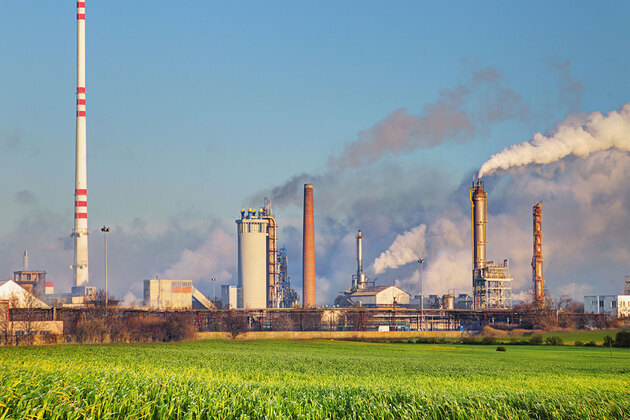
However, India's integrated fuel infrastructure -- including refineries, coastal terminals, LPG bottling plants, inland depots, and a pipeline network -- has emerged as the backbone of resilience amid growing global uncertainty, according to sector experts.
Industry believes that as geopolitical uncertainty continues, India's energy ecosystem will remain focused on demand security, operational resilience, measured market stability and long-term energy sustainability while simultaneously pushing for enhanced economic resilience and self-reliance at the national level.
(ADVERTORIAL DISCLAIMER: The above press release has been provided by NewsVoir. ANI will not be responsible in any way for the content of the same.)
Get a daily dose of Milwaukee Sun news through our daily email, its complimentary and keeps you fully up to date with world and business news as well.
Publish news of your business, community or sports group, personnel appointments, major event and more by submitting a news release to Milwaukee Sun.
More InformationLONDON, U.K.: Former Scottish National Party (SNP) chief executive Peter Murrell admitted in court on May 25 that he stole more than...
WASHINGTON, D.C: The United States has expanded its temporary Ebola-related travel restrictions to include lawful permanent residents...
COLOMBO, Sri Lanka: A court in Sri Lanka this week granted bail to a senior Buddhist monk who had been arrested on suspicion of sexually...
TAIPEI, Taiwan: Hundreds of people gathered in central Taipei on May 23 to support the government's plan to increase defense spending....
MADRID, Spain: Police and protesters clashed in Madrid on May 22 as tens of thousands of people marched to demand the resignation of...
WASHINGTON, D.C: Tulsi Gabbard announced on May 22 that she will step down as U.S. director of national intelligence, saying she wants...
NEW YORK CITY, New York: U.S. President Donald Trump disclosed more than 3,600 stock trades during the first quarter of 2026, revealing...
(Photo credit: David Banks-Imagn Images) The visiting St. Louis Cardinals will look to bounce back behind right-hander Michael McGreevy...
(Photo credit: Jerome Miron-Imagn Images) Houston pitchers Tatsuya Imai, Steven Okert and Alimber Santa combined for the majors'...
(Photo credit: Kiyoshi Mio-Imagn Images) Los Angeles Dodgers utility man Enrique Hernandez was reinstated from the 60-day injured...
(Photo credit: Peter Aiken-Imagn Images) It's been a season full of questions for the Boston Red Sox, none more perplexing than this:...