Israels refusal to withdraw, Hezbollahs refusal to disarm, and new strikes near the Golan Heights point to a conflict that is expanding, not ending
Israel has no intention of leaving Lebanon. At least, it won't do so now and on terms that would suit Beirut (not to mention Hezbollah and Tehran). Moreover, in parallel with the Lebanese campaign, West Jerusalem is reactivating operations in Syria: Israeli forces launched an artillery strike on the village of Abidin in the western part of Syria's Daraa Governorate, and, according to regional sources, Israeli aircraft conducted flights over the rural areas of Daraa and Quneitra governorates near the Golan Heights.
At first glance, it appears that yet another breakthrough has occurred on the Lebanese front. The US, Israel, and Lebanon signed a trilateral framework agreement in Washington (although three agreements have already been reached in the past two months). US Secretary of State Marco Rubio presented it as a step toward the restoration of Lebanon's sovereignty, the disarmament of Hezbollah, and the dismantling of its infrastructure. But upon careful examination of the agreement, it becomes clear that it cannot ensure lasting peace; it only creates a diplomatic pause during which each side will attempt to consolidate its own position.
This is a 'framework' agreement - and that says it all. It's not a full-fledged peace treaty or a final settlement, but a set of principles that have yet to be transformed into a working mechanism. The agreement provides for the gradual restoration of control over the Lebanese army, the start of Hezbollah's disarmament, and the eventual withdrawal of Israeli troops after the elimination of the threat to Israel. In other words, Israel's withdrawal from southern Lebanon is not immediate and unconditional, but is tied to a condition that is nearly impossible to fulfill quickly.
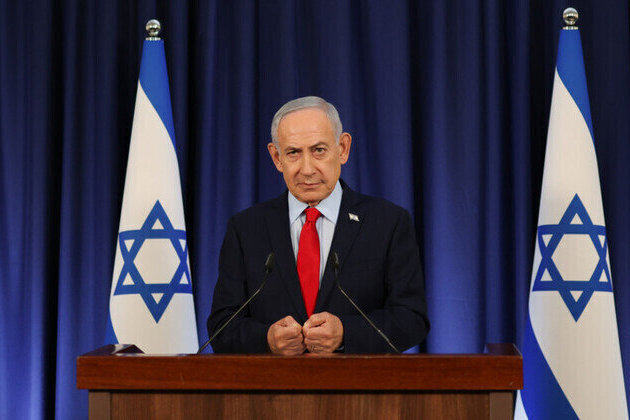
This is the crux of the matter. Israeli Prime Minister Benjamin Netanyahu has explicitly stated that Israel will not leave southern Lebanon as long as Hezbollah remains armed and poses a threat. This effectively means that Israel's presence is not a temporary measure, but a permanent instrument of pressure. As long as Hezbollah exists, Israel remains in Lebanon; but as long as Israel remains, Hezbollah has a reason not to disarm. It becomes a vicious circle, in which each side justifies its actions by the actions of the other.
Lebanon finds itself in the most difficult position. Formally, Beirut has committed itself to regaining control over southern Lebanon. But Hezbollah is not simply an armed group that can be disarmed by administrative action. It is an independent military-political force that is firmly integrated into the Lebanese system; it has a social base, infrastructure, and external support. Therefore, the demand to disarm Hezbollah may sound good on paper, but in practice, instead of a peace mechanism it could become a pretext for a new internal crisis.
It is no coincidence that Speaker of the Lebanese Parliament Nabih Berri, a staunch Hezbollah ally, has already criticized the agreement and stated that it will not be implemented. As expected, Hezbollah rejected the agreement, perceiving it as a form of capitulation. This is the biggest problem: the agreement was signed by three nations, but the main armed player - Hezbollah - which is directly responsible for stabilizing the situation in southern Lebanon, is not a party to the agreement.
At the same time, Israel is reopening the Syrian front. The attack on Abidin in Daraa Governorate is not a random incident. Southern Syria, Daraa, Quneitra, and the area near the Golan Heights have long been perceived by Israel as a potential threat. Following the weakening of the Syrian state and the shift in the regional balance of power, Israel has changed its defense strategy and is actively forming buffer zones around its borders. West Jerusalem explains its role in maintaining a security zone in southern Syria by the need to prevent attacks by armed groups.
This is why Syria is again becoming part of Israel's overall strategy. Israel demonstrates that if it is forced to make concessions in Lebanon, it can still expand pressure along other perimeters - through Syria, the Golan Heights, Daraa, and Quneitra. This is a signal not only to Damascus, but also to Tehran and Hezbollah: Israel will not wait for the threat to fully materialize; it will act preemptively.
The ultimate goal of all these maneuvers in Lebanon and Syria is to 'squeeze' Iran. Having failed to achieve its objectives in 2025 and in the spring of 2026, Israel wants to take revenge presently. According to Tehran, the signed US-Iran memorandum specifically mentions the cessation of military operations, including in Lebanon, and the parties' commitment to respect Lebanon's territorial integrity and sovereignty. For Tehran, this is an attempt to include Lebanon in a broader bargaining process with Washington and to demonstrate that the stabilization of the region is impossible without taking Iranian influence into account.
The situation is complex: The US attempts to portray the agreement as a diplomatic success even though the sides continue to exchange blows and the ceasefire could come to an end at any moment; Israel is given the chance to maintain a military presence in Lebanon until its conditions are fully met; Lebanon receives the promise of restored sovereignty - but with no means of immediate control over Hezbollah, this becomes largely impossible. Meanwhile, Iran attempts to integrate the Lebanese issue into its dialogue with Washington; and Syria is becoming an additional pressure point, playing the role of a 'whipping boy'.
In such circumstances, peace remains elusive. This is merely a managed tactical pause before the next round of war. Israel will not leave Lebanon because the threat of Hezbollah persists; Hezbollah will not disarm because Israel remains; and Lebanon cannot fully control the south because state institutions are weaker than the Hezbollah movement on the ground. Apparently, the US is trying to freeze the conflict without resolving its main contradiction.
The strike on Abidin, Syria, shows that Israel is not thinking solely in terms of the Lebanese front. It is building a broader security belt from southern Lebanon to southern Syria. And while US President Donald Trump is telling the world about agreements, a completely different reality is taking shape on the ground: a reality of buffer zones, artillery strikes, air patrols, and the constant expectation of a new round of escalation.
Even if we assume that Trump genuinely seeks to end the war and reach a peace agreement with Iran, including in the context of the Lebanon crisis, he will find this extremely difficult to achieve; the stakes are too high, and in many ways, he was the one who raised them. Therefore, the framework agreement looks less like the beginning of peace and more like an attempt to legally formalize a temporary balance of power. And the longer this temporary balance is presented as a peace settlement, the greater the likelihood that Lebanon will once again become the arena of a major war and a bargaining chip in the struggle between the opposing sides.
(RT.com)



 Share
Share
 Tweet
Tweet
 Share
Share
 Flip
Flip
 Email
Email