RFE
30 Jul 2026, 00:52 GMT+10
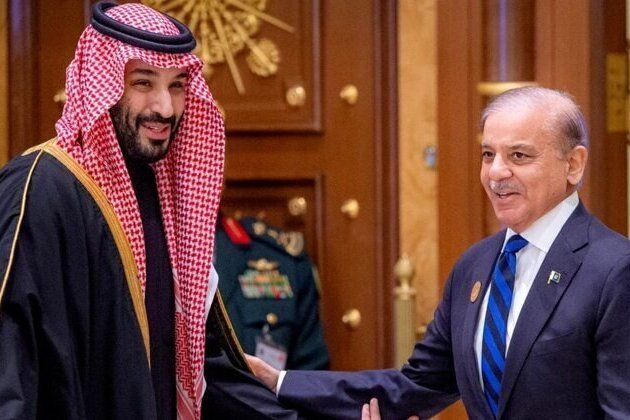
The prolonged US-Iran war has prompted many Persian Gulf nations to reassess their defense needs. For Pakistan, which has acted as a mediator in negotiations between Tehran and Washington, the conflict has created an opportunity to stabilize its fragile economy and improve its diplomatic outreach.
But the emerging partnerships between Islamabad and Middle East capitals are also reshaping the region's security dynamics, pushing the militarily weaker Gulf states closer to larger and better-armed neighbors -- Pakistan and India.
"The newly emerging security arrangements in the region are more like overlapping partnerships rather than fixed blocs," Alex Vatanka, senior fellow at the Washington-based Middle East Institute, told RFE/RL while referring to Saudi-Pakistan, UAE-India, and China-Pakistan relations.
These arrangements give "states more room to maneuver, but also make regional crises more complex and harder to manage," he added.
Kuwait, like other Gulf states, came under repeated Iranian missile and drone attacks before ratifying the agreement, causing damage to infrastructure and casualties. The country hosts at leastthree US military baseswith an estimated 13,000 personnel.
With that target on its territory, Kuwait became the second Gulf state to ratify a defense agreement with Pakistan that provides for military training, personnel exchanges, and intelligence sharing. Although signed in June 2023, the agreement only received final approval from theKuwaiti cabinetlast week,Kuwait's official GazetteAl-Kuwait Al-Youm announced on July 26.
Kuwait's neighbor, Saudi Arabia, signed a Strategic Mutual Defense Agreement with Pakistan last year that includes a clause along the lines of NATO's Article 5 that states "any aggression against either country shall be considered an aggression against both."
SEE ALSO:
Central Asia Is Increasingly Looking Beyond Iran, Says Analyst Ken Moriyasu
Meanwhile, Pakistani officials say a draft of a separate defense arrangement between Turkey, Pakistan, and Saudi Arabia has already been prepared and is awaiting a final consensus from the three sides.
On top of that, leaders of the "regional four," or R4 -- Pakistan, Saudi Arabia, Egypt and Turkey -- have been discussing closer security cooperation since the 12-day US-Israel-Iran conflict in June 2025.
Analysts say the urgency among rich Gulf states to seek defense agreements with Pakistan and forge alliances has been driven by the vulnerabilities of their defenses in the face of Iranian missile and drone strikes, despite being allies of the world's most powerful country, the United States.
SEE ALSO:
Fear Of Iran And Public Backlash Stall Trump's Push For Abraham Accords
Mushahid Hussain Sayed, a former Pakistani senator and an Islamabad-based defense analyst, said there has been a rethinking among Middle Eastern countries as "approximately 16 [US] bases could not save them from the Iranian missile and drone strikes."
Sayed said Pakistan had become the "center of gravity" because it acts as a bridge between Tehran and Washington regarding peace and has an outreach with China.
Vatanka saidPakistan combines military capability with strategic flexibility.
"It maintains ties with Saudi Arabia, Iran, China, and the US without fully joining any one camp, making it a useful security partner in a more multipolar region."
As Pakistan expands its outreach in the Middle East, its much larger neighbor, India, has already forged strong ties with Israel and the United Arab Emirates, which was once counted among Pakistan's closest allies.
Apparently unhappy over Pakistan's expanding defense ties with Saudi Arabia and the country's mediatory role in the Iran-US conflict, in April,Abu Dhabi asked Pakistan to repaya $3.5 billion loan immediately.
For decades, nuclear-armed Pakistan has remained dependent on loans and financial support from the rich Gulf countries, including Saudi Arabia, the UAE, and Qatar. Pakistan's fragile economy mostly remained dependent on aid from the United States, especially during the Afghan war from 2001 to 2021, as well as loans from the International Monetary Fund.
SEE ALSO:
Pakistani Shi'a In The UAE Caught In The Crosshairs Of Iran War
"For Pakistan, the driving factors are its fragile economy and the persistent risk of isolation by its much larger South Asian neighbor, India. For the Gulf states, the motivation lies in strengthening their defense capabilities through indigenous military development and technological advancement which have drawn them closer together," said Feroz H. Khan, a retired brigadier of the Pakistani Army and research professor at the Naval Postgraduate School in California.
Khan told RFE/RL that Gulf countries have lost faith in the previous security architecture under the US umbrella because they were attacked both by Iran and Israel.
"They are now more interested in an indigenous security apparatus instead of relying on outside forces," Khan said.
Nuclear-armed Pakistan and India have fought several wars since their independence from the British in 1947. Being much larger in size, population, economy, and defense capabilities, India has traditionally been considered the regional power in South Asia.
"As part of its Strategic Relevance, Pakistan has carved out a role for itself in the Middle East by presenting itself as the eastern fortress of the Muslim world," said Khan. "Rather than trying to compete with a much larger India in South Asia, Pakistan has successfully leveraged the US-Iran conflict to position itself as a Middle Eastern power."
How The Iran War Is Changing Security Dynamics In The Middle East
ShareCopy link
X (Twitter)
Share
ShareCopy link
X (Twitter)
Share
Follow usX (Twitter)
Youtube
Follow us
Get a daily dose of Milwaukee Sun news through our daily email, its complimentary and keeps you fully up to date with world and business news as well.
Publish news of your business, community or sports group, personnel appointments, major event and more by submitting a news release to Milwaukee Sun.
More InformationZURICH, Switzerland: FIFA is seeking support from its 211 member associations for a proposal to create a new commercial subsidiary...
HONG KONG: China moved tourists out of the famous Jiuzhaigou scenic area on July 27 after heavy rain caused mudslides, according to...
SEOUL, South Korea: A court in South Korea on July 27 sentenced former president Yoon Suk Yeol to 18 months in prison, but suspended...
DUBAI, U.A.E.: On July 27, Saudi Arabia, Jordan, and Iraq all reported drone attacks, just two days after the United States suddenly...
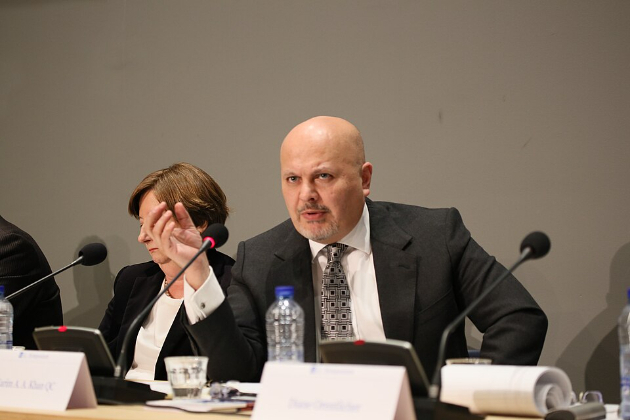
THE HAGUE, Netherlands: Supporters of the International Criminal Court (ICC) met on July 25 to decide what to do next, a day after...
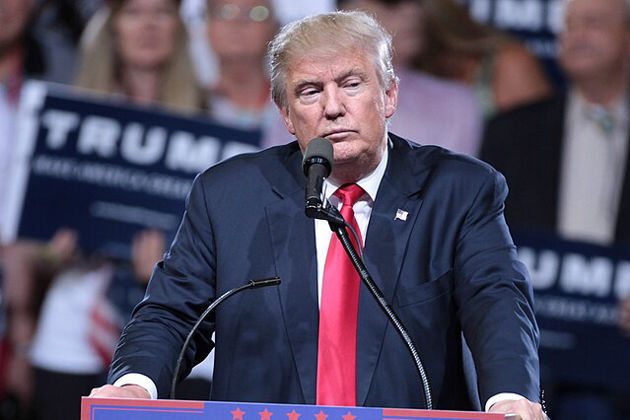
WASHINGTON D.C.: U.S. President Donald Trump's latest tariff measures signal a shift toward a more durable trade strategy, with his...
(Photo credit: Rick Scuteri-Imagn Images) The Milwaukee Brewers are adjusting their starting rotation after recalling left-hander...
(Photo credit: Justine Willard-Imagn Images) Personal history could be in the making when San Francisco Giants ace Logan Webb faces...
(Photo credit: John Jones-Imagn Images) Amid their worst season in more than two decades, the New York Mets can't even get a break...
(Photo credit: David Reginek-Imagn Images) Gleyber Torres homered and drove in five runs and the host Detroit Tigers scored in every...
(Photo credit: John Hefti-Imagn Images) Logan Henderson pitched effectively into the sixth inning, Luis Lara drove in three runs...
(Photo credit: Kamil Krzaczynski-Imagn Images) After a strong start to his Southern California tenure, coach Lincoln Riley has lost...