Xinhua
06 Aug 2026, 07:15 GMT+10
BEIJING, Aug. 6 (Xinhua) -- The ruins of Hiroshima have long stood as a reminder of the horrible human cost of war. But they also testify to another historical truth: Japan's militarist expansion would ultimately bring disaster not only to its neighbors, but also to itself.
As the 81st anniversary of the atomic bombing of Hiroshima is commemorated, this lesson should be remembered, not ignored. Yet some politicians in Japan appear to be moving in the opposite direction.
Shinjiro Koizumi, the Japanese defense minister, has gone so far as to say that Japan should discuss its nuclear policy "without taboos," including whether to revise the Three Non-Nuclear Principles that Tokyo has been adhering to for decades.
Japan's Three Non-Nuclear Principles, which prohibit possessing, producing or permitting the introduction of nuclear weapons into Japanese territory, were formally adopted by the Japanese parliament in 1971 and have since become the cornerstone of the country's nuclear policy.
The sitting defense minister's provocative and dangerous rhetoric not only betrays Japan's postwar commitment to pacifism but also raises serious concerns about the country's future direction.
The reckless remarks are the latest manifestation of the Sanae Takaichi administration's accelerated efforts to remilitarize, which include continuously inflating the country's military budget, relaxing restrictions on the export of lethal weapons, pushing for the acquisition of nuclear-powered submarines, pursuing "nuclear sharing" arrangements and deploying medium- and long-range missiles.
For years, Japan's right-wing forces have repeatedly invoked narratives of "external threats" and "self-defense" to push beyond the constraints imposed by the country's pacifist Constitution.
The country's 2026 defense white paper also portrays the regional security environment as "increasingly severe" and claims that China is the "greatest strategic challenge ever."
Such rhetoric reflects a familiar pattern: exaggerating security threats, creating a sense of crisis, and using that as a justification for military expansion and a shift toward a "war-capable" nation.
History provides a painful reminder of where such a path can lead to.
Before the mushroom cloud rose over Hiroshima, imperial Japan, under the banners of "national survival," "security" and "self-defense," had launched wars of aggression that inflicted enormous suffering on Asian countries, including China.
The postwar international order and Japan's pacifist framework were established precisely to prevent the recurrence of such tragedies.
Abandoning those restraints would mean turning away from the hard-earned lessons of history.
Japan's nuclear ambition is particularly troubling given its international obligations and capabilities. As a non-nuclear-weapon state party to the Treaty on the Non-Proliferation of Nuclear Weapons (NPT), Japan has an indisputable and unshirkable international legal obligation not to receive, manufacture, acquire or transfer nuclear weapons.
Any attempt to breach the Three Non-Nuclear Principles would constitute a serious violation of Japan's NPT obligations, a severe blow to the global nuclear non-proliferation regime, and a fundamental threat to the postwar international order.
At the same time, many within Japan remain steadfastly against nuclear armament.
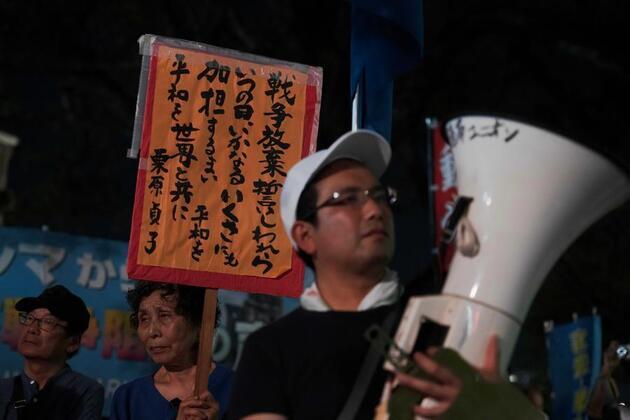
According to Japanese media, 82 local assemblies, including those of Hiroshima and Nagasaki -- the very cities that suffered atomic devastation -- have submitted petitions urging the government to uphold the Three Non-Nuclear Principles.
Such grassroots mobilization reflects a profound and enduring public commitment to peace. These voices should be heard loud and clear.
The ruins of Hiroshima deliver a lesson of unbearable human cost: militarism does not bring security. Militarism is like a pandora's box, opened again, it will plunge Japan into an abyss one more time.
Get a daily dose of Milwaukee Sun news through our daily email, its complimentary and keeps you fully up to date with world and business news as well.
Publish news of your business, community or sports group, personnel appointments, major event and more by submitting a news release to Milwaukee Sun.
More InformationDEIR AL-BALAH, Gaza City: Large crowds of Palestinians gathered on August 4 to hold a mass funeral for more than 100 people whose bodies...
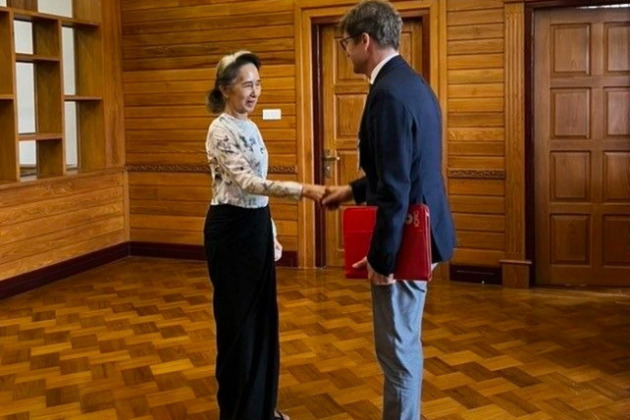
BANGKOK, Thailand: Myanmar's former leader Aung San Suu Kyi, who is being held in detention, met a representative from the International...
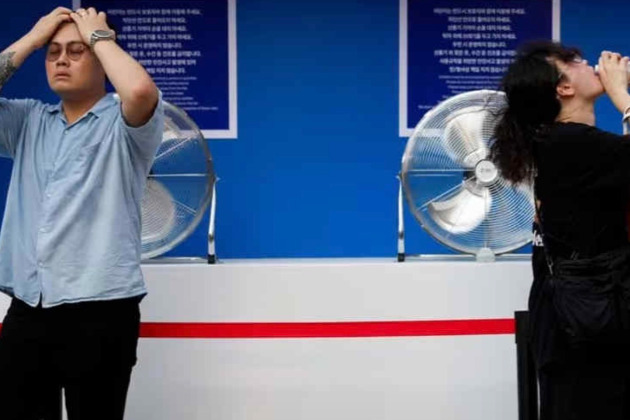
SEOUL, South Korea: A record-breaking heatwave is affecting the Korean Peninsula, with extremely high temperatures reported in South...
ABOARD AIR FORCE ONE/DUBAI: Iran said on August 3 that there were no ongoing talks with the United States and no plans for any meetings,...
HOUSTON, TEXAS: ExxonMobil and Chevron said tight global supplies of diesel and other refined fuels are likely to keep prices elevated...
ZURICH, Switzerland: FIFA has reportedly abandoned plans to sell a minority stake in a new commercial entity after facing widespread...
(Photo credit: Jay Biggerstaff-Imagn Images) Twins ace Joe Ryan left the team and returned to Minnesota on Wednesday to get evaluated...
(Photo credit: Jon Endow-Imagn Images) The Los Angeles Angels placed right-handed reliever Sam Bachman on the 15-day injured list...
(Photo credit: Albert Cesare/The Enquirer / USA TODAY NETWORK via Imagn Images) Both starting pitchers in Wednesday night's game...
(Photo credit: Kamil Krzaczynski-Imagn Images) Dansby Swanson went 3-for-4 with a homer and a double for the Chicago Cubs in a 5-1...
(Photo credit: Michael McLoone-Imagn Images) Jackson Chourio and Andrew Vaughn homered to lead the host Milwaukee Brewers to a 4-2...
(Photo credit: Vincent Carchietta-Imagn Images) The Tampa Bay Rays were active right up to Monday night's trade deadline, and their...