Welcome to Wider Europe, RFE/RL's newsletter focusing on the key issues concerning the European Union, NATO, and other institutions and their relationships with the Western Balkans and Europe's Eastern neighborhoods.
I'm RFE/RL Europe Editor Rikard Jozwiak, and this week I am drilling down on one issue: Icelands EU referendum.
Embed
share
Wider Europe Briefing: What Iceland's EU Referendum Means For Europe
byRFE/RL
Embed
share
The code has been copied to your clipboard.
The URL has been copied to your clipboard
No media source currently available
0:00
0:12:07
0:00
Direct link
128 kbps | MP3
64 kbps | MP3
Pop-out player
The Briefing: Iceland's Referendum -- Will It Restart EU Accession Talks?
On August 29, Iceland will hold a referendum on restarting European Union accession talks with Brussels.
Iceland has been here before. It applied to join the EU in 2009 and began accession negotiations the following year, but a new government put the talks on hold in 2013. Two years later, Reykjavik told Brussels that Iceland should no longer be considered a candidate for membership, although it stopped short of formally withdrawing its application.
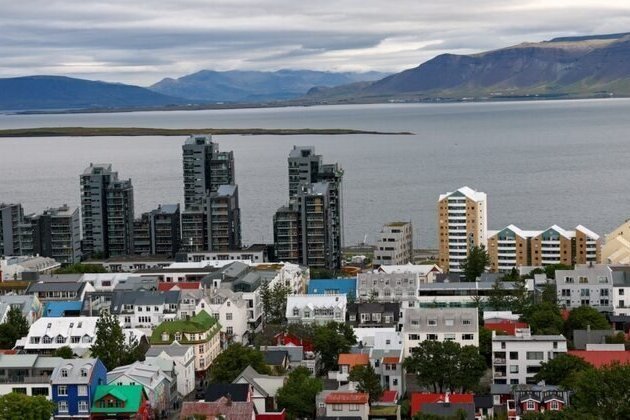
What happens this time could resonate well beyond Iceland. While a referendum on an island of just under 400,000 inhabitants in the North Atlantic normally wouldnt grab too many headlines, this vote could have far-reaching consequences for the EU, its current candidate countries, and other European countries that are pondering closer relations with the bloc.
A Test Of The EU's Appeal
For Hallgrimur Oddsson, director of the think tank Evrpustraumar (European Currents), which charts EU-Icelandic relations, the vote is very much a challenge for the EUs expansion policy.
The enlargement over the past decade and more has been pointing eastwards, he told RFE/RL. In my mind, from the EU perspective, this is a sort of a test. To see if the EU is attractive enough for the wealthier northern countries that are now currently outside of the union to join.
Among European diplomats speaking to RFE/RL, there is a sense that this poll matters as much in Brussels as in Reykjavik -- largely because of the instant feel-good factor it would give the EU, which has endured a turbulent decade marked by Brexit, sluggish economic growth in parts of the union, disputes over migration, and security concerns fueled by Russian hybrid attacks.
It would also provide a symbolic boost to a bloc whose recent enlargement debate has largely centered on less wealthy candidate countries in Eastern and Southeastern Europe.
If Iceland were to join, it would be the third richest member state on a per capita basis and a net contributor to the European Unions budget -- something that none of the current EU candidate countries in the Western Balkans or Eastern Europe is expected to be.
It would also be easily absorbable, as it would not only be the smallest member state population-wise, but is already part of the passport-free Schengen zone and large parts of the EUs internal market and rulebook by virtue of being a member of the European Economic Area (EEA), together with non-EU Liechtenstein and Norway.
The Impact On Norway And Current EU Hopefuls
The most obvious and immediate impact if Iceland votes Yes on August 29 could be felt in Norway, another affluent, non-EU Nordic country that is already watching the vote closely.
EU diplomats have told RFE/RL off the record that Oslo is in regular contact with Brussels about what the potential Icelandic resumption of accession talks would look like and what would be left of the EEA if Iceland were to join.
Norway has rejected membership of the EU (or its predecessors) twice, once in 1972 and again in 1994. A majority of Norwegians is still against joining according to recent polls, but an Icelandic Yes could fuel calls for Norway to hold a vote on at least opening accession talks.
EU officials also believe that Iceland moving closer to the union could trigger renewed discussion in both Greenland and Scotland about their relations with Brussels.
Greenland, which is a Danish territory, was part of the EU forerunner, the European Economic Community, until it unilaterally withdrew in 1985, but leading politicians there have recently been keen to explore deeper ties with the EU.
And Scotland was, of course, part of the EU when the United Kingdom was a member and voted overwhelmingly in favor of remaining in the bloc in the 2016 Brexit referendum.
Any potential future talks with these two countries, however, would have to involve Copenhagen and London, respectively -- something that is likely to be politically sensitive as it could involve questions of greater autonomy or independence. But dont rule either out if Iceland edges closer to EU membership.
There is also great hope in Brussels that renewed Icelandic accession talks will give fresh impetus to the current EU candidate countries -- notably front-runners like Albania and Montenegro in the Western Balkans, but also Moldova and Ukraine.
One reason is simply that it would demonstrate that enlargement remains possible, given that no country has joined since Croatia back in 2013. But more importantly, because some of these countries could be paired with Iceland in an eventual EU accession -- potentially not only speeding up the process but also making it more attractive to current EU member states, which must approve any new additions and are very keen to get Iceland in.
Table: EU Candidate Countries' Progress Towards Membership
The most obvious candidate for pairing is Montenegro, which has advanced the furthest out of the current crop of candidates, with 18 out of 33 policy chapters closed.
Iceland had closed 11 chapters before it suspended talks with the bloc, so it is not inconceivable to see Reykjavik and Podgorica go hand in hand toward EU membership near the end of this decade, if all goes smoothly.
But Will Icelanders Vote Yes?
In politics, however, things rarely go as planned and Iceland could serve up a potential embarrassment for Brussels if it nixes the opportunity to relaunch the accession process in the upcoming referendum.
As Steven Blockmans, the deputy director of the International Center for Defense and Security (ICDS) put it to RFE/RL: It will impact the international stature of the European Union. Take some more of its shine away for other candidate countries. So, the enlargement processes as a whole and its image will suffer. It will be a blow.
And that blow could come later this week.
In most polls, the Yes side is ahead, but only by single digits and there are still a substantial number of respondents who have stated that they are unsure how they will cast their ballots.
Most are expecting a Saturday night nail-biter, including Vilborg Asa Gudjonsdottir, a researcher at the University of Iceland.
It's impossible to predict, because this is super close, she said. And even those that were undecided a month ago and have decided what they're going to vote for today, these votes are splitting almost equally for the Yes and for the No side. So, I won't be making any predictions here.
That split is also apparent in the Icelandic political landscape where the coalition government has two parties that are in favor of restarting the talks -- the center-left Social Democratic Alliance and the centrist Liberal Reform Party. On the other hand, the junior coalition partner -- the Peoples Party -- and the entire opposition is against this.
If there is a Yes vote on August 29, Icelanders would still have to approve any final negotiated accession treaty with the EU in a second referendum.
EU membership is also expected to require constitutional changes to allow for the transfer of sovereign powers. Under Iceland's current rules, a constitutional amendment must be approved by parliament, followed by a general election, and then approved unchanged by the newly elected parliament. The next regular election is due no later than 2028, although passage of a constitutional amendment would itself trigger an election.
Euro Dreams And Transatlantic Tensions
When Reykjavik initially sought to join the bloc back in 2009, the islands banking sector had been severely hit by the global financial crisis and membership not only of the EU, but especially the eurozone, was seen as a potential lifesaver.
That was just before the eurozone itself was engulfed in the same financial meltdown and quickly became less attractive to Iceland.
In many ways the economic argument is also very much front and center this time, too.
As Oddsson points out, Iceland has high inflation and price stability has always been an issue.
We have a small free-floating currency, he said, referring to the Icelandic krona. And the question is, can we get that price stability and lower rates with the euro?
Geopolitical issues, however, are also at the back of some voters and politicians minds, notably with transatlantic trade tensions and political spats as well as increased Russian submarine activity in the far north.
Arctic security has become a hot button issue, Blockmans said. Of course, the saber rattling over Greenland and the fact that [US President Donald] Trump confused Iceland for Greenland a couple of times, has not helped. That has put nerves on edge, and it's been seized upon by this pro-European coalition
The United States has not made any explicit claims regarding Iceland, however, with Washington honoring a 1951 defense agreement with Reykjavik that protects the island, which is the only NATO member without a standing army.
The Problem With Fish
Despite the will to get closer to the EU, there are notably two areas in which the North Atlantic nation is far from integrated with the union: the Brussels Common Fisheries Policy (CFP) and its Common Agriculture Policy (CAP).
Gudjonsdottir points out that farmers, a small but politically very influential interest group, are very much in favor of a No vote.
Farmers are worried that joining the EU would mean a loss for them, she says. For example, we have protective tariffs on agricultural products and those would have to go if we joined the EU. What would that mean for their livelihoods and for their ability to continue to farm?
But fishing will be the big sticking point in any future EU-Iceland negotiations.
The country has a long and proud history as a fishing nation and that has a big impact on politics today.
While its economy has diversified in recent years, fishing still accounts for around 10 percent of the countrys GDP, and the industry is still considered a proper power broker in the country.
Both people and politicians on the island are well aware of the 1975-1976 Cod War, when Iceland expanded its exclusive fishery zone from 50 nautical miles (80 kilometers) off its coast to 200 miles (322 kilometers).
This happened much to the chagrin of Britain, but London eventually backed down after Icelandic coast guards started cutting the nets of British fishing boats and 200 miles eventually became the UN-codified norm for exclusive fishing zones.
The EU also follows this zonal arrangement but with the caveat that fishing boats from one EU member state can fish in the waters of another EU member state, such as Irish boats operating in French waters and vice versa.
Reykjavik, however, isnt keen to allow other European fleets have greater access to Icelands rich and well-managed fishing waters.
So, how do you square this circle?
Iceland ideally wants an opt out from the CFP, but other EU fishing nations, such as France, Portugal, and Spain, likely wont accept such an exemption.
Another idea would be to allow non-Icelandic fishermen to fish for some species in Icelandic waters, such as mackerel, but not the more lucrative cod or haddock.
The EU may also toy with the idea of simply giving Iceland a transition period for a defined time, meaning that the country will be gradually integrated into the CFP over many years.
This thinking is similar to what might be in store for Ukraine and its massive agriculture sector should it become an EU member.
Either way, the negotiations will be tough and could potentially drag on.
And if Iceland feels it hasnt got the best deal on fish and agriculture, the people will likely reject any deal -- that is if this process even starts after the August 29 vote.
That's all for this week!
Feel free to reach out to me on any of these issues @RikardJozwiak, or via e-mail [email protected].
Until next time,
Rikard Jozwiak
If you enjoyed this briefing and don't want to miss the next edition subscribehere.
Wider Europe Briefing: What Iceland's EU Referendum Means For Europe
Share
Copy link
Facebook
X (Twitter)
LinkedIn
Email
Share
Share
Copy link
Facebook
X (Twitter)
LinkedIn
Email
Share
Follow us
Facebook
X (Twitter)
Youtube
Instagram
Follow us
Print



 Share
Share
 Tweet
Tweet
 Share
Share
 Flip
Flip
 Email
Email