Anabelle Colaco
17 Mar 2026, 16:31 GMT+10
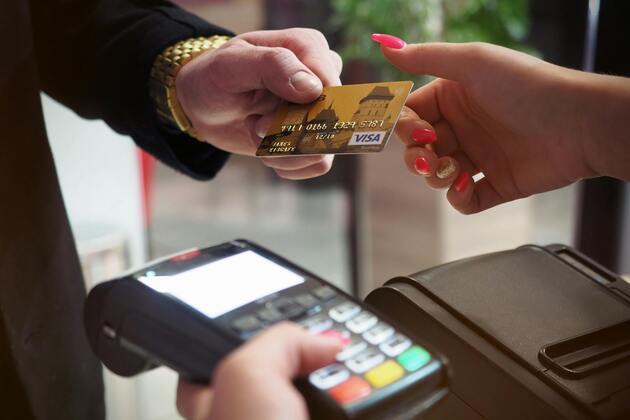
CHICAGO, Illinois: U.S. airlines are increasingly relying on revenue from co-branded credit cards, reshaping how loyalty programs reward travelers and becoming a major driver of profits.
For decades, airline fortunes depended mainly on ticket sales, fuel costs, and how full flights were. Today, billions of dollars from bank partnerships tied to credit cards are becoming an increasingly important part of the business and influencing how frequent-flyer programs operate.
In February, United Airlines said that starting April 2, 2026, regular members without its co-branded credit card will earn only three miles per dollar spent on eligible flights, while cardholders will earn at least six miles per dollar. The airline also said regular members will need a qualifying United card to earn miles on basic economy tickets.
American Airlines has stopped awarding AAdvantage miles and Loyalty Points on basic economy fares. Delta Air Lines, meanwhile, allows customers to use spending on its co-branded American Express credit cards to help qualify for elite status.
A Reuters review of filings by major U.S. airlines between 2021 and 2025 highlights the financial logic behind the shift. Banks pay airlines billions each year for loyalty miles and related payments, in some cases generating revenue comparable to airline operating income.
That income stream is less dependent on ticket sales, a factor that has become more important as rising jet-fuel costs linked to conflict in the Middle East squeeze airline margins.
At the same time, reliance on credit-card partnerships exposes airlines more directly to banks' strategies, credit conditions, and political decisions that could alter how rewards programs are funded.
Rewards Harder to Earn
As airlines emphasize credit-card spending, earning rewards through cheaper fares has become more difficult. "The value provided to frequent-flyer members has decreased over time," said Jay Sorensen, head of consultancy IdeaWorks.
Its 2025 U.S. Domestic Reward Report found reward "payback", linking ticket prices to award redemption values, has dropped by about half since 2019 as several airlines reduced or eliminated mileage earning on their cheapest tickets.
David Robertson of the Nilson Report said that if redeeming miles becomes too difficult, some consumers may abandon airline credit cards, potentially prompting pressure from banks that purchase miles in large quantities.
Airlines say credit cards are intended to complement, not replace, travel-based rewards. Alaska Airlines loyalty chief Kevin Scott said non-cardholders "continue to earn meaningful value through flying." Co-branded cards, he said, are meant to enhance the program rather than replace traditional earnings.
Billions Flowing From Banks
Airlines disclose credit-card partner payments in different ways, but the amounts involved are significant.
Delta received US$8.2 billion in cash from American Express in 2025, about 14 percent of its adjusted operating revenue and roughly 1.4 times its adjusted operating income.
A Delta spokesperson said some of that cash is recorded as immediate revenue, while the rest is deferred until customers redeem their miles.
American Airlines reported $6.2 billion in 2025 payments from co-brand and other partners, roughly four times its adjusted operating income. The company expects its new co-brand agreement with Citi to help narrow the profit gap with rivals Delta and United.
At Alaska Airlines, loyalty revenue accounted for about 16 percent of total revenue. CFO Shane Tackett said the co-branded partnership helps stabilize financial results during swings in travel demand.
However, the model also ties airlines closely to financial institutions and the credit cycle. Delta says nearly all of its marketing-agreement cash comes from American Express, while Southwest Airlines sells most of its loyalty points to JPMorgan Chase.
Brian Riley, a payments analyst, said that during economic downturns, banks typically tighten lending and reduce marketing for co-branded cards, slowing new account growth and potentially affecting airline earnings within two to three quarters.
Political and regulatory pressure, airline loyalty programs also face scrutiny from lawmakers and regulators.
A bipartisan proposal in Congress known as the Durbin-Marshall bill would increase competition in payment-network routing, which supporters say could reduce costs for merchants. Airline industry group Airlines for America warned the measure could threaten rewards programs, citing earlier regulations that reduced debit-card rewards.
Merchants and consumer groups disagree. Dylan Jeon of the National Retail Federation said premium rewards cards carry higher interchange fees that merchants often pass on to consumers.
Separately, President Donald Trump has proposed a one-year cap on credit-card interest rates at 10 percent, which banks and airline groups say could also affect rewards programs.
Airline loyalty programs have also drawn regulatory attention. The U.S. Department of Transportation said it requested information in 2024 from American, Delta, Southwest, and United about their rewards programs and policies, and is reviewing the responses.
John Breyault, vice president of public policy at the National Consumers League, said greater transparency is needed because airlines can change earning and redemption rules without clear advance notice.
"The modern airline is a gigantic rewards program that just happens to fly airplanes," Breyault said.
Get a daily dose of Milwaukee Sun news through our daily email, its complimentary and keeps you fully up to date with world and business news as well.
Publish news of your business, community or sports group, personnel appointments, major event and more by submitting a news release to Milwaukee Sun.
More InformationLAS VEGAS, Nevada: The sentencing of Dances With Wolves actor Nathan Chasing Horse, convicted of sexually assaulting Indigenous women...
MELBOURNE, Australia: A jury in a Sydney court found a businessman from the city guilty of providing reports to two people he should...
WASHINGTON, D.C.: The fee for Americans to formally renounce their U.S. citizenship has now been slashed by about 80 percent from US$2,350...
NEW YORK CITY, New York: A fast-growing drone manufacturer partly owned by President Donald Trump's two eldest sons is seeking Pentagon...
SALEM, Oregon: A spectacular waterfall in Oregon beloved by generations was recently put up for sale on Redfin. Abiqua Falls, known...
NORFOLK, Virginia: The Reserve Officers' Training Corps (ROTC) students at Virginia's Old Dominion University on March 13 subdued and...
CHICAGO, Illinois: U.S. airlines are increasingly relying on revenue from co-branded credit cards, reshaping how loyalty programs reward...
WASHINGTON, D.C.: Smaller portions are emerging as one of the biggest trends in the restaurant industry as diners look to spend less...
WASHINGTON, D.C.: About one-third of Americans cut spending on food, utilities or other basic expenses in 2025 in order to pay for...
(Photo credit: Brett Davis-Imagn Images) A lost season for superstar Giannis Antetokounmpo and the Milwaukee Bucks continues Tuesday,...
(Photo credit: Trevor Ruszkowski-Imagn Images) The New York Knicks know they shouldn't have any reason to lose focus Tuesday night....
(Photo credit: Mark Hoffman / Milwaukee Journal Sentinel / USA TODAY NETWORK via Imagn Images) Rashan Gary took less money to be...