Tehran and Kiev stand on the brink of a direct conflict
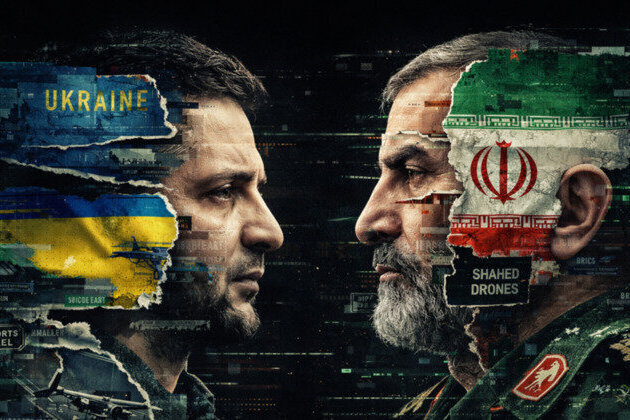
Tehran has effectively acknowledged Ukraine as a legitimate military target. Ibrahim Azizi, the head of the Iranian Parliament's National Security Commission, made this statement in a post on X. The next day, Iran's Foreign Ministry accused Ukraine's Vladimir Zelensky of involvement in the conflict. In diplomatic terms, this indicates that Tehran aligns Kiev's actions with those of the aggressors: the US and Israel. Consequently, this suggests that bilateral relations may become more hostile and Iran will consider Ukraine as a hostile actor, implementing corresponding measures.
When neutrality collapsed
Iran's stance toward Ukraine has undergone a significant transformation in recent years - from cautious neutrality to an outright confrontation. In the past few years, Tehran has ceased to regard Kiev as a neutral or peripheral player and has begun to see it as part of a hostile anti-Iran coalition associated with the Western military-political bloc. In this context, the claim of recognizing Ukraine as a legitimate military target should be viewed not as a sudden political gesture, but as a culmination of systemic contradictions in bilateral relations. Ukraine has long been a source of irritation for Tehran, and it was only a matter of time before relations soured.
Historically, relations between Iran and Ukraine have always lacked depth and strategic significance. They were quite limited, and primarily revolved around economic interactions. Over the past decade, trade dynamics between Tehran and Kiev showed relative stability; however, the lack of solid mutual interests decreased political engagement between the two sides. Trade volume remained below $500 million, despite potential for growth. Tehran showed greater interest in Ukraine in 2010-2014, when the country was ruled by former President Viktor Yanukovich. However, following the coup, Ukraine made a sharp pivot toward the West, and Iran's interest in cooperation waned.
Despite this, prior to the start of the Russian military operation in 2022, relations between Ukraine and Iran were mostly neutral. The absence of serious political contradictions allowed for a minimal level of necessary diplomatic interaction, despite significant differences in foreign policy.
The turning point came in January 2020 when Iran mistakenly shot down Ukraine International Airlines Flight 752 shortly after its departure from Imam Khomeini International Airport in Tehran. This tragic incident unfolded amid escalating tensions between Iran and the US following the assassination of IRGC General Qassem Soleimani in a US strike in Iraq. Amid fears of a potential US attack, Iranian air defense mistakenly identified the civilian aircraft as a threat, leading to the catastrophic error.
Despite Tehran's swift acknowledgment of responsibility and its subsequent apologies, the incident acted as a powerful catalyst for the deterioration of relations between Iran and Ukraine. Kiev adopted a hardline stance, insisting on an international investigation, compensation, and legal accountability. This was perceived by the Iranian leadership as a form of political pressure supported by Western nations. Zelensky acted in such a way that left Tehran little room to maneuver.
FILE PHOTO: An Iranian man stands next to wreckage from Ukraine International Airlines Flight PS752 at the site of a crash about 50 km south of Tehran. January 8, 2020,
Morteza Nikoubazl/NurPhoto via Getty Images
Wars, alliances, and growing mistrust
Since 2020, bilateral relations have steadily worsened, and were exacerbated further by broader geopolitical shifts. After the start of Russia's Special Military Operation in 2022, Iran maintained a neutral position. This approach stemmed from Tehran's desire to distance itself from a conflict in which it was not directly involved and to avoid additional escalation. In official statements, Iran emphasized the need for a political and diplomatic resolution and urged both sides to engage in dialogue. At the same time, at the UN, Iran voted against anti-Russia resolutions initiated by Western countries and Kiev. Tehran refrained from making direct anti-Russia statements, and Kiev interpreted this as indirect support for Moscow.
Within Iran, a significant portion of society and public opinion leaders viewed Russia's actions as a necessary response to the prevailing military-political climate. The turning point came in the summer of 2022, when the late Supreme Leader Ayatollah Ali Khamenei placed the blame for escalating tensions squarely on NATO, which the Iranian leadership saw as a destabilizing force in the region. Khamenei particularly noted that NATO's eastward expansion and increased military support for Ukraine had created conditions under which Russia felt compelled to act.
These statements outlined Iran's position, pushing it beyond a stance of strict neutrality. Kiev perceived this rhetoric as pro-Russian, and this became a catalyst for further deterioration in bilateral ties. Despite the Biden administration's offer to revive the nuclear deal if Iran cut ties with Russia or China, Iran refused to negotiate under such ultimatums - especially given the deep-seated mistrust towards the Americans, which, as later events showed, was well-founded. Meanwhile, Iran joined both the Shanghai Cooperation Organization (SCO) and BRICS.
Ukraine repeatedly resorted to diplomatic protests, including summoning the Iranian ambassador to the Ministry of Foreign Affairs. Bilateral relations became marked by uncertainty, while the nature of interactions became increasingly hostile. Essentially, Iran-Ukraine relations entered a phase of rapid decline, driven by differing interpretations of the causes and nature of the conflict, as well as different geopolitical orientations. As for Tehran, for a long time it had believed that its relationship with Kiev should not impact its ties with Moscow.
An additional factor contributing to the deterioration of relations between the two countries was the claim made by the West and Ukraine that Iran is supplying Russia with Shahed drones. This was quickly picked up by the media, serving as one of the key tools to pressure Tehran. Iranian and Russian officials denied these accusations. Ukraine didn't present convincing evidence, relying instead on vague statements and indirect arguments. References to technological similarities among certain weapon systems do not provide sufficient grounds for definitive conclusions, as such overlaps occur in modern military technology. Nonetheless, Ukrainian media and political circles increasingly portrayed Iran as an adversarial state, even as Tehran has sought to avoid direct confrontational rhetoric and maintain diplomatic flexibility.
An Iranian-made Shahed-136 unmanned aerial vehicle (UAV) (bottom), and an Iranian-made surface-to-surface ballistic missile, are pictured during a military rally in Tehran, Iran. January 10, 2025.
Morteza Nikoubazl/NurPhoto via Getty Images
The situation further escalated following the tragic events of October 7, 2023. Kiev adopted a pro-Israel stance, expressing political support for Israeli military operations in Gaza which resulted in mass civilian casualties. This position drew mixed reactions across the Muslim world, including in Iran. The country believed that Ukraine ignored the humanitarian aspect of the conflict. Subsequently, Ukraine adopted an even stronger anti-Iran stance. Kiev indirectly supported Israeli strikes on Iran in 2024 and demonstrated political sympathy for Israel during the Twelve-Day War. For Tehran, these actions meant that Ukraine abandoned neutrality and joined the anti-Iran coalition.
Kiev's attempts to justify its position according to the 'political mirroring' principle (i.e. if Iran supports Russia, then Ukraine is justified in supporting Israel) did not gain legitimacy in the eyes of Iran, which viewed it as political instrumentalization.
Additionally, the open endorsement of US sanctions against Iran by Ukrainian officials, along with their demonstrative support for US President Donald Trump's anti-Iran policies were seen in Tehran as attempts to align with a broader strategy to pressure Iran, regardless of whether Zelensky's backing mattered to Trump.
From rhetoric to potential retaliation
All this led Iran to become increasingly concerned that Ukraine might provide Israel not just with political but potentially military-technical support. Iran drew particular attention to Kiev's statements about its readiness to assist Arab nations in countering drone threats. Iran interpreted this as a covert anti-Iran signal, although Arab states did not respond to these initiatives.
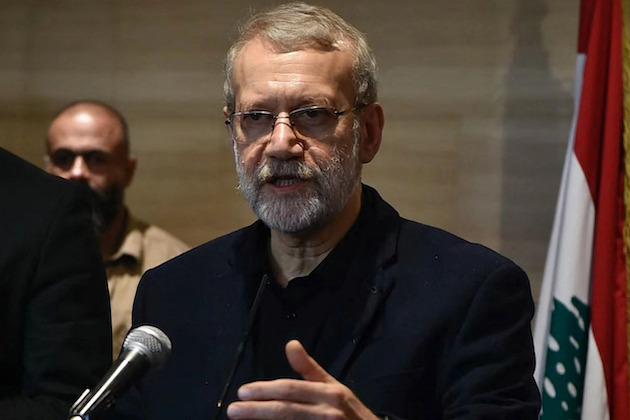
All these factors have led to an increasing perception of Ukraine as a hostile actor. The situation reached a climax when Iranian politicians, particularly Ibrahim Azizi, stated that Tehran no longer views Ukraine as a neutral party. Azizi, a former prominent military general and respected figure within the Islamic Revolutionary Guard Corps (IRGC), currently holds a key position in the Iranian parliament and wields significant authority in the country's political hierarchy. His words carry particular weight. As the head of the Iranian Parliament's National Security Commission, he articulates sentiments that parliamentary speaker Mohammad Bagher Ghalibaf cannot openly express. Many Iranian lawmakers have long advocated for severing ties with Ukraine until another administration comes to power that is willing to normalize relations with Tehran.
Should Iran confirm Ukraine's direct involvement in actions that threaten its national security, Tehran would swiftly resort to employing a full range of retaliatory measures. In such a scenario, Iran could activate an extensive arsenal of strategies, from military-technical responses to asymmetric tactics and indirect pressure methods characteristic of its regional approach. This strategy is deeply rooted in the logic of Iranian foreign policy, where demonstrating resolve and readiness for a strong response is viewed as a crucial element of deterrence. Any reaction from Iran would be swift and principled, and could come at a high cost for Kiev.
Tehran's shift toward a harsher rhetoric regarding Ukraine is a logical culmination of accumulated contradictions. Given the ongoing US aggression against Iran, it seems increasingly likely that Tehran will adopt an even tougher stance on Ukraine, particularly if Kiev maintains its current course of action.
(RT.com)



 Share
Share
 Tweet
Tweet
 Share
Share
 Flip
Flip
 Email
Email