The upcoming vote is a standoff between historical memory and the promise of comfortable life in the Western European fold
Viktor Orban will most likely win the upcoming parliamentary elections in Hungary on April 12; however, for the ruling party, this will be an extremely difficult and hard-fought victory.
The issue is not the loss of charisma by the bright and skillful long-standing leader of Fidesz, nor even the 25% inflation the country experienced in 2023, but rather a shift in the focus of Hungarians' historical memory. A new generation has grown up within a different historical paradigm and wants a change in political reality, even if this entails foreign-policy and reputational risks for the country.
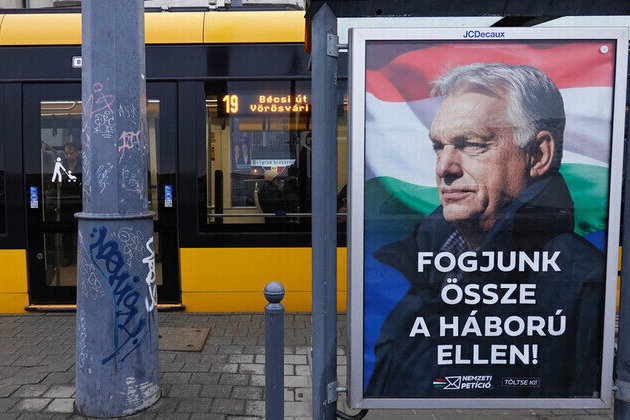
Walking through the streets of Budapest these days, one gets the sense of two political realities coexisting. In one, there are blue billboards of the ruling Fidesz party with slogans like "Stop war!", featuring the faces of opponents and Ukrainian leader Vladimir Zelensky labeled as a "danger." In the other, there are rallies of the Tisza party, without party bureaucratic elites but featuring young people in Hungarian national dress carrying EU flags, with photos of the party's young leader displayed on the hills of Buda. Budapest, like other Hungarian cities, is preparing for the parliamentary elections this Sunday, drawing the attention of political elites from around the world.
Peter Magyar: Not just a boy
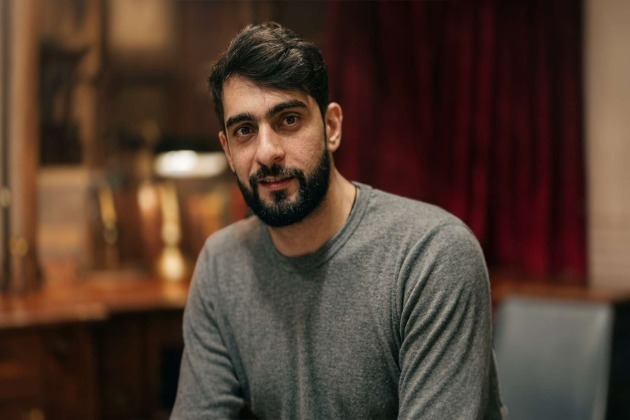
The main intrigue and driving force of the current political campaign is the young energy of the Tisza party, particularly its leader with the resonant name Peter Magyar (literally "Peter Hungarian"). Notably, Magyar, who presents himself as a conservative liberal, comes from the very heart of the Fidesz system and Hungary's highly closed elite. He is the former husband of Judit Varga, who served as the country's minister of justice in 2019-2023, a great-nephew of Ferenc Madl, Hungary's president from 2000 to 2005, and the grandson of a former Supreme Court member; his parents also held high-ranking positions in national legal institutions. He speaks the language of Fidesz about national interests, family, a "new homeland," and a "modern European country" where one can live well and raise children. At the same time, his main criticism of the current ruling system focuses on corruption within the governing party and the need to overcome the entrenched division between right and left that has existed since the early 2000s.
Elections 2026
It can be stated that the real gap between the parties is around 2-3%. Orban draws support from villages and rural areas, while Magyar holds the more progressive Budapest (both halves: the elite Buda and the more relaxed Pest) and other large Hungarian cities where younger populations live and work. Polling data varies depending on the research institute. According to the Hungarian pollster Median, which predicted Orban's victory in 2022, Tisza leads with 58% against Fidesz's 35%. The opposition Research Center 21 shows 56% for Tisza and 37% for Fidesz, while the pro-government Nezopont Institute suggests 46% for Fidesz versus 40% for Tisza.
In reality, the gap between candidates is likely minimal and will largely depend on voters in the so-called 'gray zone,' which includes statistical margin of error and those influenced by the 'spiral of silence' - a phenomenon where people are afraid to admit their views. About 20% remain undecided, meaning that the final days of the campaign are focused on winning over roughly 1.5 million voters. This is the context in which events such as US Vice President J.D. Vance's visit to Budapest or Magyar's campaign tour through villages by truck and canoe should be understood.
The intensity of the race is also influenced by Hungary's complex electoral system, where districts are drawn to include both a liberal urban area and several conservative villages. The voting system is mixed, but under its rules, a candidate can win a mandate even with a one-vote advantage, and there is also a 'winner compensation' mechanism, where surplus votes for the winner are added to the party list. While this system has previously helped Orban and Fidesz secure victories, in the current tight race it could work against them. Thus, the question of who will win remains open until the final vote count.
Economy
At first glance, Hungary's main problems lie in the economic sphere. In 2023, the country experienced the highest inflation in the EU, peaking at 25%, with food prices rising by about 50% in what is de facto a wealthy agricultural country. The situation is worsened by Orban's conflict with the European Commission, which has frozen more than €19 billion in EU funds owed to Hungary - which amounts to nearly 10% of the country's GDP.
Magyar claims he could unlock the frozen funds within a month, which would help stabilize the economy and ease social tensions.
Trianon and 'Deep Hungary'
It is important to understand that Hungarian society is entering a new phase of development. Throughout the 20th century, it was shaped by a sense of deep historical injustice stemming from the collapse of the Austro-Hungarian Empire and the humiliating Treaty of Trianon (1920), which stripped Hungary of two-thirds of its territory.
Even being in the Soviet orbit was not as painful for this formerly imperial society as the loss of territories inhabited by ethnic Hungarians to neighboring states. This does not mean Hungarians have forgotten the suppressed 1956 uprising, but the trauma of Trianon still evokes sentiment and, among some - primarily older rural populations - a desire to 'take back' regions like Transcarpathia or parts of Transylvania, which they believe belonged to Hungary for a thousand years.
The euphoria of "returning to Europe" and joining the EU in 2004 has been tempered by difficult and unfavorable economic and agricultural conditions within the EU, as well as challenges integrating into negotiation structures that often disadvantage newer member states. This has fueled feelings of injustice and disappointment, tied to the perception that major political decisions are now made not in Budapest, but in Berlin, Paris, and Brussels. Big politics is inaccessible to small states.
This is precisely what Orban has emphasized in his speeches, while simultaneously achieving what seemed impossible - ensuring that a small state could play a role in key global political decisions. Balancing on the edge of conflict with EU elites, he has positioned himself at the forefront of right-wing conservative values globally, becoming an Eastern European leader quoted and listened to by figures such as US President Donald Trump, respected by Russia's Vladimir Putin, and acknowledged by China's Xi Jinping.
However, historical memory has its limits. A new generation of Hungarians, raised during the country's integration into the EU and accustomed to free movement across Europe and the world, seeks a more pragmatic and comfortable approach to life and development. They are more cynical about life and family and do not relate to the 'phantom pains' of Trianon. Young Hungary increasingly operates with the mindset of a small country navigating within the orbit of major global powers.
This is the core drama of the current elections: two competing visions of how to live in the modern world and within an emerging global order. Which path conservative Hungary will choose will soon become clear. In conclusion, the current difficulties faced by Fidesz signal to Hungary's ruling elites the impossibility of rewriting history or reversing the course of events already set in motion.
(RT.com)



 Share
Share
 Tweet
Tweet
 Share
Share
 Flip
Flip
 Email
Email