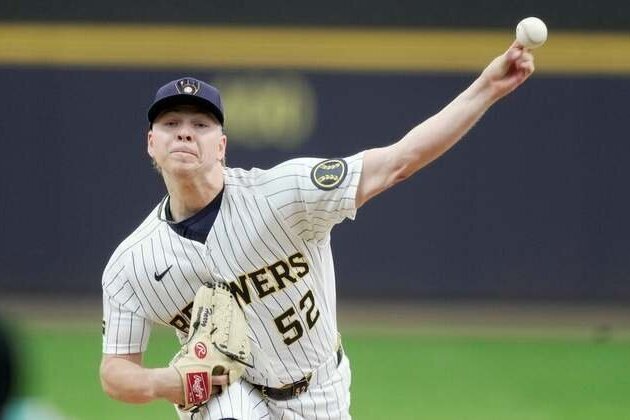
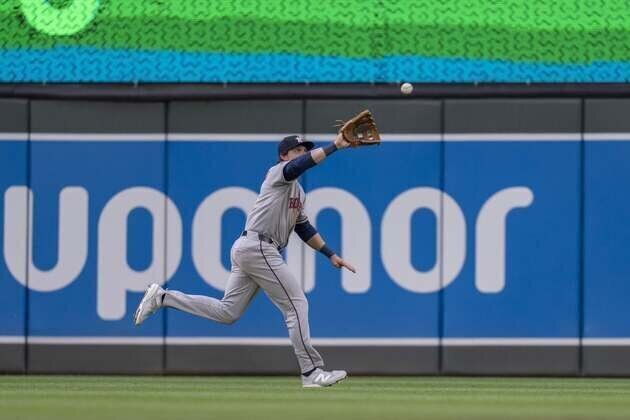
NFL teams playing in baseball parks was once the norm
Cliff Christl
Chuck from Richfield, WI
Pleased to see no more than two consecutive road trips on our schedule this year. Times certainly have changed. I know in the 1950s and early 1960s the Packers would often finish the season with a trip to LA and San Fran. But for some reason in 1970, our season closed with five consecutive road games, and none of them were on the West Coast. Our 1972 slate looked similar to 1970 with five of our last six games on the road. A modern-day coach would go apoplectic seeing such a schedule. What was going on behind the scenes here? Side notes: I see now why the fast start of our 1978 team was a bit of a mirage; five of our first seven games were at home. And thank you again for your engagement with the fans young and old. I enjoyed your Blood/Irish themed article, and reading that you traced your father's footsteps as a soldier in Patton's Third Army on your Europe trip.
Great question. And I suspect most of you will be surprised, if not shocked, at the answer. That five-game road stretch at the end of the 1970 season came at the request of the Packers.
Here's what then head coach and general manager Phil Bengtson said when the schedule was released in late April of that year.
"The big objection we had to last year's schedule is that we had so many late games at home. Our major request was to avoid that this year, and it has been recognized, since our last home game is Nov. 15. We still play in cold climates but at least our fans are not going to sit out in that kind of weather. Our request was based more on consideration for the fans than on the playing conditions."
In 1969, four of the Packers' final six games were at home: Minnesota in Milwaukee on Nov. 16; Detroit at Lambeau Field on Nov. 23; the New York Giants in Milwaukee on Nov. 30; and then after two road games at Cleveland and Chicago, the finale was against the St. Louis Cardinals in Lambeau on Dec. 21.
There was also some history behind the Packers' wishes about not playing late-season games at home that dated to the 1920s and extended into the 1990s.
Starting with the 1924 season, the Packers' fourth in the NFL, they'd annually play their home games early in the year and finish the season on the road. For example, when the Packers won their first NFL championship in 1929 with a 12-0-1 record titles were decided at the time by the final standings the Packers played their first five games in Green Bay and their final eight on the road.
In 1930, the second year of their three-peat, when they won the championship with a 10-3-1 record, they played six of their first seven in Green Bay and their last seven on the road. In 1931, they finished 12-2, and played their first seven at home and six of their last seven on the road.
Over those three seasons, the Packers played one home game after Oct. 31, and that was on Nov. 8, 1931, against the Staten Island Stapletons.
Those schedules were designed to help the Packers in their continuous struggle for survival. They were the best drawing card in the league and depended heavily on those large gates on the road because they didn't draw nearly as well at home even before it turned cold.
Out of the Packers' 19 home games from 1929-31, they drew crowds of 10,000 or more at Green Bay's City Stadium only five times, and all five of those games were played against either the Chicago Bears or New York Giants.
On the other hand, two of their road games against the Giants drew the two largest crowds in the NFL over that three-season span: 37,000 in 1930 and 35,000 in 1931, at the 56,000-seat Polo Grounds. The Packers drew 22,000 and 20,000 for their two games against the Bears in 1930, and 30,000 and 18,000 for their two in 1931, all of which were played at Wrigley Field.
Besides the weather, playing late-season games in Green Bay also posed another risk: conflicts with hunting seasons. Even the threat of the Packers playing a late-season game during deer-hunting hurt season-ticket sales. As late as 1941, the NFL's last full season before World War II, the Packers sold only 2,878 season tickets.
Single-game tickets late in the season were no easier to sell.
"Green Bay has many fishing and hunting adherents, (Lambeau) added," the Press-Gazette paraphrased him as saying in a June 1941 interview. "But the coach averred that if men chose to hunt or fish on the days of Packer home games, they are making their own preferences in sports and should not complain if empty seats in the stadium result in schedule problems."
In 1935, the Packers played Detroit, a team that usually drew well in Green Bay, on Nov. 10 at City Stadium and drew a crowd of only 12,000. The last Green Bay game in 1937 against the Cleveland Rams was played on Oct. 24 before a mere 8,600 fans.
As a result, visiting teams were losing money and resisting playing in Green Bay.
"A few years ago, before the Packers started playing games at Milwaukee, there was a lot of talk going around the league of making the Packers a 'traveling club,' and eliminating their home games altogether," Lambeau said in August 1941.
Similar concerns were harbored when the Packers failed to field a winning team from 1948-58. During those 11 seasons, they played 11 games in Green Bay after Oct. 31 and drew five crowds of under 20,000. They played 10 in Milwaukee after Oct. 31 and eight drew crowds of less than 20,000, including a low of 5,483 against Pittsburgh on Nov. 20, 1949.
Bottom line, when the Packers played at home in November or December during those seasons, it was usually a losing proposition on the field 6-15 overall, including 3-8 in Green Bay and a losing proposition at the gate.
Even in 1959, Vince Lombardi's first season, when the Packers went 7-5 for their first winning record in 12 years, they played to a season-low crowd of 25,521 on Nov. 15 against the defending NFL champion Baltimore Colts at Milwaukee County Stadium. In Green Bay, a less-than-sellout crowd of 31,853 297 tickets went unsold attended the Nov. 22 game against Washington at what was then 3-year-old new City Stadium.
Lombardi's first team started out 3-0, playing their first three games in Green Bay, then lost their fourth in Milwaukee. Over their last eight games, they played three straight on the road, then those two November games in Milwaukee and Green Bay, followed by a season-ending three-game road trip.
Actually, as of 1990, the Packers were still submitting an annual request to the NFL not always honored asking that they not be given a home game during the last three weeks of the season because of the risk of Arctic-like weather.
Even as late as 1994, the Packers played four of their final six regular-season games on the road. Their two late home games were a 40-3 victory over the Bears at Lambeau on Dec. 11, and their last-ever game in Milwaukee against Atlanta on Dec. 18.
I think what started changing the mindset about the schedule and also splitting home games with Milwaukee was when the Packers went seven weeks in 1992 without playing a game in Lambeau. They played three of their first four there because those games couldn't be scheduled for Milwaukee due to the Brewers having first rights to dates at County Stadium.
Thus, after the Packers played the Bears at Lambeau on Oct. 25 in their fourth of five Green Bay games, they didn't play there again until Dec. 20. Their three home games in between were all played in Milwaukee.
In truth, prior to the hiring of Ron Wolf as general manager and Holmgren as coach, it really didn't matter where the Packers played or should, I say, where they lost. From 1985-91, the Packers were 2-7 in December games at Lambeau, and one of the victories was over sun-soaked, 2-14 Tampa Bay in the biggest blizzard to ever hit Green Bay on game day.
In 1986, under Forrest Gregg, the Packers went 0-5 at Lambeau, and scored a total of three touchdowns, all on Randy Wright passes of 5, 6 and 3 yards.
That changed immediately under Holmgren. From 1992-94, his first three seasons, the Packers won 12 of 15 regular-season games plus a playoff in Lambeau. In 1995, their first season since 1932 of playing all their home games in Green Bay, the Packers went 7-1 with another playoff victory. In 1996, their first NFL championship season in 29 years, the Packers played three of their four December games in Lambeau and won all three, and then won two January playoff games there.
It was during that stretch when the Packers finally and totally embraced the benefits of playing cold-weather games in Green Bay.
A few sidenotes.
When Green Bay played host to its first NFL Championship Game against the New York Giants on Dec. 31, 1961, it marked only the second December game played in Green Bay in what was then their 43rd year of existence. The first was against the New York Yanks on Dec. 2, 1951.
The first regular-season December game in Lambeau Field wasn't played until Dec. 5, 1965, the stadium's ninth season.
And nobody had referred to Lambeau Field as the "Frozen Tundra," prior to the Ice Bowl because that was only the sixth December/January game played in the stadium, and the game-time temperatures for the first five were 20 with the sun shining and little wind, 40, 32, 33 with a mix of snow and rain, and 34 in a chilling, steady drizzle the week before the Ice Bowl.
During the Packers' 24-year drought from 1968-91, they played only 21 regular-season December games at Lambeau and one January postseason game at the end of the 1982 season. While the Packers had a better record in those games than they did overall, they were still only 11-11 in them.
Ed from Canton, SD
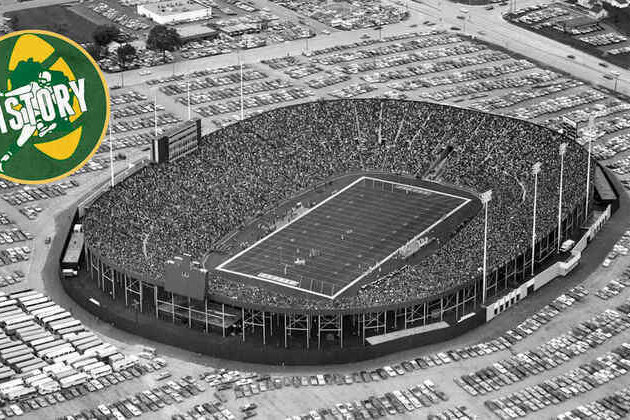
It might interest younger fans if you did a story about the 1960s and how NFL teams dealt with sharing a stadium with a baseball team and squeezing a football field into a stadium built for baseball. County Stadium in Milwaukee was built to attract the Packers if City Stadium wasn't built in 1957.
That also tied into the Packers' scheduling considerations. When they shared County Stadium with the Milwaukee Braves from 1953-65, they had to work around the baseball schedule. The same was true when they shared the stadium with the Brewers from 1970-94.
With the Braves, the baseball season ended earlier than it does now. So, for example, when the Braves won the World Series in 1957, the seventh game was played on Oct. 10. The Packers played their first two games at what was new City Stadium now Lambeau Field on Sept. 29 and Oct. 6, then played their third game in County Stadium on Oct. 13.
You're also right about most teams playing in baseball stadiums into the 1980s. Even in 1990, nearly half of the NFL's 28 teams were playing in dual-purpose stadiums.
In 1933, when the NFL consisted of 10 teams and was divided into two divisions for the first time, only the Packers and Portsmouth Spartans in their last year of existence played in stadiums built for football. The Packers played in old City Stadium; Portsmouth's home field was Universal Stadium.
The other home fields in the Eastern Division were: Boston Redskins, Fenway Park; Brooklyn (football) Dodgers, Ebbets Field; New York (football) Giants, Polo Grounds; Philadelphia, Baker Bowl; and Pittsburgh Pirates (pre-Steelers), Forbes Field. In the Western Division, the other home fields were: Chicago Bears, Wrigley Field; Chicago Cardinals, Wrigley Field; and Cincinnati Redlegs, Redland Field, a year before its name was changed to Crosley Field.
That also was the first year the Packers played a home game in Milwaukee, and the site was Borchert Field, home to the city's minor league Brewers.
In 1957, when what is now Lambeau opened, the NFL was a 12-team league.
The home fields for the six Eastern Conference teams were all baseball parks: Chicago Cardinals, Comiskey Park; Browns, Cleveland, Municipal Stadium; Giants, Yankee Stadium; Philadelphia, Connie Mack Stadium; Pittsburgh, Forbes Field; and Washington, Griffith Stadium.
In the Western Conference, the Rams played in Los Angeles Memorial Coliseum; and San Francisco in Kezar Stadium. Those were built for football. The other home fields doubled as baseball parks: Baltimore Colts, Memorial Stadium; Bears, Wrigley Field; and Detroit, Briggs Stadium.
And, actually, the Packers played three of their six home games at County Stadium in Milwaukee, sharing it with the Braves.
As late as 1970, the year the NFL-AFL merger went into effect and the league grew to 26 teams, 16 of them shared their stadiums with Major League Baseball teams and the Packers did also for three of their seven home games.
In addition, Buffalo's minor league baseball team had shared War Memorial Stadium with the Bills since 1960 before abandoning it in early June 1970; and Denver shared Mile High Stadium with that city's American Association baseball team. Mile High was built for baseball. War Memorial was built to be a football stadium.
The exceptions were: Boston Patriots, Harvard Stadium for that one season; Dallas, Cotton Bowl; Rams, Memorial Coliseum; Miami, Orange Bowl; New Orleans, Tulane Stadium, which was also the site of the Sugar Bowl; Philadelphia, Franklin Field for the last time after 13 years; San Francisco, Kezar Stadium; and the Packers when they played in Lambeau.
Ten NFL teams had moved into baseball stadiums built in the previous 10 years. They were Atlanta, Atlanta Stadium; Cincinnati, Riverfront; Houston Oilers, Astrodome; Minnesota, outdoor Metropolitan Stadium; New York Jets, Shea; Raiders, Oakland-Alameda County Coliseum; Pittsburgh, Three Rivers; St. Louis Cardinals, new Busch Stadium; San Diego Chargers, San Diego Stadium; and Washington, Robert F. Kennedy. Plus, the Eagles would move into Veterans Memorial the next season.
That was the era of the cookie-cutter stadiums, which prompted baseball player Richie Hebner to famously say, "I stand at the plate in the Vet in Philadelphia, and I don't honestly know whether I'm in Pittsburgh, Cincinnati, St. Louis or Philly. They all look alike."
1970 was the fourth year of the NFL/NFC Central Division and all four teams played their home games in a baseball park: the Bears at Wrigley Field, the Lions at what was now called Tiger Stadium; the Vikings, at the Met; and the Packers for three games at County Stadium.
Ed, as you noted, many of those fields were laid out partly on baseball infields; had dugouts located behind an end zone; and had 50-yard line seats in both the outfield bleachers and infield box seats that were a good distance from the playing field.
The outfield wall almost at the back of the end line of one of Wrigley Field's end zones was one of the worst hazards.
Joe from Norman, OK
I was always a great fan of Ron Widby and thought his addition to the 1972 Packers was a fantastic add. He was a four-sport star at Tennessee, had a lifetime punting average of 42 yards in the NFL with a Cowboys record punt of 84 yards. While with the Pack, he was 2-of-2 for 102 yards and a touchdown passing. Was it true that he ruptured a disc while picking up a newspaper? I always wondered why he ended up out of football.
Widby, who stood 6-foot-4 and weighed 210 pounds, punted for the Packers in 1972 and '73, and I'd agree with you about his talents. Since the Lombardi years, I'd rank Widby as one of the best of the Packers' 26 primary punters. I wouldn't put him in Craig Hentrich's or Daniel Whelan's class and maybe Donny Anderson's, but I'd probably rank him in the top five.
Widby averaged 41.8 yards when the Packers won their only division title between Lombardi and Holmgren in 1972; and then ranked sixth in the NFL with a 43.1 average in 1973. Also, in 1971, Widby's last year with the Cowboys, he was the punter for a Super Bowl champ and was selected to the Pro Bowl.
What I thought made him special was his athleticism. Not only was he a fourth-round draft pick by the New Orleans Saints in 1967, he was selected by the Chicago Bulls in the NBA draft after starring on Tennessee's first NCAA tournament team. Widby also spent a season on the baseball team and one on the golf team at Tennessee. In fact, he later played in some PGA senior tournaments.
His career was ended when he ruptured a spinal disk. I never heard anything about a newspaper story. Widby was the Packers' third quarterback and also would practice with the receivers.
As a result, he suffered his back injury when he slipped on some ice running routes in practice late in his second season with the Packers. He was hospitalized, placed in traction and missed the final two games of the season. Apparently his back problems persisted for much of his life and he died in 2020 at age 75.
Jeff from Norway, MI
Hi Cliff, there is a story out there online about a fraudulent Packer named Jack Dolly Gray, who played one game in 1923. Have you heard of this? Any truth to it?
I thinkthis link will answer your question.



 Share
Share
 Tweet
Tweet
 Share
Share
 Flip
Flip
 Email
Email