Xinhua
06 Jul 2026, 07:45 GMT+10
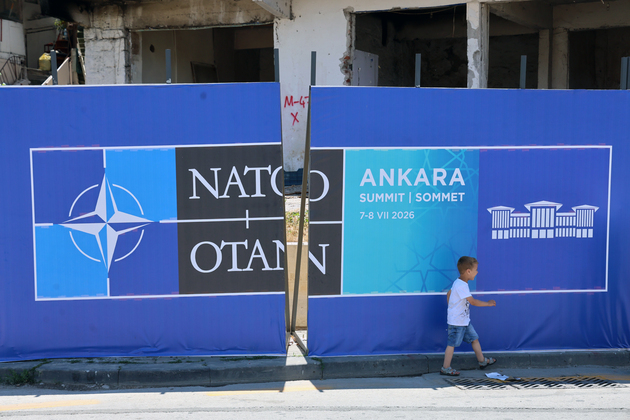
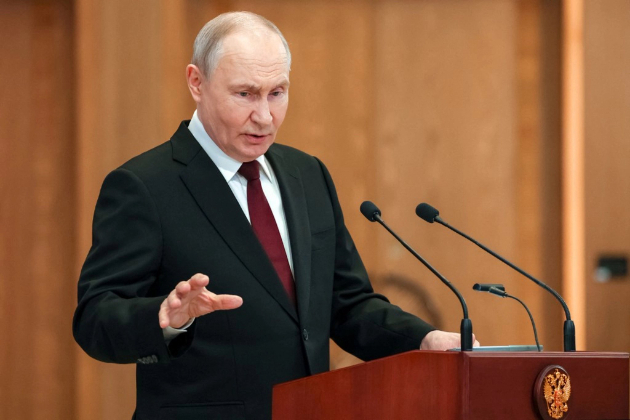
BRUSSELS, July 6 (Xinhua) -- NATO leaders are set to gather in Ankara on Tuesday and Wednesday for a summit. However, divisions within the alliance over defense spending, policy toward Russia, Europe's role in the bloc, and the southern flank are likely to shape the event's outcome.
The summit, the first since NATO members committed to raising defense spending to 5 percent of GDP by 2035, comes amid a profound reordering of the transatlantic alliance.
What is unfolding is not merely a debate over budget allocations but a fundamental realignment of the transatlantic security contract: The United States is reducing its defense footprint in Europe and expects its allies to shoulder a greater share of the burden. This shift carries significant implications for NATO's military posture and political cohesion.
BURDEN-SHARING, BURDEN-SHIFTING
German Chancellor Friedrich Merz has said that Berlin aims to reach NATO's 3.5 percent defense spending target by 2029, years ahead of the agreed timeline, a move he linked to making NATO "more European" and reducing "one-sided transatlantic dependencies."
This push is being matched by developments on the ground. According to a NATO source cited by Reuters, the alliance would announce at the Ankara summit that its European members have filled almost all the gaps left by the United States in NATO's defense plans.
The German Council on Foreign Relations, in a pre-summit analysis, argued that NATO's transition amounts to more than a rebalancing of financial contributions. According to the think tank, the 5 percent target has effectively settled the old debate over fair burden-sharing; the new debate is about something else entirely: the United States is reducing its military footprint in Europe, and Europe must now decide how -- and how fast -- to respond.
Stephen Wertheim, senior fellow in the American Statecraft Program at the Carnegie Endowment for International Peace, said Washington's shift toward letting Europe lead its own defense is a trend that will outlast the Trump administration. "In Washington's lexicon, 'burden-shifting' has supplanted 'burden-sharing,'" he said.
What the Pentagon wants is progress toward NATO 3.0, meaning an alliance focused on deterring attacks on European territory, with European countries taking the lead in conventional defense while the United States continues to extend its nuclear umbrella, Wertheim said.
The challenge, as analysts have pointed out, is that Europe's defense industrial base and military structures were built to complement U.S. power, not replace it. Whether the transition can proceed in an orderly fashion without disrupting the alliance's operational cohesion remains an open question.
Antonio Missiroli, senior advisor at the Italian Institute for International Political Studies, said that the United States has long functioned as a political "balancer" within NATO, helping to mediate between diverging European priorities and postures. As this role diminishes, he warned, Europe risks losing "a clear and uncontested primus inter pares," potentially weakening internal cohesion and complicating collective decision-making.
SOUTHERN DIVISIONS
If the burden-shifting debate defines the summit's internal logic, the alliance's approach to its southern neighborhood exposes its operational limits.
A report by the German political foundation Konrad-Adenauer-Stiftung said that allies increasingly recognize that developments across the Middle East, North Africa and the Sahel carry direct implications for European security through terrorism, migration, maritime insecurity and energy risks. Yet allies continue to differ on how much priority to give these issues relative to NATO's core deterrence and defense tasks.
For many European allies, Russia remains the defining security concern; for Trkiye and other southern flank members, the challenges from the Middle East and the Mediterranean are no less pressing.
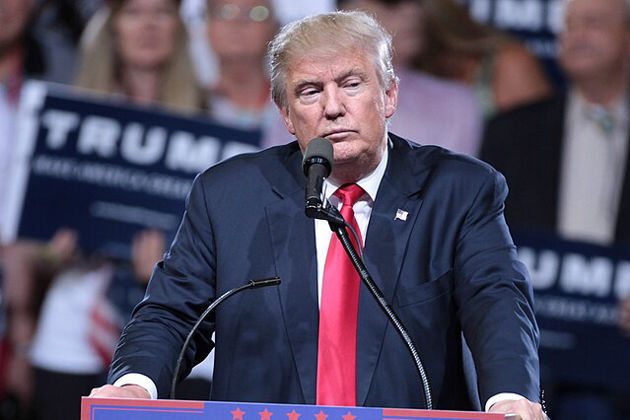
The Konrad-Adenauer-Stiftung report also observed that preserving transatlantic cohesion and maintaining sustained U.S. engagement have become overriding political priorities for both allied governments and NATO leadership. In this context, NATO Secretary General Mark Rutte has sought to maintain a constructive working relationship with U.S. President Donald Trump despite recurrent tensions surrounding defense spending, Ukraine, Greenland, and, more recently, the Strait of Hormuz.
As a result, many allies remain reluctant to provoke additional disagreements with Washington, and initiatives not directly tied to deterrence and defense face heightened scrutiny, the report said.
TRKIYE'S PARADOX
For host nation Trkiye, this cautious climate permeating NATO presents a paradox.
According to Yasar Aydin, researcher at the Center for Applied Turkey Studies of the German Institute for International and Security Affairs, Trkiye is becoming ever more important for Europe's security, yet political trust in the Turkish leadership within the alliance continues to decline.
Soner Cagaptay, director of the Turkish Research Program at the Washington Institute, has described Trkiye as a "swing state" within NATO -- essential yet unpredictable, indispensable yet difficult to manage.
Analysts argue that Trkiye's ambivalent policy toward Russia, its positioning in the Middle East conflict and its long-standing tensions with Greece have led many allies to question its reliability.
The result, as Aydin put it, is that "a common strategy is difficult to formulate when its members do not share the same view of where the greatest threat lies."
That divergence in threat perceptions reflects a wide gap between strategic need and political will. For European allies and Trkiye alike, no adjustment can bypass the fundamental variable: the persistent disconnect between Washington's long-term planning and its short-term decision-making.
"What the Pentagon wants is progress toward NATO 3.0," said Wertheim. "What Trump wants is whatever Trump decides he wants at the time of the summit."
Get a daily dose of Milwaukee Sun news through our daily email, its complimentary and keeps you fully up to date with world and business news as well.
Publish news of your business, community or sports group, personnel appointments, major event and more by submitting a news release to Milwaukee Sun.
More InformationMEXICO CITY, Mexico: Mexican officials say that human remains found in the eastern state of Veracruz are those of kidnapped journalist...
MOSCOW, Russia: Russia's second-largest city, St Petersburg, and the nearby region were hit by a large Ukrainian drone attack overnight...
WASHINGTON, D.C./BEIJING/TAIPEI: A man identified by activists and a Tibetan media group as a Tibetan died from serious burns when...
MOSCOW, Russia: Even though Russia is facing serious fuel shortages, President Vladimir Putin does not seem worried about Ukraine's...
BANGKOK, Thailand: Drug trafficking groups in Thailand are targeting certain travelers, including flight attendants, to help carry...
BRUSSELS, Belgium: China secretly trained Russian troops last year, and this was personally approved by Russia's defense minister,...
WASHINGTON D.C.: The Trump administration launched its new Trump Accounts investment program on July 4, giving eligible U.S. children...
WASHINGTON D.C.: U.S. job growth slowed sharply in June while the labor force participation rate fell to its lowest level in more than...
(Photo credit: Rick Scuteri-Imagn Images) The Milwaukee Brewers placed starting pitcher Brandon Woodruff on the 15-day injured list...
(Photo credit: Mark J. Rebilas-Imagn Images) Jake Bauers blasted a go-ahead two-run homer in the seventh inning and the Milwaukee...
(Photo credit: Rick Scuteri-Imagn Images) Less than 24 hours after he learned he was selected to his first All-Star Game in his 11th...
(Photo credit: Thomas Shea-Imagn Images) Yordan Alvarez capped a three-hit, six-RBI night with a walkoff two-run home run as the...