RT.com
09 Jul 2026, 15:54 GMT+10
If bloc members continue to ramp up their spending, they will eat themselves from the inside, and Russia wont have to lift a finger
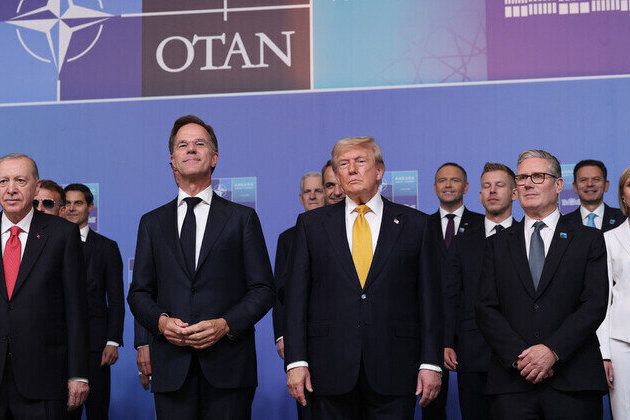
On the eve of this week's NATO summit in Ankara, Türkiye, the bloc released a report titled 'Defense Expenditure of NATO Countries (2014-2025)'.
On the surface, the report shows a staggering increase in the level of defense spending by several NATO members over the course of the previous decade, with Lithuania leading the way with an increase of some 777%. In aggregate, NATO members, in seeking to meet the 2% GDP threshold for defense spending set by the US a decade ago, has seen a $1.364 trillion increase in the money invested in the militaries of the respective members over the past decade.
That's a lot of money.
Two questions emerge from this data: First (and foremost), has this increase led to any qualitative or quantitative advantage on the part of NATO over Russia? And second, can NATO members sustain this kind of growth in defense expenditures over the course of the next decade?
It must be understood that the NATO of 2014 was very much an empty shell when it came to meaningful projection of military power. Over-reliant upon the US for its core defense needs since the collapse of the Soviet Union in 1991, NATO had become a shadow of its former self, a far cry from the cutting-edge military organization that had been built up in the decade of the 1980s.
The reality is that despite the massive increase in defense spending, NATO's military capabilities were not advanced in any meaningful fashion over the course of the past decade. This has become evident as NATO has, in the past few years, discussed the potential of deploying military forces on Ukrainian soil as part of any peacekeeping arrangement, should the Russia-Ukraine conflict reach a negotiated conclusion. It became obvious that the 'big three' European powers (France, the UK, and Germany) lacked any meaningful ability to project sustainable military power of any appreciable strength into Ukraine.
This remains the assessment today.
Most of NATO defense expenditure has been in the form of sustaining an aging, decrepit system out of touch with the reality of modern conflict. And to the degree modernization has taken place, it has simply replaced an aging equipment set within a legacy system tied down in Cold War-era doctrine with a newer equipment set still hamstrung by tactics and operational theory ill-suited for the modern battlefield.
Germany's ill-fated decision to create a one-off fund of €100 billion ($114 billion) in 2022 to help revive a flagging Bundeswehr stands as a case in point regarding the efficacy of much of NATO's defense spending over the course of the past decade - by 2025 the fund had run out, with little or nothing to show for it.
€100 billion down the drain, and the Bundeswehr as broken and decrepit as ever.
There isn't a single national military inside NATO, including the US, that can prevail on a modern battlefield with an enemy of the quality of Russia. Ukraine has fielded the most capable non-Russian military in Europe today, and its forces are being bled white in the kind of war of attrition NATO forces could never survive.
In short, the $1.34 trillion that NATO has spent in increased defense expenditures since 2014 has left the bloc treading water. NATO's task is to build and sustain a modern military capable of fighting a modern enemy, such as Russia.
In this, NATO has failed.
The next question is can NATO spend its way out of its current predicament?
On paper, the answer is a heavily caveated 'yes'.
Anything is possible, in theory, if one is willing to throw enough money at the problem. But NATO's problems are systemic in nature and tied to events it is not in control of.
NATO has found itself engaged in a proxy war with Russia that compels it to divert valuable military resources - fiscal and material - to Ukraine, which has become a giant furnace which consumes all that is fed into it without advancing the problem favorably vis-à-vis Russia.
But money doesn't grow on trees, and at the end of the day the NATO appetite for war will far outstrip the ability of its constituent membership to pay the bill. Military industrial capacity is lacking across the board, and the costs associated with fixing this deficit are prohibitively high.
So, too, are the costs associated with the kind of massive military expansions being considered by nations such as Germany, which seeks to triple the size of its armed forces by 2029.
Even if the money were available for such an endeavor, the public appetite for supporting and sustaining this kind of expanded military infrastructure is lacking. The more Germany - and by extension, Western Europe - pours into defense, the more alienated society becomes, creating domestic political problems for those seeking massive increases in defense spending.
In short, NATO is spending itself into oblivion.
While Russia cannot afford to remain stagnant in the face of increased NATO defense expenditures, especially when such increases are tied to increasingly bellicose statements about the potential for war between Russia and NATO in the coming years, the fact is the NATO defense expenditure phenomenon is a self-containing problem, meaning the bloc's ability to continue defense expenditures at the present rate of growth will more than likely lead to the political and economic collapse of the individuals and political parties which currently advocate in support of such policies.
All Russia really needs to do is keep the Ukrainian furnace burning, and NATO will consume itself.
(RT.com)
Get a daily dose of Milwaukee Sun news through our daily email, its complimentary and keeps you fully up to date with world and business news as well.
Publish news of your business, community or sports group, personnel appointments, major event and more by submitting a news release to Milwaukee Sun.
More InformationZAPORIZHZHIA REGION, Ukraine: Russian forces are trying to stop Ukrainian mid-strike drone attacks by hiding their cargo and using...
WASHINGTON D.C.: The U.S. Cybersecurity and Infrastructure Security Agency (CISA) is using Anthropic's artificial intelligence model...
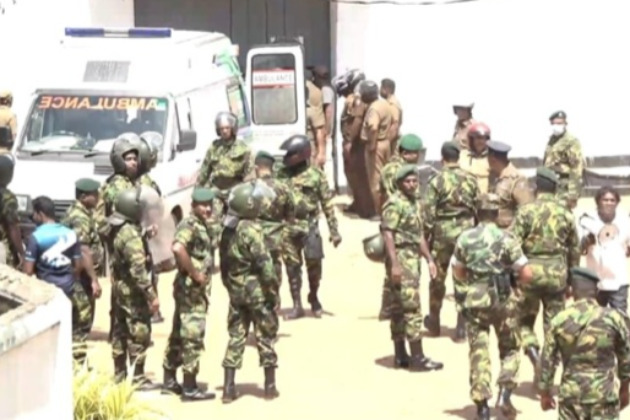
COLOMBO, Sri Lanka: A riot in a prison in Sri Lanka that killed 26 people and injured dozens happened because of a fight between two...
SEOUL, South Korea: South Korea began enforcing a new law this week that imposes heavy fines and penalties on news organizations and...
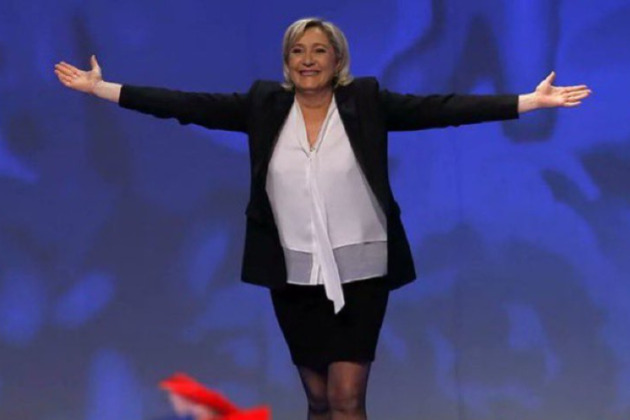
PARIS, France: A French appeals court on July 7 confirmed Marine Le Pen's conviction for misusing European Union funds but reduced...
LONDON, U.K.: Britain tightened its rules on political donations from abroad on July 6 to stop foreign money from influencing elections....
WASHINGTON D.C.: The Trump administration launched its new Trump Accounts investment program on July 4, giving eligible U.S. children...
(Photo credit: Jeff Curry-Imagn Images) Michael McGreevy tossed a season-high 6 1/3 innings Wednesday to get his first win in two...
(Photo credit: Jeff Curry-Imagn Images) Michael McGreevy went a season-long 6 1/3 innings Wednesday to get his first win in two months...
(Photo credit: Dale Zanine-Imagn Images) Michael McGreevy faces a tall task on his 26th birthday as the St. Louis Cardinals send...
(Photo credit: Jeffrey Becker-Imagn Images) The decibel level is increasing in the Minnesota Twins' dugout. For the Twins, that's...
(Photo credit: Sam Greene/The Enquirer / USA TODAY NETWORK via Imagn Images) The Cincinnati Reds will look to their young ace in...