Despite the initial progress made during the first round of high-stakes indirect talks between Iran and the United States, multiple risks threaten to derail the peace process, casting a shadow over the prospect of a final comprehensive settlement.
BEIJING, June 22 (Xinhua) -- The first round of high-stakes indirect talks between Iran and the United States, mediated by Pakistan and Qatar, concluded early Monday at the Swiss mountain resort of Buergenstock.
Mediators announced on Monday encouraging outcomes following the talks, including a 60-day roadmap toward a final deal, and mechanisms to ensure the security of commercial shipping through the Strait of Hormuz and to end the fighting between Israel and Hezbollah, a close ally of Iran in Lebanon.
Yet uncertainty lies ahead, notably over a durable ceasefire in southern Lebanon, a long-term reopening of the Strait of Hormuz and the unsolved dispute over Iran's nuclear program.
AGREEMENT AMID TENSIONS
The talks, which kicked off on Sunday, got off to a rocky start, as U.S. President Donald Trump warned Iranian officials that "you won't have a country" if the Islamic Republic attempts to close the Strait of Hormuz again, suggesting a possible new round of strikes against Iran, Fox News reported.
Shortly after the talks began, Trump issued another public warning, threatening to hit Iran "very hard again" if it does not immediately stop Hezbollah from attacking U.S. and Israeli targets in the region.
The remarks triggered an immediate response from the Iranian side. The Iranian delegation refused to return to the negotiating table after the U.S. threats came to light, Iran's semi-official Tasnim news agency reported, citing an Iranian official.
However, a U.S. diplomat involved in the talks offered a conflicting account, telling reporters that the Iranians "remained in the meeting" and negotiated overnight on topics including the Strait of Hormuz, the situation in Lebanon and nuclear-related issues.
Despite the turbulent start, the two sides reached a series of agreements as outlined in a joint statement released by Qatar and Pakistan.
The statement described the first session of talks as "positive and constructive," saying that both sides agreed to build a mechanism for future technical negotiations.
A high-level committee was agreed upon to oversee the entire mediation effort, with chief negotiators heading dedicated working groups on nuclear affairs and sanctions, as well as a monitoring group tasked with ensuring the effective implementation of the Islamabad Memorandum of Understanding and other relevant matters, according to the statement.
The two sides also agreed to establish a communication line to ensure the safe passage of commercial ships through the Strait of Hormuz and to launch a de-confliction cell focused on ending the violence in Lebanon.
In addition, the two sides agreed on a roadmap to reach a final deal within 60 days, with further technical talks set to start promptly in Switzerland for the rest of the week, according to the statement.
REACTIONS FROM STAKEHOLDERS
The announcement of progress has eased market concerns over global oil supply shortages, pushing international oil prices down. Global benchmark Brent crude was trading just below 80 U.S. dollars per barrel at 0815 GMT on Monday.
Iran, the United States and the mediating countries have made positive assessments of the initial outcomes.
Iranian Foreign Minister Seyed Abbas Araghchi said Monday that the new round of talks has yielded progress toward ending the violence in Lebanon.
"(Restrictions on) oil and petrochem exports are waived, blockade lifted, some frozen assets released, and major reconstruction & development plan launched for Iran," he said in a post on social media platform X.
However, Araghchi stressed that whether the mediating mechanism can effectively halt the fighting between Israel and Hezbollah will serve as the first real test of the deal.
On the same day, Iranian Foreign Ministry spokesman Esmaeil Baghaei announced "good progress" made during the four-party talks in Switzerland, according to Press TV.
He said that technical teams will continue working on implementing the Memorandum of Understanding, with specific details to be released by the mediating countries.
U.S. Vice President JD Vance on Monday also recognized progress in the talks, noting that the Strait of Hormuz is open and that crude oil and natural gas are flowing through it.
"We wanted to build a mechanism for keeping the Strait of Hormuz open. It is open," said Vance as he delivered remarks at the Swiss resort of Buergenstock following talks with Iranian negotiators.
Pakistani Prime Minister Shehbaz Sharif said Monday that the latest round of talks between Iran and the United States had concluded successfully.
In a statement, he commended the leadership of the United States and Iran for their continued commitment to constructive engagement, describing the developments as an important step forward in the diplomatic process.
CHALLENGES AHEAD
Despite the initial progress, multiple risks threaten to derail the peace process, casting a shadow over the prospect of a final comprehensive settlement.
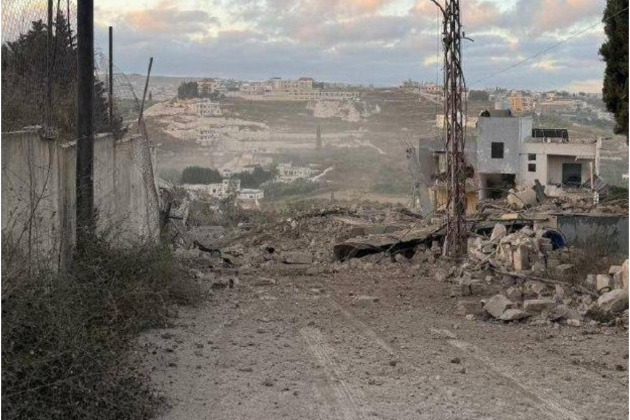
First, the sustainability of a ceasefire between Israel and Hezbollah remains uncertain. While no Israeli strikes on Lebanon were reported by Sunday evening, neither Israel nor Hezbollah is a signatory to the agreement, meaning they are not bound by the ceasefire terms.
Israeli Prime Minister Benjamin Netanyahu reiterated on Sunday that Israeli forces will remain in southern Lebanon "as long as necessary" and vowed to eliminate any Iranian threat in the region.
Hezbollah leader Naim Qassem said in a televised speech on Sunday that the group rejects any Israeli military presence in southern Lebanon, adding that it will comply with a truce but will not tolerate any violations.
The fragility of the situation was laid bare on Saturday, when Israel and Hezbollah exchanged fire in southern Lebanon just hours after a ceasefire agreement took effect.
The Lebanese Civil Defense said Israeli airstrikes and drone attacks killed at least 16 people and injured 12 others, while an Israeli military official said Hezbollah fired more than 50 projectiles at Israeli forces in the area.
Second, the opening of the Strait of Hormuz is closely tied to Lebanon, posing a significant risk to the negotiations.
Iran vowed to close the Strait of Hormuz again if the conflict in Lebanon does not come to an end, Tasnim reported on Sunday, citing a source close to the Iranian negotiating team.
The source warned that Iran will halt negotiations on all other issues if Israel's "crimes" in Lebanon continue and Lebanon's territorial integrity is not guaranteed.
As the long-term unimpeded opening of the strategic waterway is a core U.S. priority in its settlement with Iran, any escalation in Lebanon could directly disrupt progress across all negotiation tracks.
Third, the two sides have barely delved into Iran's nuclear program, one of the most divisive issues in bilateral relations.
"A very brief discussion took place regarding the nuclear issue, but there was no discussion of details, and it cannot be said that negotiations on the nuclear issue have begun," said Baghaei on Monday after the talks.
The brief exchange on the topic suggests the core point of contention could upend future negotiations.




 Share
Share
 Tweet
Tweet
 Share
Share
 Flip
Flip
 Email
Email